
It is normal to assume that we have a very good knowledge of things that we interact with or witness regularly. However, when we are asked to give a detailed explanation of how a mechanism or object works, that illusion can quickly disappear.
The gap between our perception of what we know about a topic and our true ability to explain it has been studied by psychologists at Yale University. Their experiments revealed that People often have a tendency to overestimate their understanding of specific mechanisms.
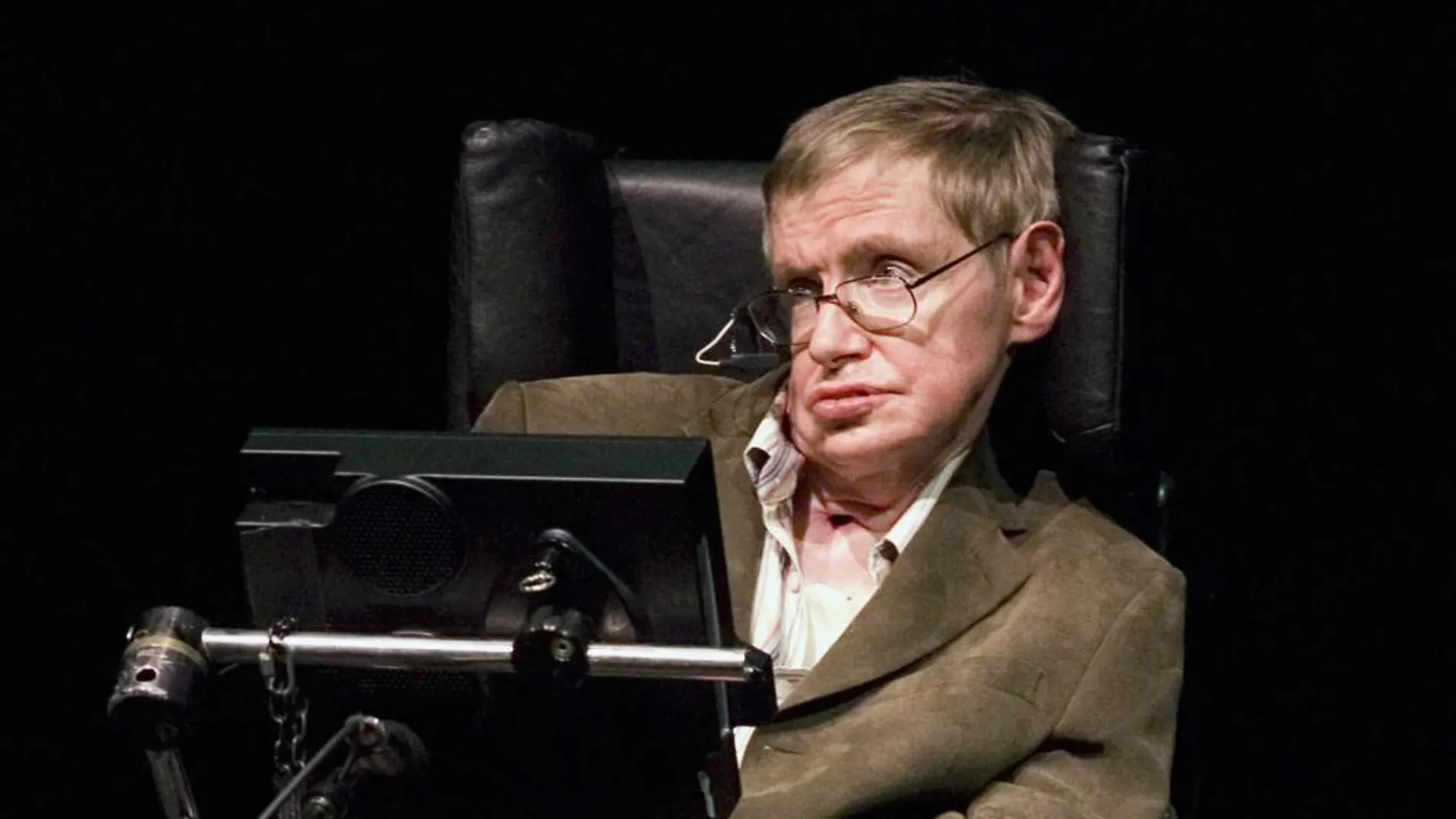
The theory corroborates a fairly popular idea that has been attributed to Stephen Hawking for many years: “It’s not enough to not know something, the problem is when we assume we know something when in reality we don’t.“.
The difference between ‘knowing’ and ‘knowing how to explain’
In 2002, Leonid Rozenblit and Frank Keil conducted an experiment that was published in the journal “Cognitive Science.” The study investigated the notion known as “the illusion of explanatory depth“.
The experiments were carried out to assess the degree of people’s ability to adequately estimate their own knowledge. To accomplish this goal, participants had to rate the degree to which they knew certain objects and mechanisms.
The critical point was that participants were asked to explain in detail how some of those things worked. And the results turned out to be quite surprising, since the level of confidence of the participants dropped significantly after trying to explain things step by step.
When everyday life stops seeming so simple
As Yale points out, The difficulty increases as we go from recognizing something to explaining how it works. It is possible to know how to use a mechanism without knowing how to describe the elements that make it up, as well as the order of these elements and their interaction.
One of the experiments required participants to reevaluate the amount of knowledge they possess about the mechanism after attempting to explain it. The estimate dropped drastically when they realized what they didn’t know. This helps to identify the significant difference between know how to use something and understand how it works.
Scientists also came to the conclusion that this phenomenon does not happen in exactly the same way in all areas of knowledge. There were areas where the amount of information memorized was quite high and in case of justifying the answer there were small differences. For example, The identification of the capitals of several countries did not result in the same drop in the level of trust as the explanation of how a mechanism works..
Also, natural phenomena such as the tides either the formation of a rainbow. When trying to give an explanation of these processes, people might realize that their knowledge was not complete enough.
When the details put everything to the test
Another important factor that contributes to this process is how easy it is to confuse knowing about something with understanding it.
The simple fact of seeing the mechanism of the device can make us believe that we understand the process of its operation. But, The reality is that our brain can maintain the general image but does not remember all the steps necessary to describe the process..
Therefore, the more details we are asked to explain something, the easier it will be to detect the limits of our knowledge.
Research shows that that illusion may have some practical value. If we knew all the details of how all the objects we use in our daily lives work, we would spend too much time doing something that is unnecessary.
Does the phrase really belong to Stephen Hawking?
While the quote is commonly attributed to physicist Stephen Hawking, its origin is actually highly controversial. According to the study cited by the magazine Science & Vie, the quote comes from American historian Daniel J. Boorstin. It can be found in his book titled “The Discoverers” written in 1983.
The attribution to Stephen Hawking appears to have emerged much later in 2001 in an Oklahoma newspaper. So, even though the quote is commonly circulated under the name of well-known British physicist Stephen Hawking, there is no indication that he originated it.
Beyond the identity of the person who coined the term, there is a very interesting problem related to our perceptions as well. The ability to recognize an object and its purpose does not imply knowledge of all the processes involved in the functioning of the object..