
Naturgy Foundation this week announced the winning projects of the eighth edition of the Efigy Technology Contestthe educational initiative with which it promotes young talent and promotes awareness about the energy transition among Secondary Education students.
The “EnergyFence” project of the Institut Roquetes (Roquetes, Tarragona), a modular wind system manufactured with 3D printing from plastic. received the award for ‘Most achievable project’. “Goodbye to lime with a magnet” (IES Jérica Viver, Castellón), an experimental study on the reduction of limescale using magnetic fields was awarded as the best communicated project.
The award for ‘Most innovative project’ went to Colegio San Agustín (Calahorra, La Rioja), with “Ebro verde agrofotovoltaico, a circular model that integrates agriculture, photovoltaic generation and recovery of agricultural waste. In addition, Colegio Salesiano Santo Ángel (Avilés, Asturias), with the Speaking Nature project, a system for monitoring urban air quality using low-cost sensors, received the ‘Access to Best Communicated Project’.
María Eugenia Coronado, general director of the Naturgy Foundationhighlighted the enormous potential of young talent to address major environmental challenges. In his words, initiatives like this not only provide technical knowledge, but awaken vocations, encourage a critical outlook and prepare new generations to lead innovation in the energy sector.
Adding energy for Valencia
For the first time in the history of these awards, the award ceremony was held outside the city of Madrid and was the City of Arts and Sciences of Valencia the place chosen to celebrate the final of the Contest as part of the “Adding Energies for Valencia” programwith which the Naturgy Foundation is contributing to the recovery of the areas affected by DANA in 2024.
The eighth edition of the Efigy Technology Contest has had the participation of more than 3,000 3rd and 4th year ESO students from 35 educational centers throughout Spain, who have presented a total of 102 projects aimed at improving the planet through energy efficiency. To date, the program has brought together some 15,000 students from 151 schools throughout Spain, who have presented more than 500 innovative projects around energy efficiency.
Effigy Girls closes the school year
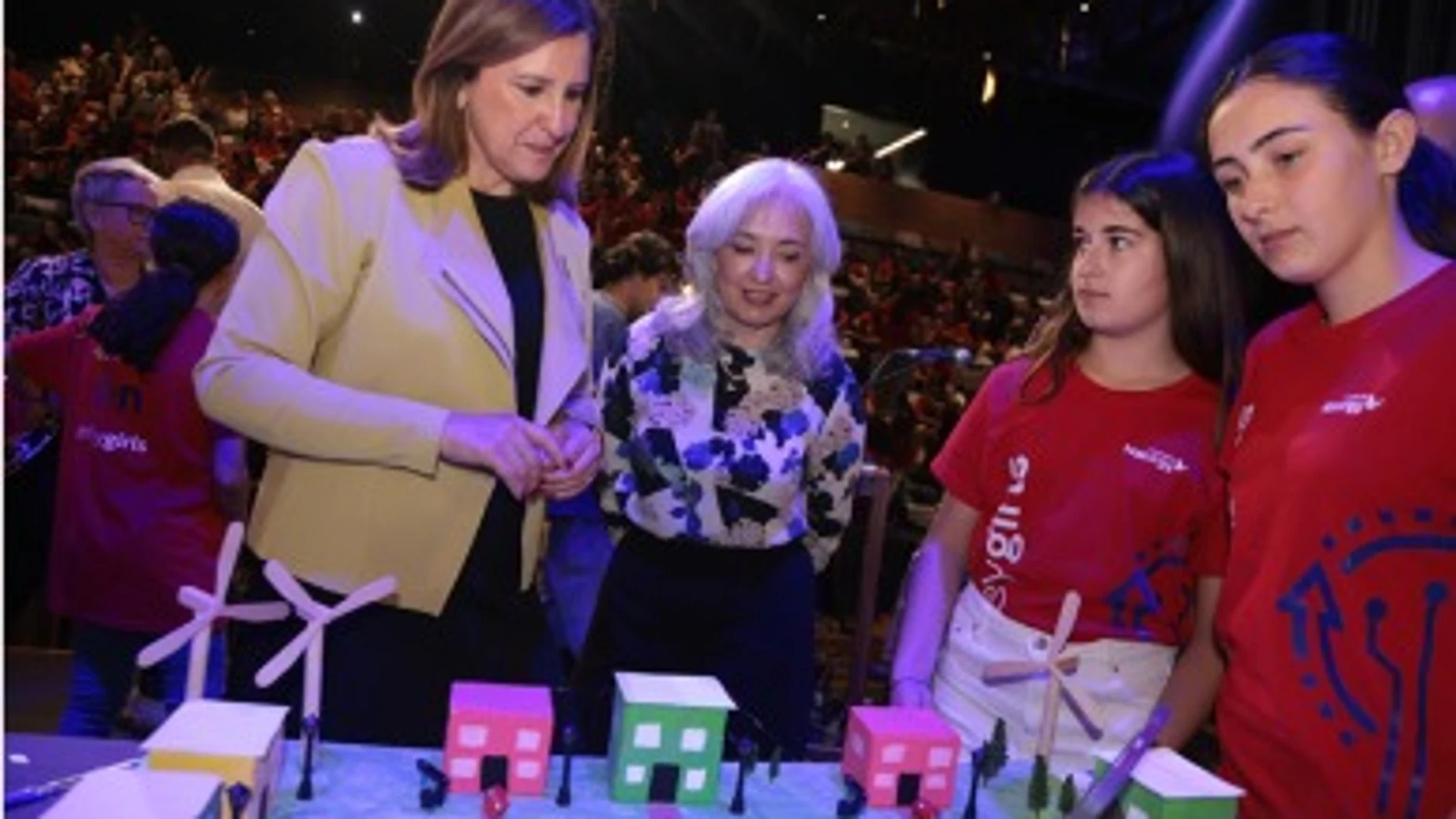
A few days before, also at a meeting held in Valencia, Fundacion Naturgy closed the “Efgy Girls” school year, in which more than 160 girls who have worked on different energy and environmental projects have participated. The closing day included the participation of the mayor of Valencia, María José Catalá, as well as the attendance of other mayors of municipalities in the Valencian Community affected by the DANA of 2024
In this sixth edition, the Efigy Girls program has awarded scholarships to students from 23 educational centers in nine autonomous communities. Notably, this year nine teams have joined from Valencian educational centers affected by DANA. The participants have focused their projects on climate change, renewable energies, efficient water management, air quality, sustainable mobility and the circular economy.
For the director of the Naturgy Foundation, “promoting educational initiatives specifically aimed at girls favors equal opportunities in the energy sector and guarantees universal access to technological education, an essential condition to move towards a fair energy transition.” For her part, the mayor of Valencia, María José Catalá, has highlighted the importance of projects such as the Naturgy Foundation to awaken early vocations in girls and promote female talent.
Both the Efigy Technology Contest and the Efigy Girls project are part of the Efigy Education Program, with which the Naturgy Foundation offers a wide training catalog in the field of climate change and new energy technologies, with more than one million people benefiting since 2018, the program has the recognition and collaboration of leading institutions in the field of education and research.
With these initiatives, the Naturgy Foundation reaffirms its commitment to education, scientific dissemination and the promotion of STEAM vocations. In this way, it contributes to training the new generations who will lead the transition towards a more sustainable energy system.