
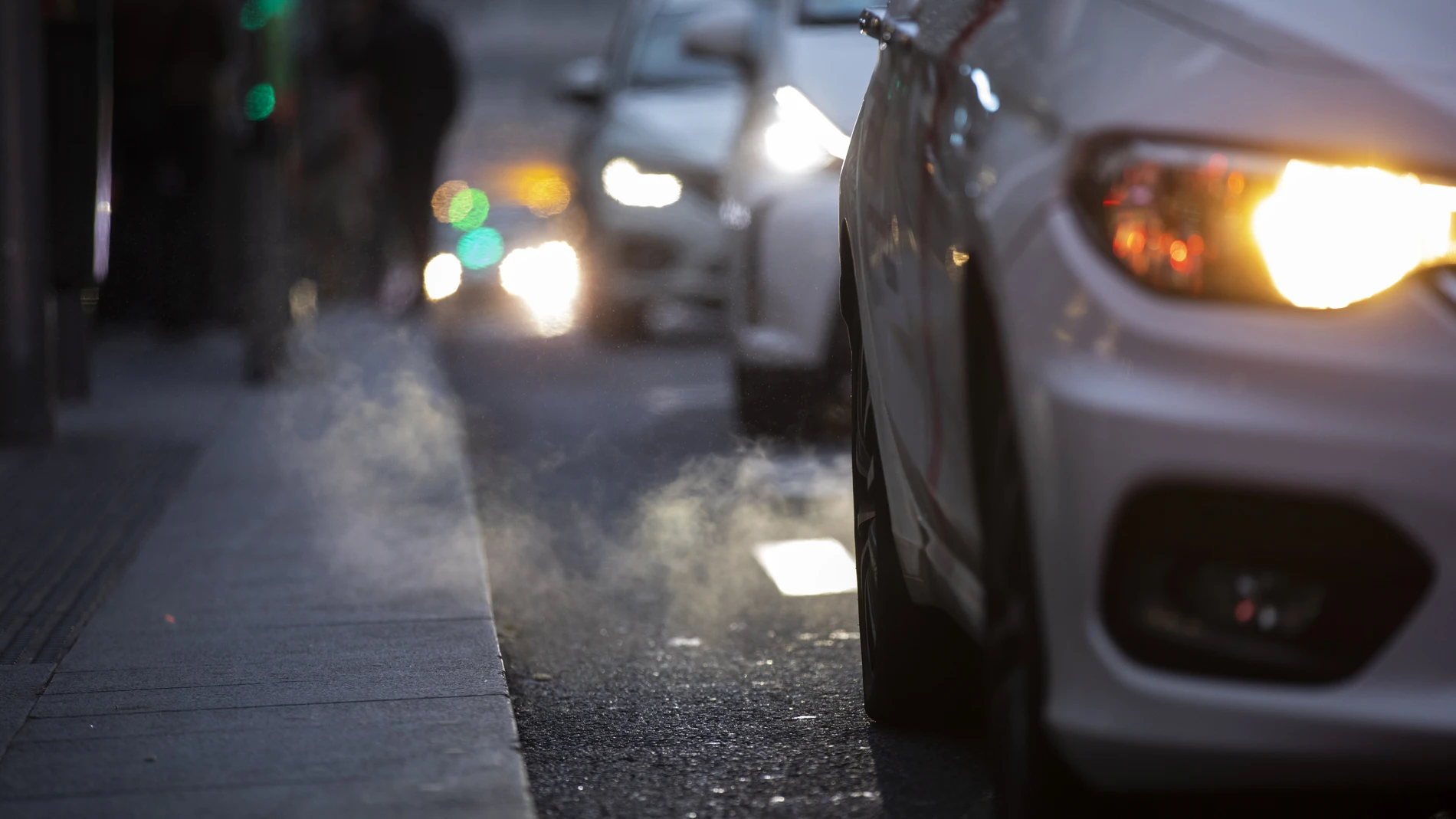
They call them emissions radars and “they use optical spectroscopy technology to measure, in real time, the pollutants emitted by each vehicle while driving. That is, it directly analyzes the plume of gases from the exhaust pipe and calculates its real emissions on the road, not in the laboratory. Unlike other methods, this measurement is individualized and eliminates environmental background noise, allowing precise data to be obtained for each vehicle. The technology is not new: it was validated in the United States in the 90s and today it has international recognition,” says Opus RSE, a company that has several of these devices installed in Spain.
Spain can be considered a pioneer in the installation and testing of these devices, since, among other things, it has prepared regulations that specify the technical requirements and test procedures applicable to these instruments. In February, the Spanish Metrology Center (CEM) published UNE 82509:2026. «Until now, IMREVs (Instruments for Remote Measurement of Vehicle Emissions) had been mentioned in various European directives and regulations as possible tools for evaluating emissions from vehicles in circulation. However, there was no regulatory document that established the technical requirements or testing procedures applicable to this type of instruments,” says the entity. Spain is thus preparing for a possible massive implementation of IMREV in Europe as a consequence, for example, of the new Air Quality Directive, which requests greater efforts from cities to reduce pollutants. «As far as we know, it is believed that these systems will begin to be implemented in Belgium, Holland, Malta, Lithuania or Poland before they do so in Spain, despite the fact that pilot tests have been carried out. The Commission has decided to be more restrictive and adapt to the advice of the World Health Organization. The new directive more than halves the current limit value of PM2.5 by 2030 »comments Cristian Quílez, responsible for Transport and Mobility at the Ecodes Foundation.
The advantages of these radars, they say from OPUS RSE, is that “they measure real emissions and not estimates. Until now, decisions were based on laboratory approval data or vehicle characteristics. But in practice, two identical cars can pollute very differently. This system makes it possible to detect these differences and locate the so-called ‘large emitters’, which opens the door to more precise and effective policies. Its integration is relatively simple. The technology can be incorporated into municipal ordinances to identify vehicles with excessive emissions and apply specific measures to them. Furthermore, it could be reinforced if the thresholds that determine when a vehicle is a ‘large emitter’ were officially defined, whether in the Traffic Law, the Sustainable Mobility Law or the Royal Decree of Low Emission Zones,” they comment. And it is calculated that 1% of the cars on the road are responsible for up to 40% of total emissions.
Replace ZBEs
Will it serve to locate the large emitters and force them to inspect their vehicles? Could it be a formula that replaces Low Emission Zones, which allow or prevent circulation according to the vehicle labeling? This is what is being discussed in Brussels: whether or not to deploy a real emissions monitoring network to identify large emitters. Furthermore, regarding the labels, organizations like Ecodes have been insisting that they be reviewed for some time because “in Spain, what they have done is restrict cars without a label, but they continue to allow the entry of C vehicles, which are vehicles from the late 2000s, that is, they are already more than 16 years old and have considerable emissions. Then there is the zero label, which not only includes 100% electric vehicles, but also incorporates plug-in hybrid vehicles. Maybe in the city these are in electric format, but as soon as they exceed 30 or 40 kilometers per hour the combustion engine starts up,” says the Ecodes technician. «Instead of restricting in a general way, action could be taken only on the vehicles that pollute the most. In fact, different studies suggest that a small part of the vehicle fleet, around 1%, is responsible for a very high proportion of emissions. Identifying them and acting on them would have a direct impact on air quality,” OPUS RSE explains.
Complementary measures
The news of the publication of UNE 82509:2026 coincides in time with the questioning of some ZBEs, such as that of Madrid, currently being discussed in the courts and questioned due to the insufficient economic impact of the measure. Among other things, the Superior Court of Justice of Madrid considers that it disproportionately affects citizens with lower economic capacity, violating the principle of just transition. «What the directive seeks is to reduce the current limit value of PM2.5 and, in parallel, promotes the entire issue of measurement controls. Until now, more than 98% of the Spanish territory meets the current air quality indicators. But few areas of Spanish territory, with the new more restrictive indicators, could be said to have clean air. So, between now and 2030, most cities will have to take measures, especially at the mobility level, to reduce these air pollutants and then, in parallel, they will also have to carry out work regarding the fixed metering controls and the mobile metering controls that they currently have. At Ecodes we consider that ZBEs can be a good formula if they have the appropriate extension and are accompanied by complementary measures such as the electrification of bus fleets, bicycle lanes, pedestrianization, etc”, comments the Ecodes technician.
The truth is that ZBEs are not going through their best moment. The decision taken in France has been more forceful. The National Assembly has approved the repeal of traffic-restricted areas. «Imposing quickly brings problems. We cannot force certain vehicles to cease to exist overnight. In the case of the ZBE, the objective was to restrict general private traffic and increase collective travel, but not to prohibit some cars and not others. The abruptness of the rule has provoked public, political and legal debate. Spain could reduce or redefine the ZBE by reforming the law or regulation, but it cannot avoid European air quality obligations or climate commitments,” Ramón Ledesma, partner of Impulso by Pons and mobility expert, told Europa Press in an interview.
«ZBEs can be useful, but we must ensure that they are not part of an ideological prejudice against private vehicles. Furthermore, its implementation penalizes families who cannot afford a new car, not the one that pollutes the most. And its application makes little sense in small cities, where traffic density and pollution levels are very different. Adding penalties to private traffic could reinforce the worst of the ZBE: it is likely to end up being particularly punitive on low-income families with older vehicles. This would intensify the perception that the policy to combat emissions is socially unfair,” they comment from the Oikos think tank. In 2024, the entity published a report on transportation decarbonization in which it advances some keys on how to reduce emissions in cities. «They propose prioritizing an approach focused on intensive users, establishing realistic and achievable policy objectives, and focus on intermediate but accessible solutions today, such as promoting public transport.
HVO, 92% more expensive
► In Spain, driving a car that runs on HVO is 92% more expensive than driving an electric car, according to a new T&E analysis: «Biofuels are being promoted as an affordable alternative to oil during the energy crisis, but a new study reveals that pure HVO (Hydrogenated Vegetable Oil), the most promoted “direct” substitute for fossil fuels, is, on average in Europe, 79% more expensive than recharging an electric car. In Spain, this figure reaches 92%. Recharging an electric vehicle costs, on average, €5.7 per 100 km traveled in the EU, while pure HVO (hydrotreated vegetable oil) would cost €11 to travel the same distance, according to the analysis.
The NGO calls on EU legislators “to resist pressure to lower car manufacturers’ CO2 targets, counting as zero-emission vehicles that can only use expensive biofuels,” the organization says.