
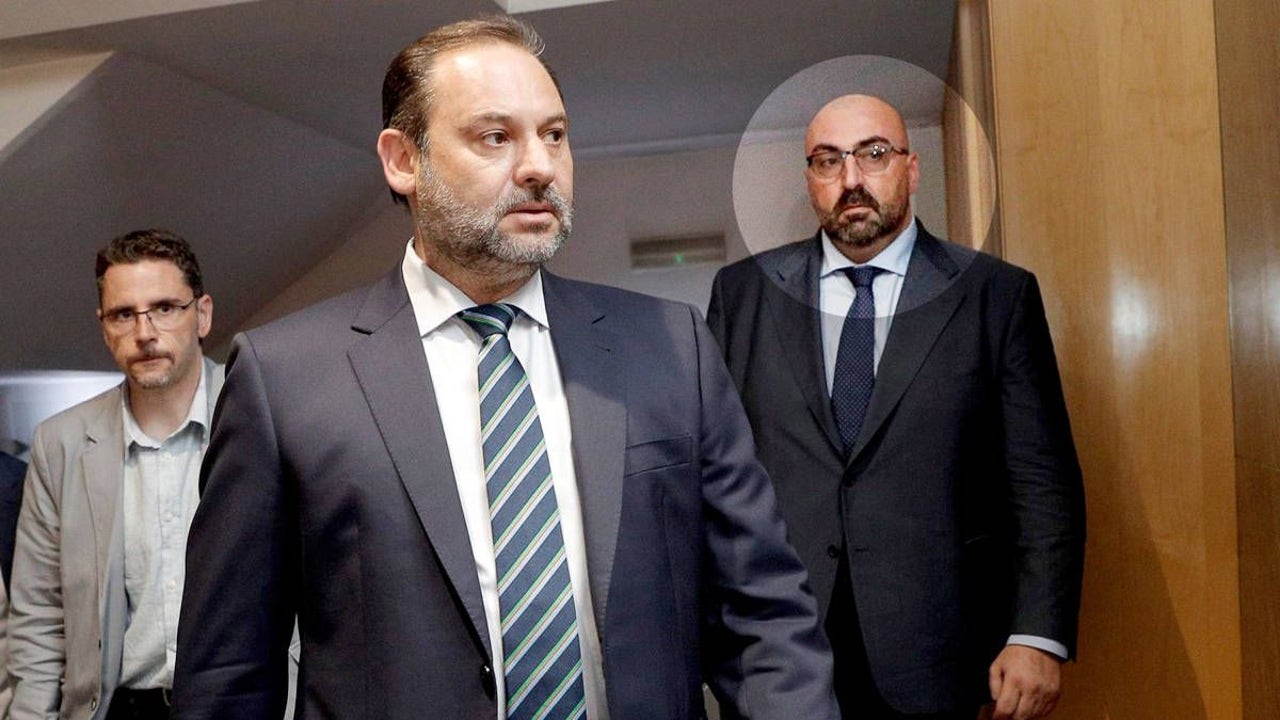
José Luis Ábalos, Koldo García and Víctor de Aldama approach the dock. While waiting for the Supreme Court to set a date to hold the first trial of the macro-case, the three defendants They are already preparing to be judged for a series of actions that they promoted after Ábalos landed in the Ministry of Transportation, with the focus especially on the mask contracts that this department awarded to the company in the plot.
However, in the last few hours it has skyrocketed the concern in those around him of a possible imprisonment even before the hearing takes place. In its indictment, to which LA RAZÓN has had access, the Anti-Corruption Prosecutor’s Office asks the judge to hold the appearance of article 505 of the LECrim (known as “vistilla”) for “the modification of the precautionary measures” agreed for Ábalos and Koldo.
It is worth remembering that Judge Leopoldo Puente agreed for both ban on leaving Spain, passport withdrawal and biweekly appearances; measures that both have scrupulously complied with. In fact, the magistrate – who released Santos Cerdán this Wednesday – has ruled out in recent months toughening these measures despite the fact that popular accusations have requested it. For example, they claimed it after the appearances of both in court last month.
The judge’s warning in October
The Prosecutor’s Office did not support the request and the magistrate rejected it considering that the legal requirements to agree to it were not met (risk of flight, destruction of evidence and repetition of crime). Now, in his order dated October 15, he warned that as the date of the oral trial approached more burdensome precautionary measures could be adopted, as suggested by Anticorruption.
Now, with the indictment already issued and the indictment from the Public Ministry presented, his possible entry into prison seems to be gaining strength. Especially after learning that the Anti-Corruption Prosecutor’s Office requests 24 years in prison for Ábalos and 19 and a half for his former advisor and seven for Aldama for five crimes. Additionally, request fines exceeding 3.7 million euros for the former minister and Koldo for use of privileged information. The Chief Anti-Corruption Prosecutor adds this crime to those currently in force in the case (criminal organization, embezzlement, bribery and influence peddling.
In his writing he details the alleged criminal activity that the three defendants promoted as soon as José Luis Ábalos landed at the Ministry of Transportation. In this regard, he maintains that Koldo began working as his driver but soon becamen his “alter ego” and “the faithful transmitter of his decisions.” In this regard, he maintains that he managed “the illegal sources” of the former minister’s money, “acting de facto as front man of his superior in criminal activities”.
The meetings with the chiefs of staff of Montero and Maroto
The prosecutor details all the facts for which they will be judged in this first oral hearing, which are framed in the pandemic period. The first of those listed lies in the authorization by the Ministry of Transportation of citizens’ safe conduct that Koldo indicated by order of Aldama (mostly Venezuelan people) to facilitate their entry into national territory.
Likewise, it echoes the meetings that Koldo facilitated with members of the Government. On the one hand, Aldama’s appointment with Carlos Moreno, former chief of staff of the Minister of Finance and Public Function, Maria Jesus Montero and, on the other, the one held by people investigated in the fuel plot with Juan Ignacio Díaz Bidart, head of the cabinet of the former Minister of Industry at that time, Reyes Maroto.
However, the bulk of the procedure is limited to the commissions they received for mediating so that the emergency contracts for the supply of medical supplies during the pandemic went to Management Solutions; Aragonese company that introduced Aldama into the administration and that benefited from contracts worth 54 million euros despite having hardly any workers and having presented a business volume in the previous year close to zero euros.
From Jésica to Isaías Taboas: the prosecutor’s witnesses
Furthermore, remember that Aldama paid 10,000 euros per month to Koldo García (who, in turn, would send a portion to his boss) to keep the doors of the Administration open for him. Precisely, the businessman maneuvered to accelerate the rescue of Air Europa in the middle of the pandemic. The letter highlights the role of Ábalos in issuing the press release in which the Government promised to inject liquidity into the firm.
In exchange, he would have enjoyed a holiday home in Marbella in August 2020. The same dynamic was repeated a year later, although this time with a house in La Alcaidesa (Cádiz). The payment for the holiday home would respond to his mediation so that businessmen from the fuel plot could meet with Bidart at the Ministry of Industry. Added to all this are the payments for the house where Jésica Rodríguez (Ábalos’ ex-partner) lived and which was paid for by an Aldama partner and also the “moral pressure” exerted by the former minister so that he could be hired at Ineco and Tragsa, public companies where he was on the payroll despite not coming to work a single day.
Jésica Rodríguez is precisely one of the witnesses whose testimony the Prosecutor’s Office proposes. Almost forty people join it, among whom are Pedro Saura (former Secretary of State for Transport); Isabel Pardo de Vera (charged in the part of the case that is being followed in the National Court), partners of Aldama such as César Moreno or Ignacio Tapia); the businesswoman Carmen Pano (who says he took 90,000 euros to Ferraz); the former chiefs of staff of Maroto and MonteroKoldo’s brother, Ábalos’ former secretary, Ana María Aranda, or the former president of Renfe Isaiah Taboas.