
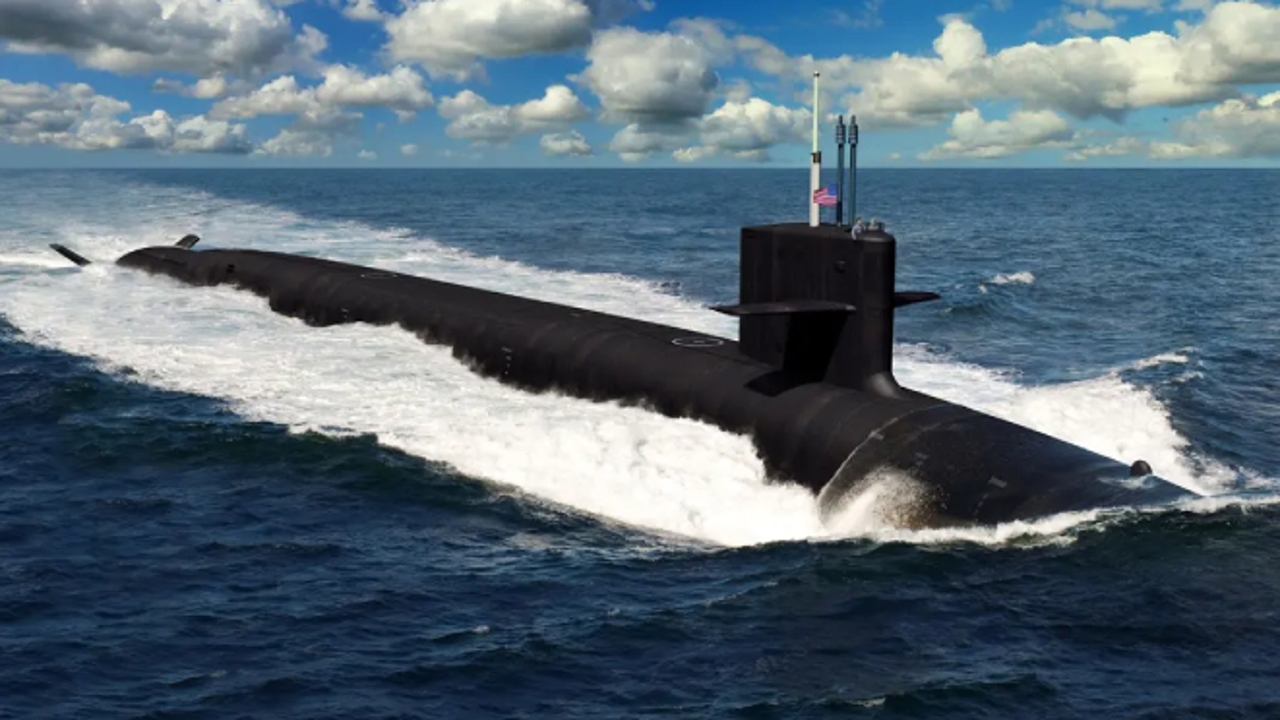
The United States Navy advances in the largest naval program in its recent history, the construction of strategic submarines of the class Columbia. These units, which will replace the veterans Ohiothey will be the largest and most complex ever conceived for the US fleet and the cornerstone of its maritime nuclear deterrent for decades to come.
The Pentagon has awarded a contract for 2,090 million euros ($2.28 billion) General Dynamics Electric Boat to ensure long manufacturing materials and initial work on five new helmets, of the SSBN-828 to the SSBN-832. These add to the District of Columbia (SSBN-826) and to Wisconsin (SSBN-827)already under construction in the shipyards of Groton in Connecticut and at partner facilities in Rhode Island and Virginia. Electric Boat will coordinate the work with the Naval Sea Systems Commandresponsible for strategic submarine programs.
The transition is not minor. The Ohio class, in service since the 1980s, faces the end of its useful life after more than four decades in service. Between 2027 and 2040 they will be retired at a rate of one unit per year. The Columbia class will take over with 12 submarines that will replace the current 14, with the first delivery scheduled for the beginning of the decade 2030.
Each Columbia submarine will move 20,810 tons in immersion and will have a length of about 171 meters. will transport 16 Trident D5 ballistic missiles and will be equipped with an expanded sonar system, inherited from the class Virginiaalong with a pump-jet propulsion systema standard in new generation submarines, and advanced acoustic reduction measures aimed at keep them undetectable for more than 40 years of service.
To achieve this, the pump-jet propulsion system is essential. This replaces the conventional propeller with a rotor and stator housed within a nozzlewhich allows the water to move in a more stable and silent way. This design reduces cavitation and, therefore, the noise generated by the submarine, improves efficiency at the low speeds typical of deterrence patrols and protects the internal components by being encapsulated. For all this, It is the solution of choice in new generation strategic submarines, where not being detected is essential for their survival and deterrence capacity..
In addition to the propulsion system, the Columbia class will debut in US submarines an ‘X’ rudder configurationa design that improves maneuverability and efficiency and contributes to further reduce noise compared to the cross configuration of current models.
The reactor that the Columbia class will use is the S1Ba new generation pressurized water reactor (PWR) designed to operate throughout the life of the submarine without the need for refueling. This will eliminate the long refueling stops required by the Ohio class every two years, which is equivalent to gaining cumulative decades of operational availability in the future fleet.
The Navy estimates that the total acquisition cost now amounts to 109.3 billion euros ($126.4 billion), driven by the complexity of the design and the necessary expansion at the only two US shipyards capable of manufacturing nuclear submarines. The first helmet will cost more than 13.2 billion euros ($15.2 billion), a high figure due to non-recurring engineering and the learning curve associated with a completely new platform. The second is estimated at 8.1 billion euros ($9.3 billion).
Despite cost overruns and a changing budget environment, the strategic priority of the Columbia program has allowed shield it against cuts. The White House has requested additional funds to avoid delays, aware that a delay in the schedule could create a gap in deterrence patrols.
With this latest contract, General Dynamics Electric Boat enters serial production phase of America’s future nuclear backbone. The Navy insists that it is not only a question of replacing the Ohios, but of ensuring that its maritime deterrent capability remains credible in the current international scenario.