
The future of artificial intelligence moves between two great perspectives that today divide public and scientific opinion. From an optimistic look, IA represents an unprecedented opportunity to transform society into multiple levels. Socially, these systems are expected to contribute to a better quality of life thanks to advances in personalized medicine, adaptive education and more accessible services. On the economic level, AI defenders point out their ability to boost productive sectors, generate new industries and promote technological entrepreneurship. Politically, a scenario is projected where governments can make more informed decisions through the use of predictive data and models that allow them to anticipate crisis or design more efficient public policies.
In the workplace, although drastic changes are anticipated, the optimists are confident that new roles and professions will arise that today does not yet exist, accompanied by a process of reconversion and training that would allow a balanced transition. In contrast, the detractors see in the progress of artificial intelligence a latent threat that could deepen the existing inequalities. At a social level, they fear greater dehumanization of links, increased isolation and loss of privacy in an environment dominated by algorithms that record each action. Economically, they warn that the concentration of power in the hands of large technological corporations could unbalance markets, leaving out small actors and reinforcing the gaps between developed and developing countries.
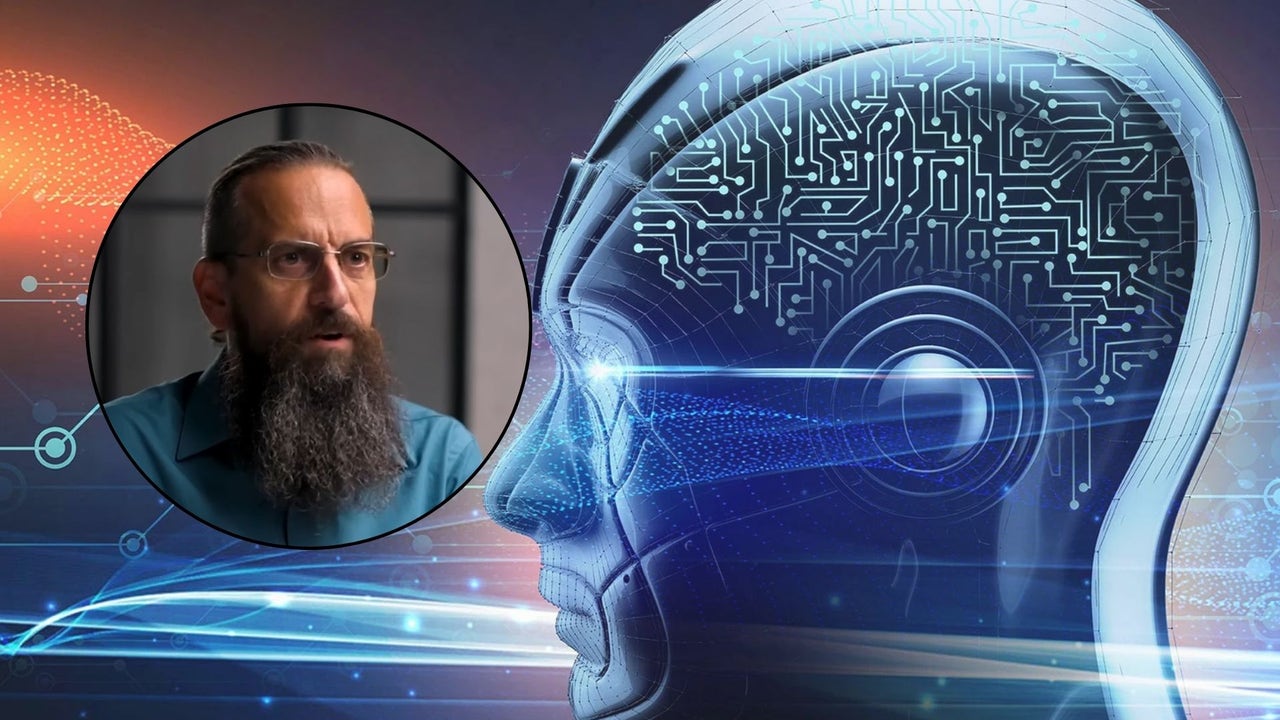
In the political field, the influence of AI is questioned in the manipulation of public opinion and the risk that automated systems are used to reinforce state control and surveillance. In work, the most widespread fear is the massive disappearance of jobs due to automation, with direct consequences on millions of workers who would not have immediate insertion alternatives, which could generate deep social tensions and generalized discontent. In this sense, Dr. Roman Yammpolskiy, an artificial intelligence expert, is located on the most extreme side of the balance and establishes a scenario where technological systems will prevail in the coming years.
The most pessimistic prediction about the future of AI
In his speech in the prestigious English -speaking podcast The Diary of A CEOwhich accumulates more than six million visualizations at this precise moment, the expert builds a mental map with different dates in which the society that holds us for each of them. But without a doubt, the prediction that has caused the most impact was the following: “In five years we will see a world with unemployment levels never seen, I am not talking about 10% but 99%“, establishes in relation to many sectors that will see reduced human intervention in the coming decades. But entering this composition, the interviewer proposes the number of 2027 as a starting point.
“We are probably having access to the AGI (general artificial intelligence) as the prediction markets and the main laboratories estimate,” he says. This advanced system seeks to equate the machines to any intellectual task that a human being can perform. Continuing with the prediction, Yamampolskiy predicts the arrival of humanoid robots from 2030, when he affirms the following: “In five years all physical work can also be automated“, He says. In this way, the professor affects the humanization of the machines again.” They are connected by the AI and are always connected to the network so they are already dominating in many important aspects, “he says.
What will happen in 2045 according to the expert?
To explain this year’s future, Raymond Kurzweil’s uniqueness is based on the uniqueness of the uniqueness of artificial intelligence will become uncontrollable and irreversible for the human hand. “That is the year in which progress becomes so fast that we can no longer follow the rhythm“, sentence. In this sense, the reason that bases this thesis is based on the continuous evolutionary cycle that the AI is suffering, with elements that only professionals understand.” We are all becoming more ignorant, “he says based on the continuous updates and inventions that arise in technology.