
Washington – A recent study of the National Academy of Sciences revealed that many Americans do not accurately identify the personal decisions that contribute the most to climate change.
By asking participants to classify actions such as changing a gasoline car for an electric one, sharing the car or reducing food waste, their evaluations on the real impact on climate change were inaccurate. Climate change is mainly caused by the release of greenhouse gases by burning fuels such as gasoline, oil and coal.
Madalina Vlasceanu, co -author of the Report and Professor of Environmental Social Sciences at Stanford University, said: ‘people overestimate the impact of low impact actions such as recycling, and underestimate the real impact of behaviors much more carbon intensive, such as flying or eating meat.’
The three most effective individual actions to help the weather (avoid flights, not have a dog and use renewable electricity) were the most underestimated. In contrast, lower impact actions (change to efficient appliances, recycle and wear less energy when washing clothes) were the most overestimated.
Vlasceanu explained that marketing focuses more on recycling and low consumption bulbs than on the negative effects of flights or the adoption of dogs, which influences the perception of people. In addition, Jiaying Zhao, professor of psychology and sustainability at British Columbia University, added: ‘You can see the bottle being recycled, it is visible. But carbon emissions are invisible, so we do not associate them with flying ‘.
Zhao also mentioned that it is easier to remember actions that we do frequently: ‘Recycle is almost daily, while flying is less frequent. As a result, we give more psychological weight to recycling ‘. In addition, misinformation also plays an important role. Some companies promote their recycling without mentioning the contamination of their general operations.
Brenda Ekwurzel, a climatic scientist at the Union of worried scientists, said: ‘There has been much deliberate confusion to support obsolete policies.’ For more information, Visit of Concerned Scientists.
Dogs have a great climatic impact because they are great meat consumers, whose production contributes significantly to ** climate change **. Granja animals release methane, a greenhouse gas. Beef is especially harmful due to illegal deforestation to raise cattle. Tree felling, which absorb carbon dioxide, aggravates the problem.
Zhao explained: ‘People do not associate pets with carbon emissions. That link is not clear in their minds. ‘ However, not all pets are the same. Zhao, owner of a dog and three rabbits, commented: ‘I can adopt 100 rabbits that will not approach a dog’s emissions, because my dog is carnivorous.’
To reduce the impact of a carnivorous pet, you can opt for foods that do not contain beef. Zhao minimizes your dog’s carbon footprint feeding it with less carbon protein sources, such as seafood and turkey.
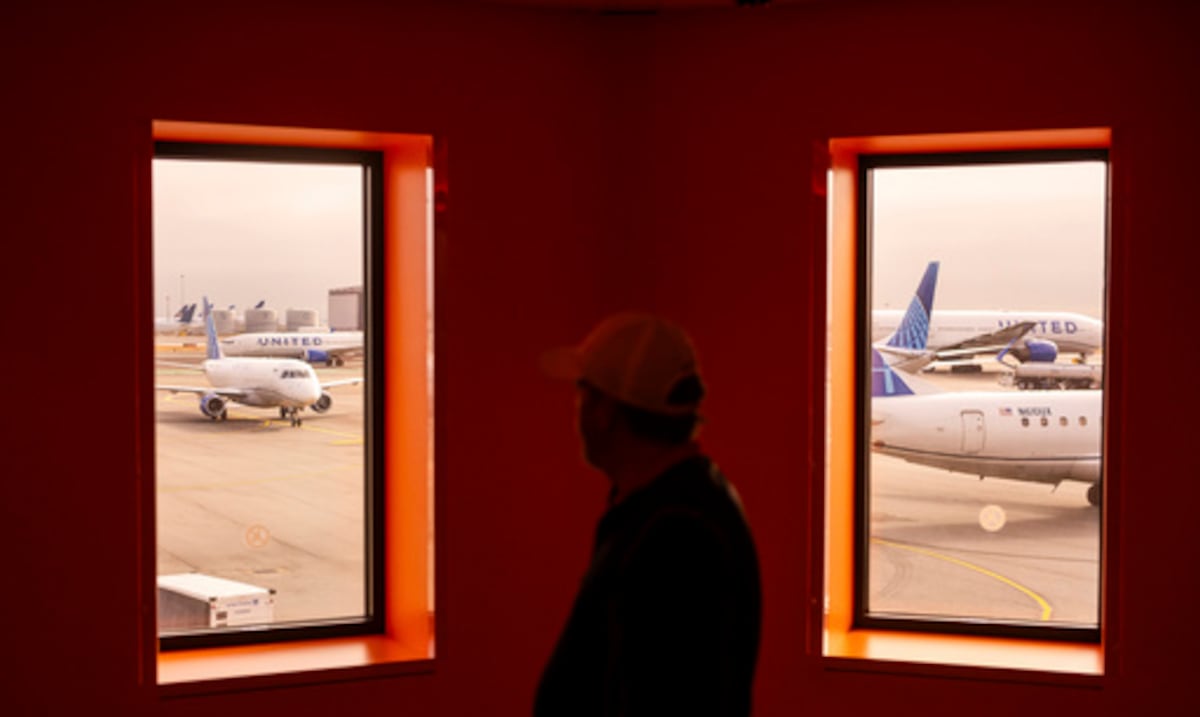
Airplanes emit carbon dioxide and nitrogen oxides, both greenhouse gases. In addition, they produce steam steles that prevent gases that heat the planet escape to space. A round trip flight in a 737 New York to Los Angeles produces more than 589.67 kg of passenger emissions, according to the International Civil Aviation Organization.
Avoiding that flight is equivalent to not eating meat for a year or living without a car for more than three months, according to UN estimates. For more details, consultation (International Civil Aviation Organization) (https://www.icao.int/).
Other important decisions include changing renewable energy sources such as solar and wind, which do not emit greenhouse gases. Decisions on heating, cooling and transport are also crucial. Recycling reduces waste, but its climate impact is relatively small due to the use of fossil fuels in transport and processing. In addition, less than 10% of plastics are recycled, according to the Environmental Protection Agency.
Other decisions with overestimated impact, such as washing clothes with cold water and changing to efficient bulbs, are less important because they have a lower impact compared to flights and dogs.
Experts suggest that the best way to combat the human tendency to miscalculate climate -related decisions is to provide more information. Zhao said the estimates are more precise now than 10 or 20 years ago due to the greater availability of information.
The study supports this hypothesis. After the participants classified the actions, the researchers corrected their mistakes, which changed the actions they said they would take to help the planet. Vlasceanu concluded: ‘People learn from these interventions and are more willing to commit to more shocking actions.’