
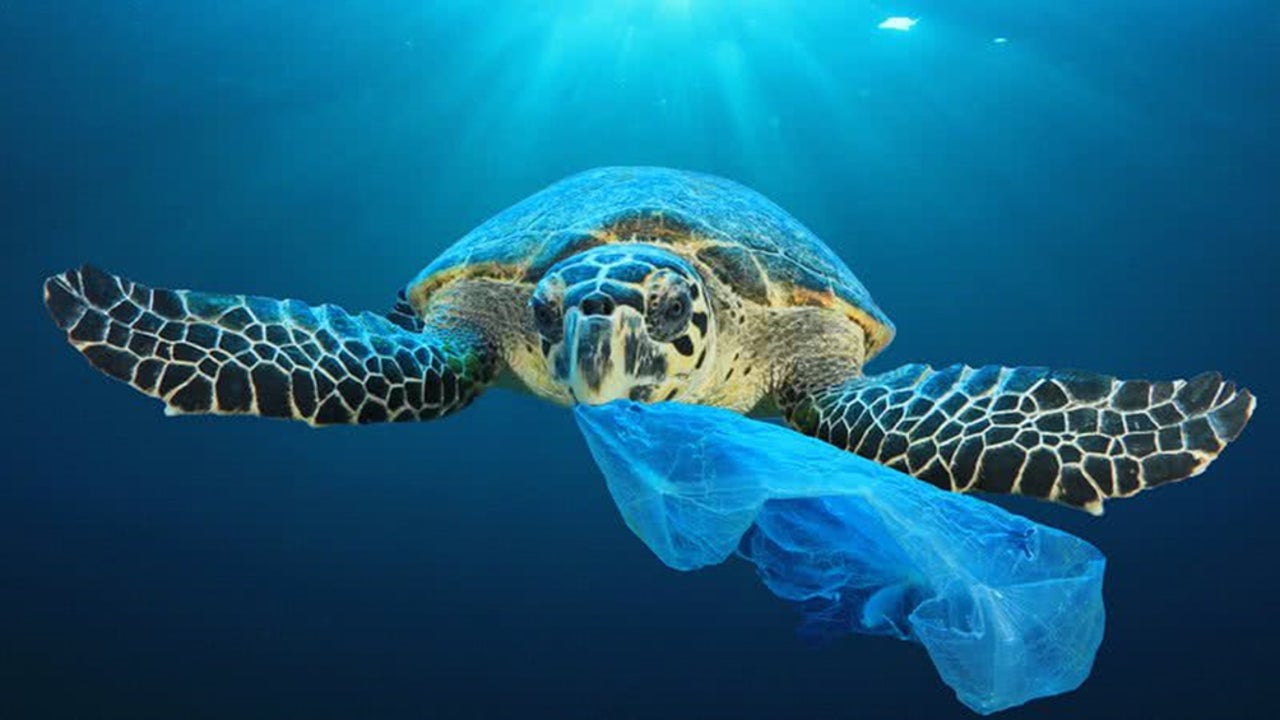
Plastic is a cheap and resistant material and its use has been increasingly frequent since the seventies until the first decade of the 21st century.However, its great negative impact on nature and human health forces to rethink its use and management of its waste.
With the aim of drastically stopping its use, the European Union has been marked as a objective that All plastics are recyclables before 2030 and has developed an action strategy to achieve it.
The strategy seems that, although slowly and in a very unequal way, it begins to bear fruit. From 2018 until today, in the European Union, the consumption of light plastic bags (LPCB of between 15 and less than 50 microns of thickness) has constantly decreased. At present, all EU countries have consumption reduction measures required by the directive on plastic bags, whose objective is to reduce the consumption of LPCB so that it does not exceed 40 bags per person and year.
Although by countries the figures are very different, the union is still far from reaching the proposed goal. According to the latest data published by Eurostat, each EU citizen consumed in 2022 an average of 66.6 light plastic bags, which represents a decrease of 10.8 bags (-14 %) per person compared to 2021. In total, throughout the year they were consumed in the EU 29.8 billion light plastic bags which is a decrease of 4.7 billion bags with respect to 2021.
Among the EU countries with available data, the countries that reported lower consumption were Belgium (4 bags per person), Poland (7) and Portugal (13). On the other side of the list were Lithuania (249 bags), Latvia (193) and Czechy (185), and most of the consumption was related to very light plastic bags (VLPCB),
For its part, Spain reported an annual consumption of 95 bags per person, although more than the data itself, the important thing is the trend that in recent years shows a constant reduction in its consumption, which in 2018 was 186 per person, that is, its consumption has decreased practically to half.
In this variation in per capita consumption in different EU countries, different factors influence All the countries of the Union, passing because some countries applied reduction measures in brief periods of time, while others did so for a longer period, to economic, social and political circumstances.
Despite all efforts, single -use plastics, such as bags, suppose a third of plastic waste consumed in the world. Most of these bags are not reused or recycled, but are discarded immediately ending in the garbage dumps or in the sea.
The situation in the world
If at European level the figures are worrisome, worldwide are alarming. Approximately 5 billion plastic bags per year are consumed, which is equivalent to almost 10 million per minute, according to data from the United Nations Environment Program (UNEP) and, according to Greenpeace, only 7 percent is recycled.
To these 10 million bags per minute, it must be added that the average time of use of each of them is 15 minutes and most (8,000 million) are not reused or recycled, but end up in the garbage dumps or in the sea.
If this equation is added to the fact that the platform waste takes between 50 and more than a hundred years to disappear, it is not far unlawful to think, as stated by the United Nations estimates, which, if the current trend continues, the oceans will contain more plastics than fish in just 25 years.
In the opinion of Minna EPPS, Director of the World Marine and Polar Program of the International Union of Nature Conservation, (IUCN) “plastic pollution can cause long -term damage to terrestrial and marine ecosystems and biodiversity.
In addition, EPPS continues, plastic waste releases chemical substances such as softeners or ‘retarders’ of fire, which can be harmful to both ecosystems and human health. The current and planned measures are not enough to reduce plastic spills and avoid these impacts, “
Sustainable alternatives
Antonio Troya, director of the UICN Mediterranean Cooperation Center puts the emphasis on “governments, private sector, research institutions, and other industries and consumers must work in collaboration to redesign supply processes and chains, invest in innovation and adopt sustainable consumption patterns and best waste management practices to close the ‘plastic tap’”.
The prevention, reduction and management of waste is a pending subject that is a matter of many. Changes in commercial and consumer practices must be supported and, in some cases, promoted by public policies that foster sustainable production and consumption.
On the other hand, consumers must exert their influence rejecting plastic materials in single -use containers and bags and manufacturers must take responsibility when preparing and packing their consumption products.
Committed companies
Companies can also carry out awareness and dissemination work, undertaking different initiatives. This is the case of Naturgy that offers initiatives and services that seek to connect companies with entrepreneurs who develop sustainable products.
Naturgy also participates in awareness campaigns facilitating tips to reduce plastic consumption, opting for reusable alternatives such as fabric bags or the use of reusable containers to transport or store food; Looking for products with less plastic wrapping or choosing bulk options. As well as, properly recycle and consume in a responsible manner.
In addition, Naturgy offers services such as Servielectric Xpress, which includes repairs of appliances and equipment that can help reduce energy consumption and, therefore, the carbon footprint. It also provides household maintenance services that can help prevent water and gas leaks, contributing to energy efficiency and waste reduction.