
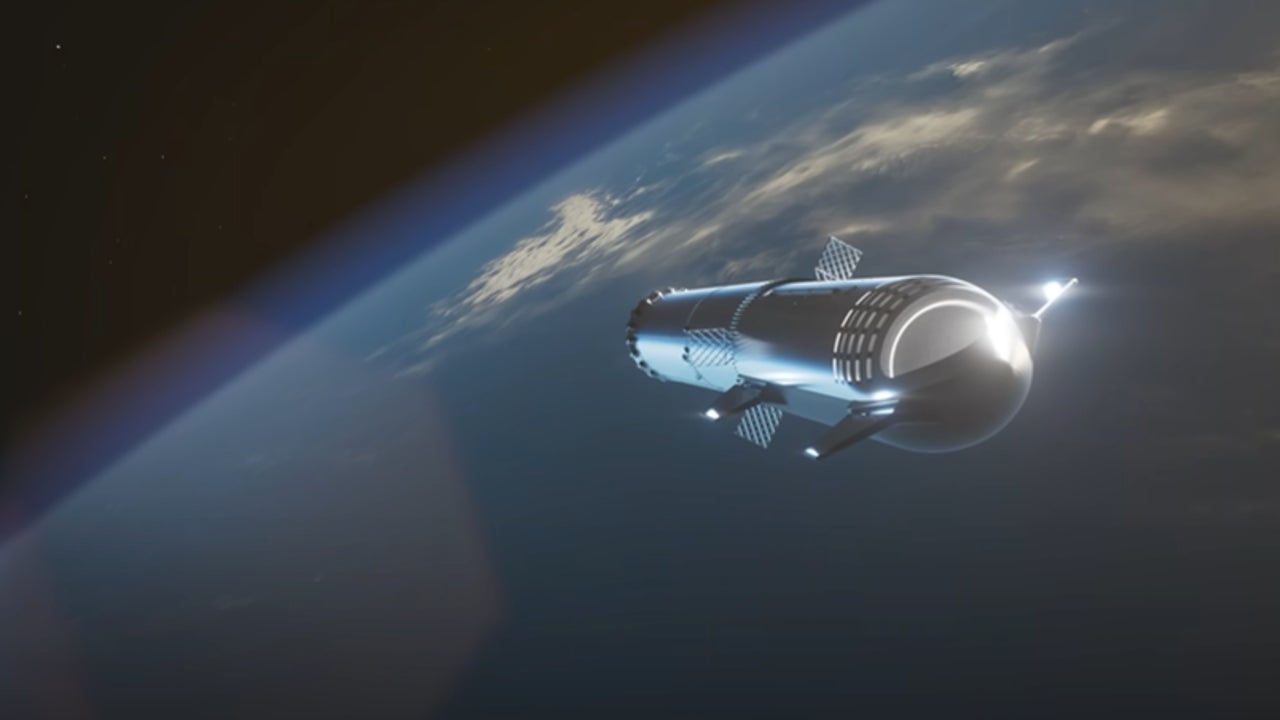
NASA and SpaceX have been working together for years to set foot on the Moon again and the closest project is the Starship spacecraft. It is not surprising, therefore, that SpaceX is doing everything possible to prepare for upcoming test launches next year. And one of these preparations includes the ability to solve problems in space.
Now, images shared by NASASpaceflight show a large robotic arm that appears to weld one of the ship’s frontal cones inside its Starfactory, a massive facility at the company’s launch complex in South Texas.
According to documents obtained by The Launch Pad Network last month, SpaceX does not plan to conduct its seventh Starship test before January 11. It is expected that The launch involves a new generation of Starship prototypes called “Block 2“, the first of which will be “Ship 33”. What is not clear is whether the frontal cone in the latest images belongs to this prototype or a different Starship Block 2.
The prototype will have a new front spoiler design, a new heat shield design, increased propulsion capacity and possibly even more oomph than its predecessors, among other changes.
Looking forward to Starship Flight 7? Well, Starbase is already working on vehicles for multiple flights until 2025. Oh, and using robots, of course.
Full video in response. pic.twitter.com/x3NknOVxSY
— NSF – NASASpaceflight.com (@NASASpaceflight) December 8, 2024
In other words, SpaceX is making some considerable changes to the design of its Moonbound rocketwhich could raise expectations for the upcoming test launch next month.
According to NASASpaceflight, Ship 33 completed the first cryogenic tests in late October. But it is not yet clear whether it will survive its next test flight unscathed. During the previous two launches, SpaceX’s Starship spacecraft sank into the ocean after experiencing scorching temperatures and melting metals during re-entry.
For SpaceX CEO Elon Musk, getting to the point of being able to launch again soon after landing will be the real litmus test for a heavy lift launch platform extremely ambitious that NASA still hopes to use for its first human landing on the Moon.
“The biggest technological challenge ahead for Starship is a fully reusable heat shield immediately,” Musk himself tweeted. Being able to land the ship, refuel and launch immediately without the need for reconditioning nor laborious inspection. “That’s the litmus test.”