
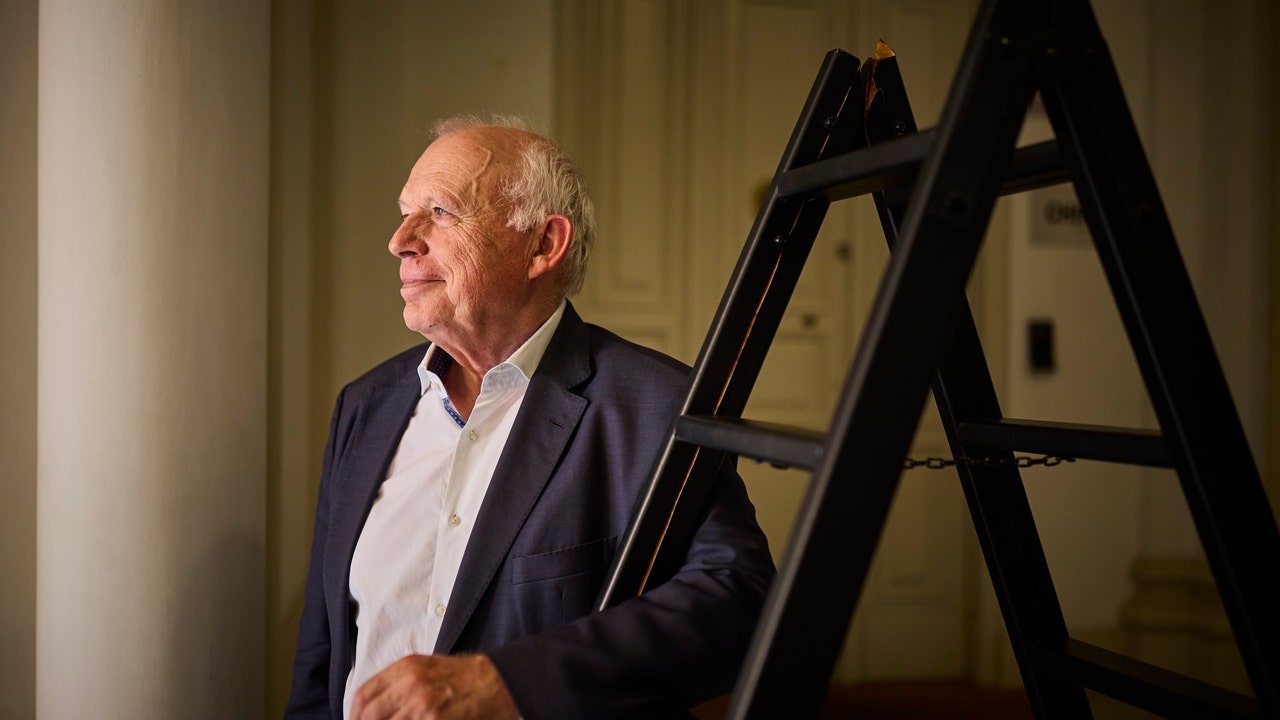
Dominique Roques (Paris, 1953) has been traveling through the world’s forests for 30 years. He used to be a lumberjack, but for decades he has been working searching for essences to make perfumes. The extracts it supplies to companies originate from more than one hundred and fifty raw materials from fifty countries. He already talked about his work and experience in his first book “The Essence Searcher”. Now in “The aroma of the forests”, he explores the link that exists between humans and trees.
In perfumery, are essences of natural origin valued?
In most perfumes the composition is 80% synthetic molecules and 20% natural. The industry always wants novelty, but natural products are sometimes expensive and have harvesting difficulties, due to the issue of climate change, or come from countries in very fragile situations, as is the case with vetiver from Haiti or vanilla from Madagascar. It is true that young people increasingly ask for certificates that there are natural products in the perfumes they buy and they no longer accept that a brand tells them that this perfume is fantastic, like a garden of jasmine in the morning and that it is actually synthetic . In addition, high-quality companies and products are appearing with a serious content of natural products and that explain the origin of the ingredients.
Scientists say the forest is becoming silent. Do their odors also disappear?
The smell of a forest is different in summer, autumn or spring, there is variety in that, but it is true that there are fewer birds, insects, less of everything.
What do you think about reforestation? And on the other hand, does an old forest smell the same as a new one?
Reforestation? Yes, yes, and a thousand times yes. But there are many forms of reforestation, one is industrial with pine, eucalyptus, but there are more. There is an awareness that something must be done for the forests and reforest by mixing species. I am very much in favor of it. As for the other part of the question, the truth is no. A young forest does not smell like an old one. What you smell in a mature tropical forest is incredible, because it is a mixture of leaves, fruits, things that decompose… If you start planting fir and beech trees, you will have to wait 20 years for everything that is going to be really reconstituted. produce odor. But, the truth is that most of the new forests in the world are industrial plantations, because they grow quickly and are ideal for producing wood. These plantations, which some call tree agriculture, don’t smell much. It is true that eucalyptus has a strong smell, but underneath it does not have all the life of the natural forest.
Is people’s relationship with forests changing?
It is important to distinguish the north, where the situation is more or less good, meaning that for 20-30 years efforts have been made to use forests in a more sustainable way. It’s not perfect, but there are reasons to be optimistic. However, in the tropics, primary forest continues to be removed to plant soybeans, palm trees, or livestock. With our conscience as inhabitants of the North we think that this must be stopped, but the people who live in those areas do not have our opinion. They want wealth. As I say in my books in Borneo, I get sick seeing what has been produced and my driver thinks it is magnificent to see all those oil palms that provide work and wealth. However, everywhere there are people who are fighting against deforestation. People have begun to understand that the tree is not just something that needs to be cut down, it is very useful, perhaps vital for our future, because the first thing a tree provides is shade and in cities around the world they are going to need more. We have to find a balance between living trees and those we have to cut down. I have always thought that cutting down a tree is not criminal if it is to give space, light and land to young people. What is criminal is removing entire forests. That has no justification.
What smell do we need to preserve in the 21st century?
We must never miss the incense. It is our history of humanity. It was already used 5,000 years ago as Lebanon cedar wood. For me it is the birth of modern perfume. And I add the rose, because it was the first flower whose scent man has managed to capture. That was in Persia. I can’t imagine us losing its smell and the perfume and oil of the rose. In a rose essence there is a mixture of 250 molecules. If you want to make a synthetic essence, the most the model will allow you to do is mix 10. It is impossible to have the complexity and richness of the pure product.
The lumberjack who stopped cutting
Dominique Roques has always lived near trees; First he was a woodcutter. His first contact with perfume was here in Spain, seeing the work of the Huelva rockrose. «Although it is not a lumberjack job, it is very close. I discovered the dedication of the gypsies who picked rockrose and the women who cooked it. You also see that physical work in Egypt or India. And in some ways it is much richer to get things from a tree without cutting it down. The resins, the balms, for me represent an incredible gift that the trees give us. “It’s like giving us their blood.”