

The Overmobile company, whose products you can find on multiple platforms, became known for web titles such as’Pocket Tower‘, the RPG’Magic world‘ either ‘Destroyers‘, which have caught the attention of millions of players. Its director of business development, Yan Yankeloits, shares a coffee with reason while telling us about its beginnings in the development of video games, The technological transition from Flash to HTML5the current perception of the navigator games, the current monetization formulas and the future perspectives of the HTML5 beyond the browser.
Beginnings in development
Yankeloits recounts that the beginnings of Overmobile They were linked to a mobile social network called Glammylaunched in 2007. Although the project worked, its operator did not share benefits, so in 2008 they opted for a micropagogue model developing ‘Varvarara‘, its first browser game and a MMORPG with open economy.
This experience marked the course of the company and in its own words, with ‘Pocket Tower‘(2015) made “the jump to the iOS/Android market”, a title that still accumulates millions of downloads. The house grew in the following years creating durable strategy and role games. ‘Pocket Tower’ became In a “historical project“For the firm and showed that” to succeed it is vital to create something you like “rather than further fashion.
From Flash to HTML5: Technological evolution
Web technology has lived a drastic evolution. Overmobile knew the Flash era, which dominated browsers until Apple announced in 2010 that it did not admit it on iPhone, accelerating its decline. Since then, open standards have gained ground. The Canvas element allows 2D graphics to be drawn with JavaScript and work with audio/video directly without additional plug-ins, while the webgl API enables advanced 3D content in the browser. In the words of Yankeloits, these tools cover many of the flash deficiencies and avoid taking steps back in the user experience.
Renacer of the games in browser
For Yankeloits, HTML5 games They enjoy renewed interest. The market, saturated in traditional formats, looks for new growth points and sees an expansion route in browser. “The games in browser, thanks to modern technologies (especially the new version of Unity), could experience another rebirth,” he explains. In addition, the influence of emerging platforms: Telegram, for example, is emerging as “a new ocean of opportunities and users” for web games. This combination of improved technologies and social channels makes the perception of HTML5 Change the initial skepticism to a stage of renewed interest.
Monetization and emerging platforms
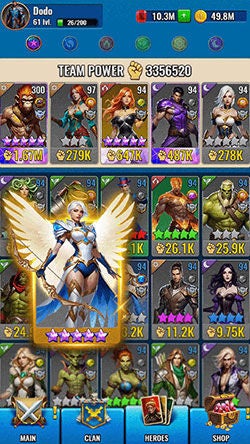
Monetization has been a central challenge during his career. After a failed initial experience, the company quickly turned to the free-to-play model with integrated purchases. Summarizes it: “In long -lasting games, internal purchases fit perfectly: we offer the player exactly what he needs and so he would pay a reasonable amount.” Thus, ‘Varvara’ was born with his own micropago economy. Today web platforms dedicated to HTML5 games proliferate micropagos. Sites such as Playhop seek to add Mid-Core titles with Freemium model. According to Yankeloits, on these “there are always audience” platforms for games with in -app purchases. Although hyper-male games attract more visiting traffic, Overmobile observes that the deepest games They keep faithful audience and pay for contentwhich validates its commitment to this form of monetization.
Tips for new developers
At the end of the talk, Yankeloits offers us a series of Practical recommendations for those who enter web development: First, he insists on the importance of playing intensely to the game itself, in addition to trying the competition titles. So It is possible to understand exactly the experience that the end user receives and improvable aspects are identified in design or playability.
Secondly, he advises to perform real tests of integrated purchases. “It is essential to pay in your own game before launching it,” he explains. In this way, possible problems in payment or navigation processes are detected, avoiding future difficulties for players.
Finally, Yankeloits highlights the need to check the functioning of the game on all possible platforms. “If you have an iPhone, you also get an Android,” he recommends, stressing that most users will possibly play from devices with different systems to yours. Ensuring that the game is executed correctly in any environment is essential to reach the widest possible public.
HTML5 and the browser
The HTML5 already advances beyond the PC or mobile screen. The multiplatform compatibility of this technology allows the same game It runs even on smart televisions. In a modern Smart TV, for example, developers can take advantage of voice control, movement detection or large screens – together with Webgl – to create new experiences. In addition, messaging applications (Telegram, Kik, Messenger) integrate HTML5 Games on their platform, reaching mass audiences. Yankeloits remembers that these ‘overrapps’ are in essence social networks that use games to loyalty usersallowing to share achievements and challenge friends. Together, these trends make “the web become the next game platform”, opening a new land to explore.
Total renewal
With his career in Overmobile, Yankeloits maintains confidence in HTML5 and encourages other creators to continue innovating. Your message is optimistic and with current tools, in addition to new distribution channels, web games They seem aimed at a rebirth already conquer environments beyond the traditional browser.