
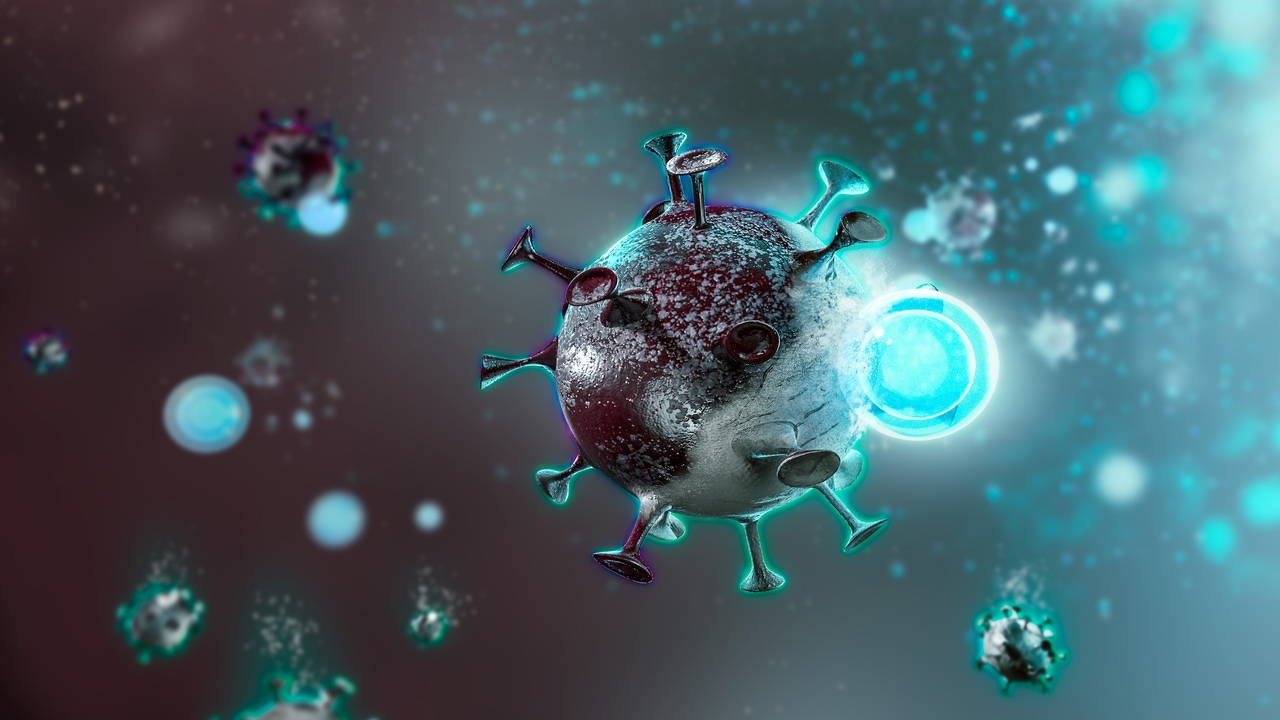
All experts agree: there will be a next pandemic and understanding viruses is the key to facing it. In this panorama, the evolution of viruses is decisive, since it will affect their contagion capacity and their effects on human health. But It is almost impossible to know how a virus will evolve just by looking at its genetic sequence…unless we have artificial intelligence that does it for us.
Viruses, in particular RNA viruses like SARS-CoV-2 constantly evolve by accumulating new mutations. Some of these changes are advantageous for the virus, as they allow it to bypass the host’s immune system and perform its “vital function”: spread rapidly.
Until now, the most advanced AIs can predict which individual mutations in a virus will be most successful, but this is just a first step. We are still a long way from being able to predict combinations of mutations or variants that will occur in the future.
To achieve this, AI models require large amounts of data. In this sense, the sequencing of the SARS-CoV-2 virus, responsible for COVID-19, has allowed scientists They have about 17 million sequences that they can use to train their models.
To this we must add the development of AI-based protein structure prediction tools, such as AlphaFold by DeepMind and ESMFold by Meta. Or the latest of them, EVEscape created by Harvard Medical School and the University of Oxford, a program capable of predicting how viruses could mutate to evade the immune system.
To do this, it combines evolutionary sequences, which show how similar viruses evolved in the past, with biological and structural information about the current virus. The tool has already proven effective in predicting significant mutations during the COVID-19 pandemic and is now being used to predict future variants of SARS-CoV-2 and other viruses.
These AI models analyze large amounts of data to predict how proteins will fold and interact, helping scientists forecast potential mutations and their impacts. Yes ok They are not yet perfect, these tools are a significant advance in our fight against the evolution of viruses.
But the AI models used to predict viral evolution have some important limitations. The first of them is that, although they can predict the effects of small changes in the genome of a virus, it is difficult for them to anticipate sudden and important evolutionary leaps, such as the omicron variant of SARS-CoV-2, which had more than 50 mutations.
Another problem is that they can only anticipate the evolution of viruses that have been previously analyzed and there are hundreds, if not thousands of viruses still unknown for which it is impossible to create a reliable prediction: an AI can use virus models from the same family, but it will not be the same
Right now, scientists are focusing on developing AI models to understand the evolutionary leaps of viruses and using this knowledge to develop targeted vaccines. What is clear is that the more information these models have, the better they will be able to make their prediction. The problem is finding the balance between getting as much information as possible and letting the virus become a pandemic before acting.