
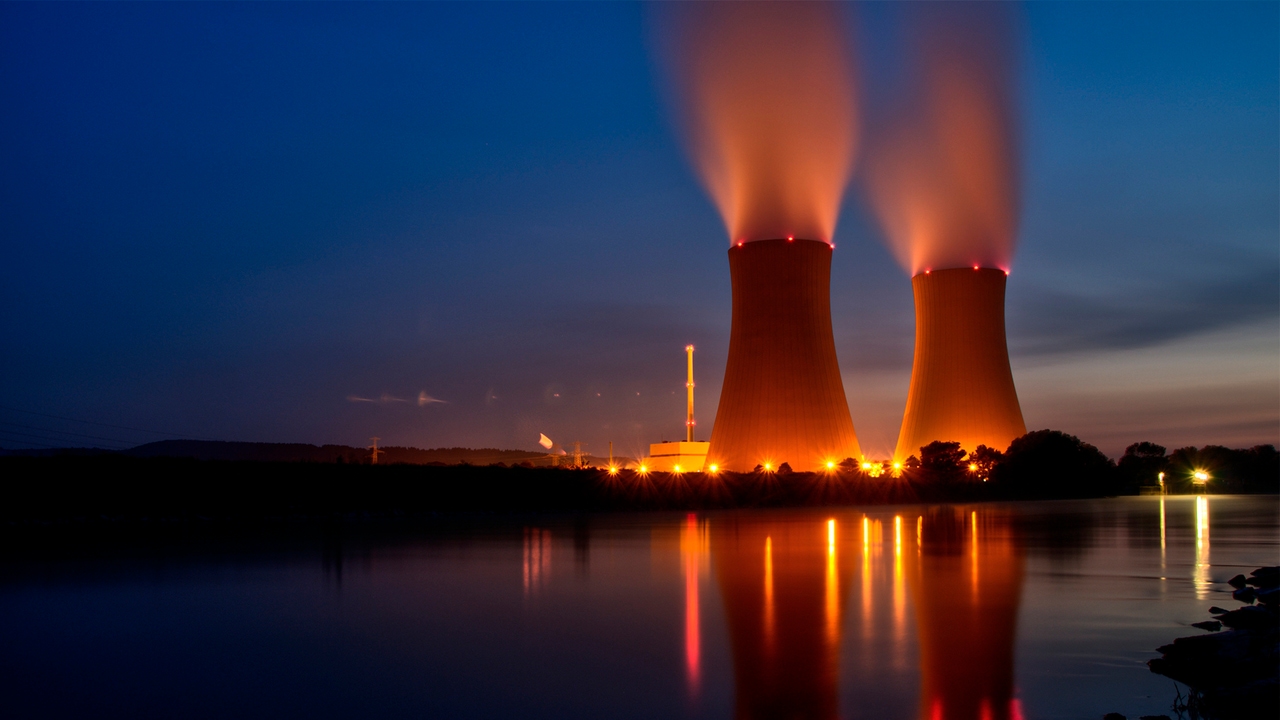
Recent bombings to Iran’s nuclear power plants by Israel have caused many questions. The main one is what consequences it will have in the future. The responses of the competent authorities, such as the International Atomic Energy Agency (OIEA) or the ICAN (International Campaign for the Abolition of Nuclear Weapons), coincide in several aspects.
The first thing to know is that Highly enriched uranium is approximately three times more radioactive That uranium not enriched. But, in fact, on a real scale, none of them is particularly radioactive, so it would not cause a serious problem of environmental pollution.
In this way, shoot a missile against enriched uranium reserves duly stored would not be a “nuclear incident” of the same magnitude that the disasters occurred in the nuclear power plants of Fukushima or Chernobil.
What worries the most OIEA experts They are the so -called fission products, The compounds in which uranium is broken down when it is in a reactor or in a pumpsuch as radioactive cesium, radioactive strontium and radioactive iodine. These represent a problem of environmental pollution.
But since no nuclear reaction occurs in enrichment plants, and The explosion of a bomb would not trigger itthese dangerous radioactive fission products could not be generated.
What can happen is that uranium disperse locally by an explosion and Those who live nearby, about 50 km around, can see their affected health. Uranium particles could stay in cells, both in the lungs and in the stomach, and slowly disintegrate radioactively, which would cause damage.
It should also be considered that most nuclear reactors are not designed for extreme events, such as aerial bombardments, missile attacks or airplanes. These activities They could break the containment building and destroy the reactor, causing the fusion of its nucleus. However, most reactors are protected by thick concrete and steel containment structures, but the necessary surrounding areas, which may include spent fuel swimming pools, cooling equipment, fire extinguishing equipment, etc., may not be.
Some scientists suggest that The release of CESIO-137 by fires in spent fuel swimming pools could be much greater than that caused by reactor accidents, such as those that occurred during Chernobil and Fukushima accidents.
Said accidents forced The evacuation of more than 100,000 people in Ukraine and 160,000 in Japan. Exposure to CESIO-137 can cause burns, acute radiation disease and death.
The nuclear centrals under construction have been attacked numerous throughout history. For example, the nuclear centrals under construction in Iran were repeatedly bombarded from the air by Iraq between 1984 and 1987. Yugoslava Air Force Combat Airplanes Slonia the Krsko nuclear power plant in Slovenia, which was in operation at that time, a few days after Slovenia declared its independence in 1991. The so -called Research Reserting Reserts in Iraq were destroyed by bombing. from Israel in 1981 and the United States in 1991.
In accordance with the additional protocols I and II of the 1949 Geneva agreements, in its article 56, Specifically prohibits attacks against nuclear centrals. However, this prohibition is limitedsince if it is known that the installation also supplies electricity for military operations and if attacking it is the only way to cut the electricity supply, it can be attacked, although the requirement to protect the civilian population is maintained. This prohibition is reiterated, without reservations, in article 15 of the additional protocol II, applicable in non -international armed conflicts, which establishes:
The works or facilities containing dangerous forces, namely dams, dikes and nuclear centrals, They will not be attached, Not even when they are military objectives, if said attack can cause the release of dangerous forces and the consequent serious losses among the civilian population.
The reality is that, not knowing exactly how enriched the uranium was in the reactors of Iran, It is very difficult to know the consequences you will have in the short and long term.