
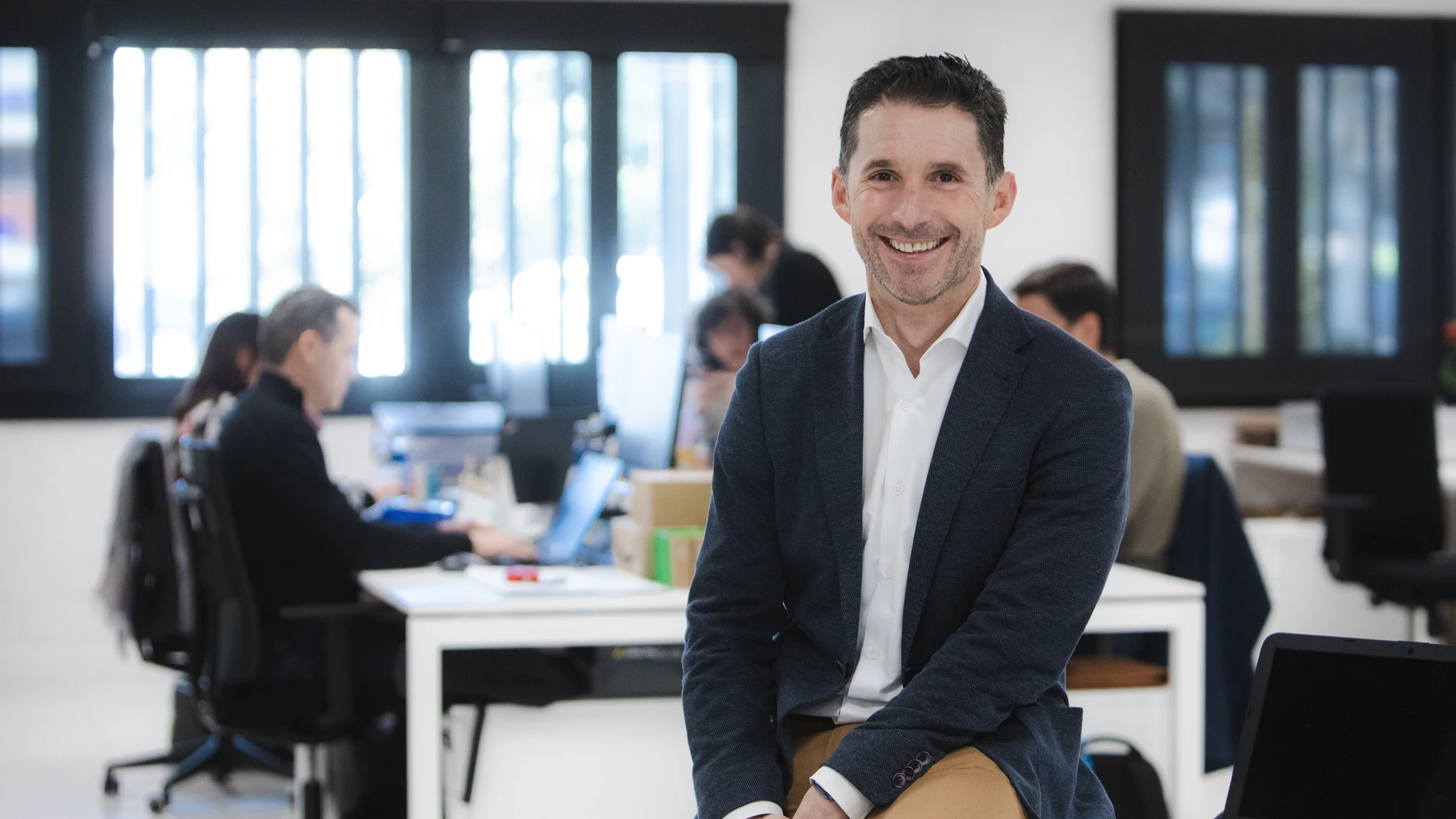
In a context marked by the accelerated expansion of artificial intelligence (AI) and the growing global concern for digital security, the Spanish company Veridas has established itself as one of the European leaders in identity and document validation technologies. Founded in Pamplona in 2012, the company develops its own AI-based solutions for sectors such as financial services, fintechs, cryptocurrencies, governments and telecommunications, currently operating in 25 countries with a team of 220 professionals distributed between Spain, Austria, the United Kingdom, Italy, Portugal, France, Germany, Mexico, Colombia, Brazil and the United States. CEO and co-founder Eduardo Azanza analyzes the challenges of digital identity, the impact of artificial intelligence on security and the future of biometric technologies in an increasingly digitalized environment in which Spanish professionals have developed, for example, programs to validate a video call as proof of life for pensioners in Mexico before their banks, to open a bank account with a simple selfie or implement voice recognition so as not to need to provide identification data every time the energy service operator is called.
What role will biometrics continue to play in combating fraud?
The line between physical life and digital life has already been blurred, it does not exist, there is no line, there is no separation. We live in a fraud pandemic because the world’s large companies have put free tools to commit fraud in the hands of all citizens, it is as if the people on the street all had a gun in their hand and were sure
that there would be more deaths because someone was going to accidentally shoot someone. Faced with this pandemic of fraud, we can lock ourselves at home, which is what we did during the Covid pandemic, but in the end we will not solve this pandemic just by locking ourselves at home and then we look for a vaccine. And the same thing happens here, against a fraud pandemic what we do is give “vaccines” in the form of technologies also based on AI and that are capable of detecting this fraud, often also based on AI. Biometrics plays a central and fundamental role there because we cannot give up operating in the digital world just because there is some threat of fraud. It would be returning to a physical ecosystem.
How do governments accompany all these advances in regulation?
In Europe, starting in November 2027, all European citizens will have the right to have a digital identity wallet on our mobile phone and banks, telcos and large companies such as Google, Amazon, etc., will be obliged to accept this means of digital accreditation, which we call sovereign identity because, for example, you can verify that you are of legal age without having to share your date of birth. So that is the big news that is coming. We also have all the regulatory change that is being implemented in Europe in relation to the prevention of money laundering, with an authority called Anti Money Laundering Regulation. In Spain we already have an excellent money laundering prevention service that belongs to the Bank of Spain, but at the European level we will have a regulation that will cover all member states and from July 2027, banks, fintechs, cryptocurrencies, financial services and even football players’ agents or jewelers will have to take advantage of it. We want regulation and technology to go hand in hand.
How is Spanish human capital prepared for these technological challenges?
Recognition from NIST (United States National Institute of Standards and Technology) is very important to us because we measure ourselves against other players and we do very well. Then we have many other certifications, there are international ISO regulations and a whole range of data protection regulations that we scrupulously comply with. But, in the end, we develop all the technology here in Spain and that shows that Spanish engineers are as good as the best in the world and that was also recognized by Gartner, the most important consulting firm in the world on technology issues, and only 11 companies from around the world in our sector are recognized there. Likewise, one of our greatest assets are clients in 25 countries, who have very high levels of demand and demands, and they are the voice of the market.