
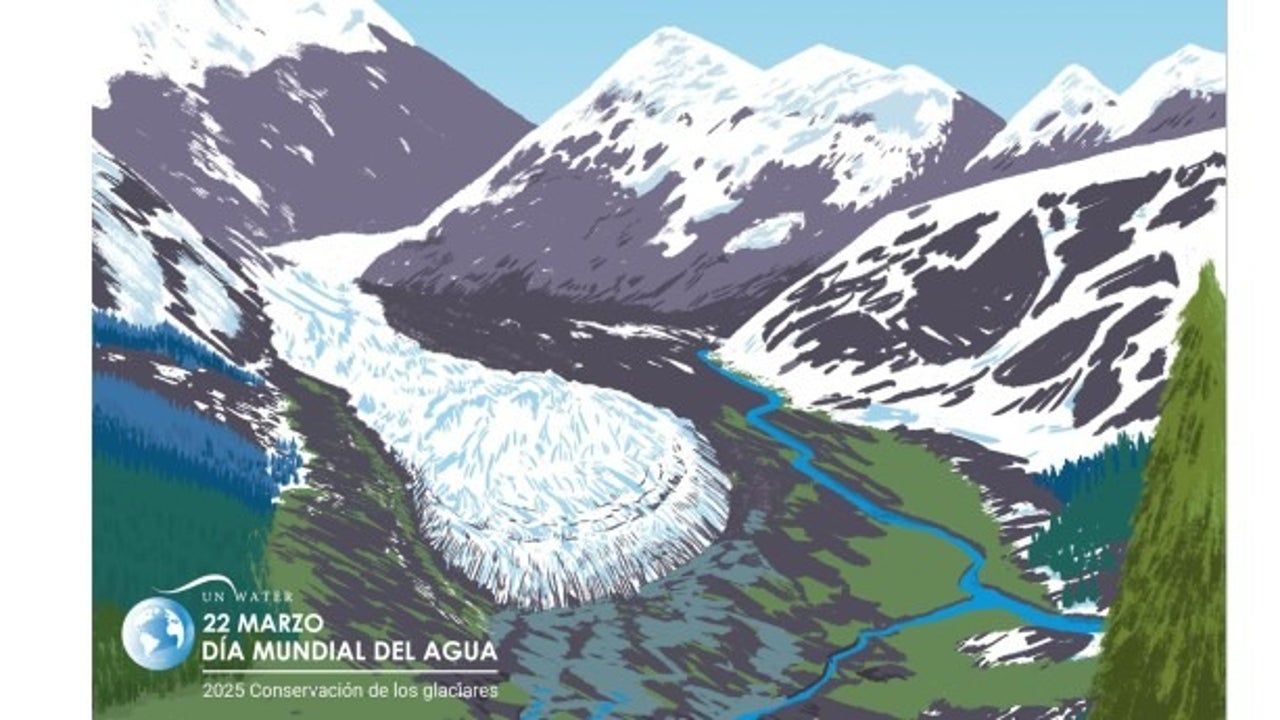
Today that worldwide water day is celebrated worldwide, it is a good date to remember that it is one of the most critical and scarce resources on the planet. The growing demand, climate change and pollution is accelerating and aggravating the situation.
World Water Day had its origin in 1992, at the United Nations Conference, held in Rio de Janeiro known as the Earth’s summit. A year later, its celebration was officially declared and from then until today it has been used as an awareness tool, as well as to take a balance of the situation of water resources worldwide.
And, since 2003, the UN uses World Water Day to launch the United Nations report on the development of water resources on the planet. Initially, this report was published every three years, but as of 2014 and due to the worsening of the water situation, the international body decided to monitor and publicize the results annually.
Little encouraging data
According to the data corresponding to the last 2024 report, almost half of the world population suffers from water shortage at least during the year. A quarter of the world’s population faces extremely high water stress levels.
The causes of this shortage are due to reasons of a very different nature. In the lowest income countries, the poor quality of environmental water is mainly due to low levels of wastewater treatment. On the other hand, in the highest income countries, agricultural runoff constitutes the most serious problem.
Unfortunately, water quality data is still scarce worldwide. Especially in many of the less developed countries in Asia and Africa, which have less data monitoring capacity.
However, according to the United Nations, among emerging pollutants that cause greater concern among experts, chemicals known as perfluoroalquilated and polyfluoroalquiladas (PFAS), pharmaceutical products, hormones, industrial chemicals, detergents, cyanotoxins and nanomaterials are included, used in fields such as sanitary, electronics and cosmetic.
The report ensures that in all regions of the world high concentrations of antibiotics have been found due to insufficient treatment of wastewater from homes, livestock and aquaculture.
Water crisis
According to data provided by WWF, the problems of overexploitation of waterpollution, and impacts of Climate changecombined with poor management of water resources and the destruction of aquatic ecosystems have left billions of people around the world without access to clean water and sanitation, while water risks grow for companies and economies. In 2050, about 46% of world GDP could come from areas with high water risk, compared to current 10%.
No one seems to doubt that the global water scarcity is a great threat to the future of the planet. It is necessary that governments, institutions, and citizens help protect a resource as scarce as necessary for life.
Naturgy recognized for its water management
For 15 years, the Naturgy Energy Multinational, is part of the CDP index, a classification that carbonates the carbon disclosure project (CDP) annually -a non -profit organization– That helps companies and governments around the world to evaluate their environmental impact and the management of their water resources.
Throughout these years Naturgy, has been recognized in this index among the group of world leaders, both for their action in favor of the climate, and for the management of water resources, among which it stands out with a score above the average of the sector and its comparable at European level.
For the director of Environment and Social Responsibility of Naturgy, Nuria Rodríguez, “This recognition supports the actions that we are carrying out from the company to be a key actor in the energy transition. Year after year, we have been adopting“ measures to combat climate change and its effects, which translate into results, specifically last year we redouble our total carbon footprint in 30% compared to 2017 and our water consumption in 39%.
10 curiosities about glaciers.
This year the World Water Day is dedicated to the preservation of glaciers. The importance of these “water deposits of the world” is essential for environmental sustainability, economic stability and the safeguarding of subsistence means.
1. The glaciers melt faster than ever. In the last 20 years the loss of glacier mass has been doubled, mainly due to climate change. If this trend is maintained, many regions of regions such as the Andes and the Himalayas could disappear before this century ends.
2. Limit global warming to 1.5 ° C could save the glaciers of two thirds of the places considered world heritage
3.Glaciers usually nurture the snow fallen in winter and lose ice during the summer. The highest temperatures flow into shorter summers and shorter winters, heat wave episodes during summers, a decrease in snow quantity and an increase in rainfall in the form of rain.
4. Almost 2 billion people depend on the water of glaciers, the thaw and the runoff of the mountains for their own consumption, agriculture and energy production.
5. Glaciers store approximately 70 % of the planet’s fresh water: they are the largest fresh water reserve on Earth. They provide a vital water flow for drinking water and sanitation systems, agriculture, industry and clean energy production, which is also essential for ecosystems health.
6. Glaciers contribute to oceanic circulation, regulating heat, carbon dioxide and nutrients that support food networks throughout the planet.
7. The glaciers act as a natural shield against excessive warming of the earth helping to cool its temperature, since they reflect important amounts of solar radiation towards space.
8. Glaciers represent frozen time capsules that contain irreplaceable files in human, environmental and climatic history, which provide scientists with invaluable data on historical climate patterns
9. For the indigenous peoples of Asia, Latin America, the Pacific and East Africa, glaciers have a cultural and spiritual meaning.
10. The loss of these ice formations would mean the disappearance of fundamental places for cultural heritage and spiritual practices that have been recognized by UNESCO as Intangible Cultural Heritage of Humanity.