
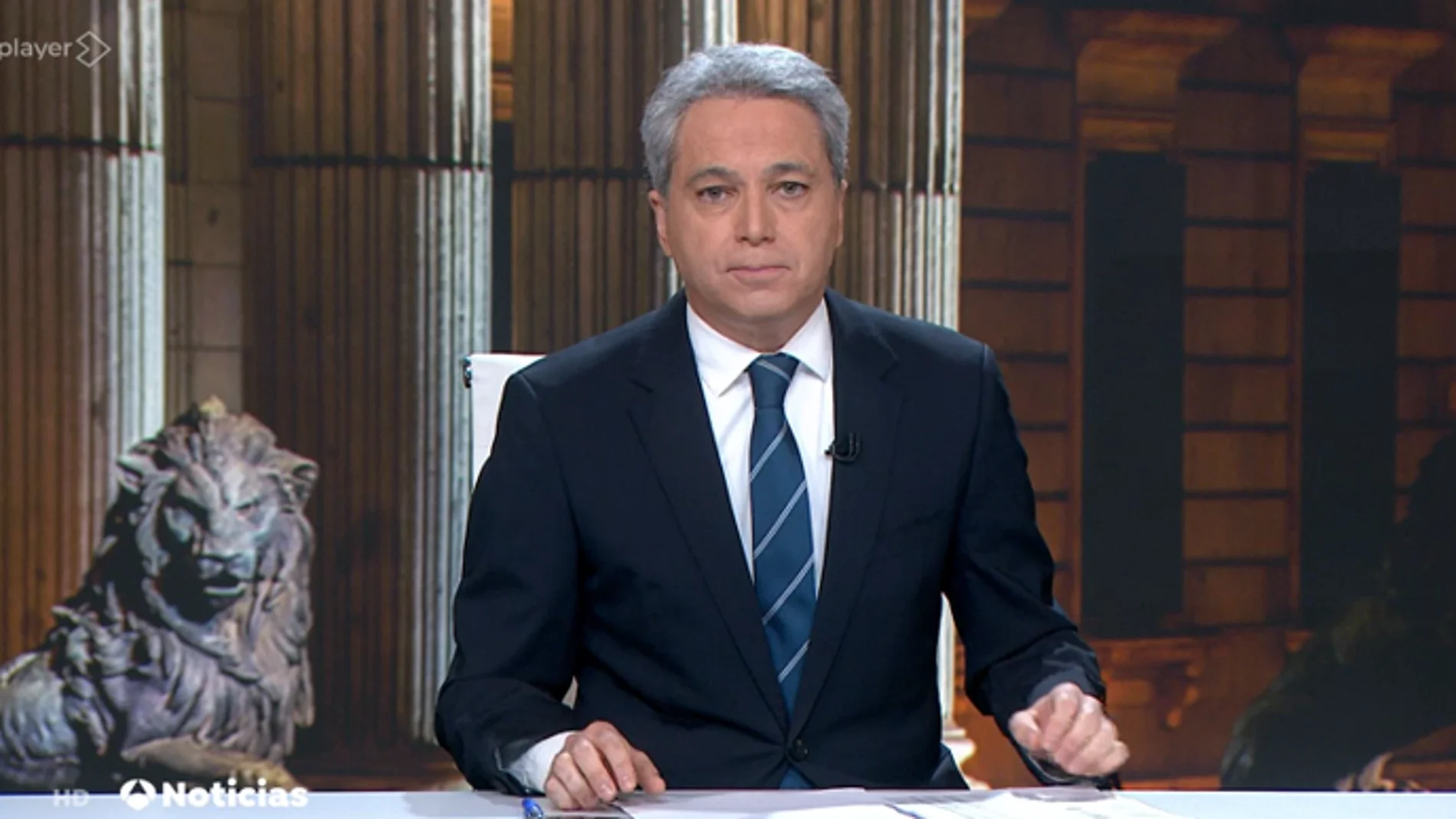
The crisis of Ceuta continues to generate political friction weeks after the massive arrivals recorded from Morocco. The actions of the Minister of the Interior, Fernando Grande-Marlaskaand the position maintained by the Government on the possible responsibility of Rabat have once again focused the analysis of Vicente Valles.
The presenter of ‘Antena 3 Noticias 2’ stopped this time at an element that has opened a new front for the Executive. The judge of the National Court Maria Tardon has opened proceedings to investigate what happened and determine whether behind the entries there could have been an organized action that affected the territorial integrity of Spain.
Vallés linked this investigation with the position that the Government has been maintaining regarding Morocco. “The Government and the PSOE, for some reason, do not like that a Spanish judge is investigating Morocco, determined as they are to not blame the Moroccan regime in anything,” he stated during his analysis.
Vicente Vallés focuses on research on Morocco
The judicial investigation It represents a new scenario in a crisis in which Morocco’s role has been causing controversy for weeks. Tardón’s resolution provides sufficient evidence to investigate whether an organized mass entry could have occurred and whether there was participation by Moroccan forces.
The judge considers it necessary to clarify what happened and has agreed to investigate possible crimes related to the illegal immigrationin addition to other criminal figures. Among the elements analyzed are the high number of people who crossed the border, the way in which the entries occurred and the possible existence of a coordinated action.
It is precisely the possibility that the Justice deepens the actions of Morocco which Vallés used to question the position maintained until now by the Executive.
Marlaska is once again at the center of the Ceuta crisis
Vallés’ words also come after a new Marlaska’s visit to Ceuta. The minister defended that the triage process of migrants who entered the city has already been completed and assured that the Government’s objective is to recover normality.
One of his statements that has provoked the most reactions was his reference to the “feeling of subjective insecurity” expressed by the people of Ceuta. Marlaska maintained that he understands that perception and pointed out that work is being done to reverse it and guarantee security at the borders and in the city.
The minister also had to respond this Wednesday in the Congress to the opposition’s questions about the management of the crisis and about information that points to the possible role of Morocco. There he defended that the procedure followed by the Interior was appropriate and rejected the accusations about an alleged lack of information within the Executive.
Vallés, however, now focuses attention on an issue that transcends ticket management and security in Ceuta. The investigation by the National Court opens the door to judicially clarify whether Morocco had some degree of participation in what happened, while the Government remains cautious when it comes to blaming the neighboring country directly.
A contrast about which the Antena 3 presenter has once again spoken out clearly and which keeps Morocco, Marlaska and the Ceuta crisis at the center of the political debate.