
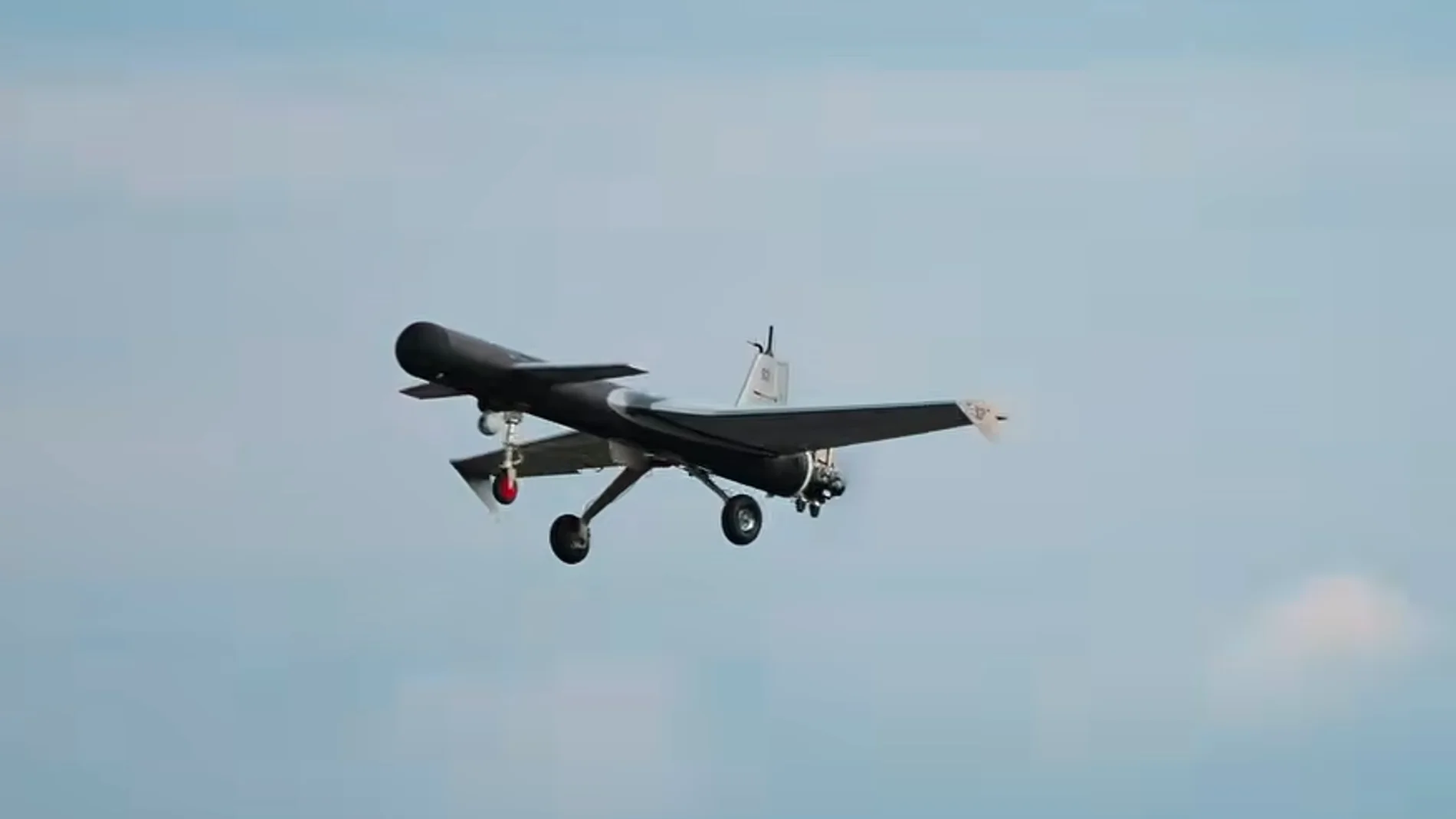
Historically, the development of stealth technology It has been reserved for large-scale defense projects and astronomical budgets. These solutions often require expensive and complex manufacturing processes. According to Defense Blog, A Turkish start-up claims to have transformed this paradigm through the use of a simple aerosol.
This innovative product allows dramatically reduce radar return signalsreaching a decrease of up to 43 dB. Expressed in a less technical way, it is equivalent to the echo that returns to the radar is about 20,000 times weaker. This greatly simplifies the application of stealth capabilities in unmanned aircraft and represents a figure much higher than the reduction of between 20 and 30 dB observed in many current radar absorbing coatings.
Kurşat 3.0
The stealth spray coating, called Kurşat 3.0is the result of seven years of work carried out by the researcher Yunus İnce along with colleagues from a small defense research company. Traditional stealth is mainly based on the design of shapes capable of deflecting radar waves away from the emitter, while absorbing materials take care of the residual energy by converting it into heat.
Large manned aircraft, such as F-35can incorporate complex, faceted or contoured designs, supported by advanced computing. The little ones UAVHowever, they prioritize aerodynamic efficiency and payload over specialized geometry. Quadcopters, in particular, generate strong radar returns due to their exposed propellers. Simple spray coating can offer practical solution for retrofitting existing aircraft.
Kürşat 3.0 is composed of basalt and pumice, and takes advantage of the microscopic porous structure of the volcanic rock to trap electromagnetic waves. If claims about its performance are confirmed, this lightweight spray could make small drones, already difficult to detect, even more so. However, the researchers point out Possible limitations, including added weight, surface drag, and durability under flight conditions.
İnce provided Defense Blog with test images that would demonstrate the claimed performance, but independent validation is necessary by third parties to confirm the results and evaluate their real effectiveness against military radar systems.
The coating does not make the drones completely invisible to radar, so the researchers note that should be used in conjunction with other stealth features. Still, in the case of mass-produced tactical drones flying in dangerous areas, Even a small reduction in radar signature can help them survive and complete their missions..
If this technology proves effective and can be produced at scale, it could affect both military and commercial use of drones. No information has been revealed yet about the necessary thickness of the coating, its resistance in different environments or the cost of its application. According to the outlet, defense experts are awaiting results from peer-reviewed tests and signs that drone manufacturers could begin to adopt it.