
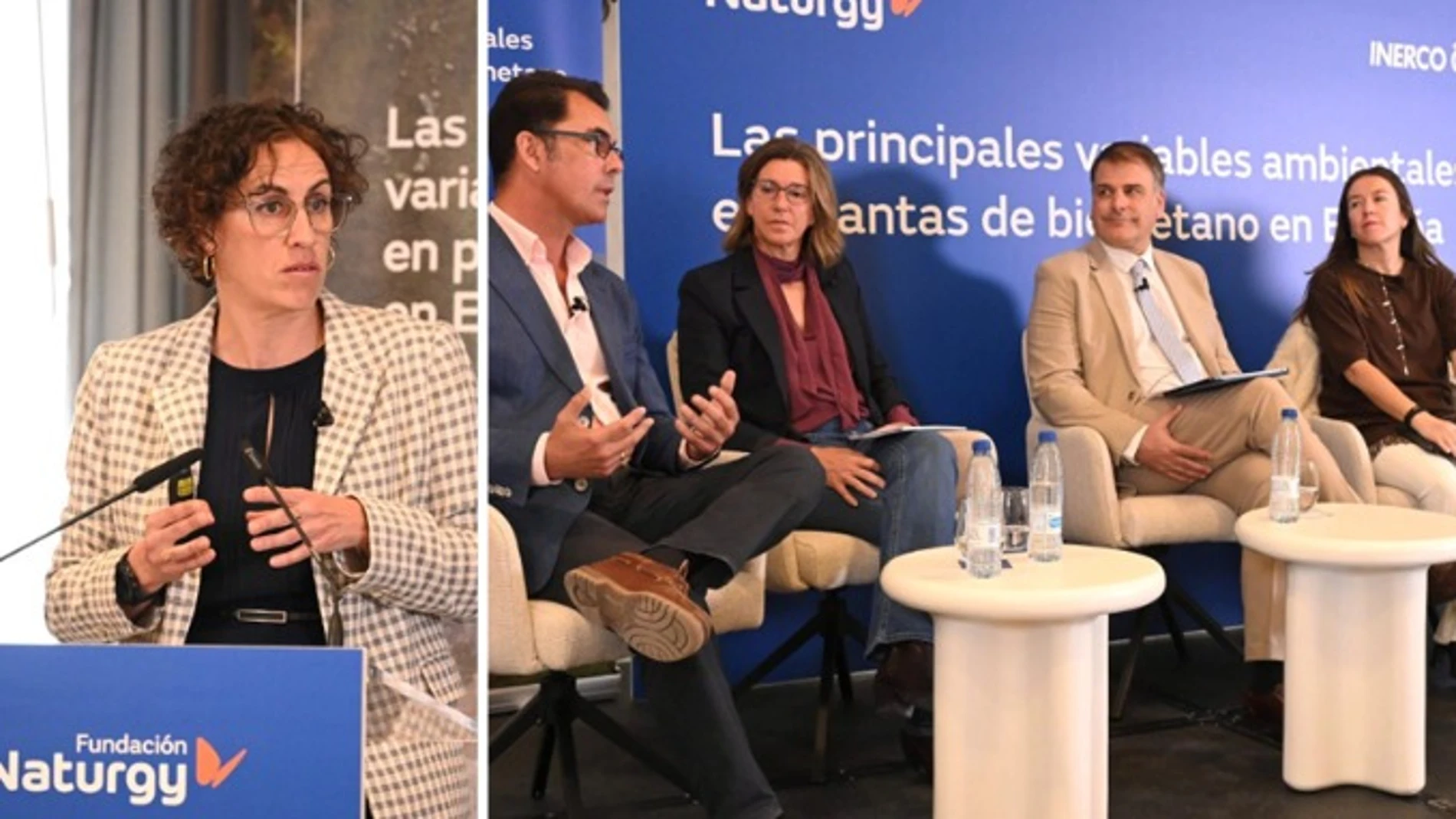
The development of biomethane in Spain involves sustainable environmental integration, the implementation of regulatory security and adequate territorial planning that ensures its contribution to a fair and equitable energy transition. This is one of the main conclusions of the report “The main environmental variables in biomethane plants in Spain”prepared by INERCO and presented by Naturgy Foundationwhich has brought together institutional representatives, technical experts and companies from the energy and environmental sector.
The presentation of the report was led by Amelia Olid Rodríguez, head of the Environmental Management Area of New Developments at INERCO, who explained that the document offers a comprehensive vision of the factors that determine the implementation of biomethane plants in Spain.
Global perspective
The report highlights that the development of biomethane plants in Spain as a source of renewable energy must be approached from a global perspective, in which the sustainable management of organic waste, environmental protection and territorial planning are perfectly aligned. Given the growing interest in this technology, the document highlights the need to design and implement projects considering the characteristics of the environment, the real availability of substrates and compatibility with other uses of the territory.
One of the pillars of the study is the importance of having a clear, stable and coherent regulatory framework, which allows progress in the deployment of biomethane with legal certainty for both promoters and administrations. The report examines the environmental authorization and impact assessment procedures, highlighting the convenience of integrating homogeneous and rigorous criteria that facilitate processing without relaxing environmental requirements, thus contributing to an orderly and socially acceptable implementation.
Environmental and territorial aspects
The study pays special attention to the environmental aspects linked to the production process, from the reception and treatment of waste to the management of biogas. In this context, it highlights the need to apply the best available techniques and to incorporate, from the beginning of the projects, measures aimed at minimizing impacts such as emissions, odors or noise, key elements to promote the coexistence of these facilities with their environment.
Finally, the report highlights the potential of biomethane as a strategic circular economy tool, capable of transforming an environmental challenge—organic waste management—into an energy and economic opportunity for territories. To this end, it concludes that it is essential to strengthen coordination between public administrations, the industrial sector and the technical field, promoting planning based on knowledge, innovation and environmental rigor as pillars to consolidate this technology in the Spanish energy system.
Sharing visions
After the presentation of the document, a discussion moderated by Humberto del Horno, delegate of the Europa Press Agency in Castilla-La Mancha, took place, in which representatives of the regional administration participated, where the importance of coordination between administrations, the industrial sector and the technical field was highlighted.
For Alipio García Rodríguez, general director of Energy Transition of Castilla-La Mancha, the region has been betting on renewable energies for years, but the current great challenge is the adequate treatment of waste, especially organic waste. He highlighted that, “thanks to technological advances, biogas and biomethanization allow this waste to be used efficiently, integrating it into a circular economy model that returns fertilizers to the field and reduces pollution.
From a business point of view, Lourdes Gómez de la Vega, head of Engineering and Environment at Naturgy Renewable Gases, insisted on the importance of applying environmental criteria from the initial phases of the projects. “Biomethane is a key piece within the energy transition and decarbonization, especially in a region like Castilla-La Mancha, with high thermal demand and limitations for electrification in certain industrial and domestic sectors.
For her part, Margarita de Gregorio, CEO of the Spanish Biocircularity Association (Biocirc), highlighted the potential of biomethane as a lever for the circular economy. “Biomethane is strategic for Europe because it reinforces energy autonomy and allows us to take advantage of our own resources in a context of energy transition. However, we are facing a different transition than other renewables, since it is not just about installing infrastructure such as wind or photovoltaics, but rather developing industries that transform organic waste into energy and other products, functioning as mini refineries.”
For Javier Hidalgo, Director of Consulting in Spain at INERCO, “the report reflects the enormous potential that the current regulations and the different environmental procedures have if we are able to complement them with the necessary technical experience for the minimization of environmental impacts and the application of the best available techniques, as well as for the development of prior and complementary analyzes that allow each project to optimize its advantages in terms of circularity, generation of energy and renewable products and, above all, as a source of wealth and social improvement of the rural environment.
For her part, María Eugenia Coronado, general director of the Naturgy Foundation, highlighted the role of technical knowledge and rigorous analysis as a basis for advancing the development of sustainable energy solutions. “Biomethane represents a strategic opportunity for the energy transition and the circular economy, but its development must be supported by solid environmental criteria, planning and dialogue between all the agents involved,” he noted.