
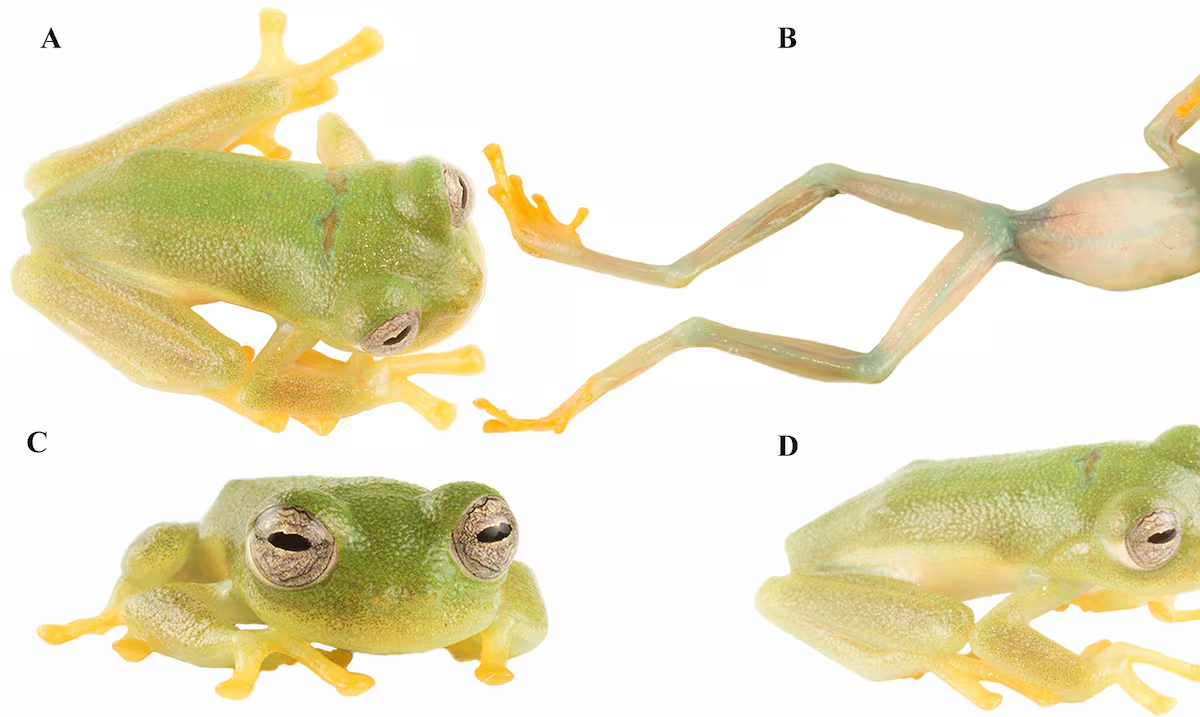
A team of researchers has discovered a new species of ‘glass frog’ in the reserve of The Chemi (Ecuador), a natural sanctuary considered a true ‘lost world’ for amphibians, due to the extraordinary number of new and unexplored species that the territory houses.
The animal stands out for its translucent skin that allows you to see some of its internal organs and the discovery is especially important because its evolutionary lineage goes back millions of years, the researchers have stressed, who have stressed that the ecosystem where it has been found is a bastion of biodiversity, but threatened by mining exploitations.
The scientists, who today published the results of their discovery in the journal Plos, have stressed the urgent need to preserve Andean habitats to protect the species that have begun to be documented, such as the new glass frog, which they have named Nymphargus dajomesae as a tribute to Neisi Dajomes, the first Ecuadorian woman to win an Olympic gold (in weightlifting at the 2020 Tokyo Games).
Glass frogs are a group of approximately 167 species that inhabit the trees of the tropical forests of Central and South America.and although most are green on the upper part, their name comes from the transparent skin that covers the lower part of some species, a translucent skin that sometimes allows the heart and other organs to be seen in detail.
The work was coordinated by the young researcher Mylena Masache, from the Pontifical Catholic University of Ecuador, who found the new species in 2017 and 2018 during studies carried out in the El Quimi reserve, a mountainous region in southern Ecuador.
Based on comparisons of its DNA with other related species, researchers have estimated that the new species probably originated during the Pliocene, about 4.5 million years ago.
It is currently unknown whether the frog is threatened or in danger of extinction, the first specimen of the Dajomes glass frog was found a few kilometers from an agricultural area and a major mining operation, and researchers have confirmed that mining activity in the area has caused a decline in local amphibian populations and could endanger this species in the future.
During the two expeditions to the El Quimi Natural Reserve, in which this new species of frog was discovered, researchers have verified that more than 85 percent of the amphibian species they have found were unknown until then.