
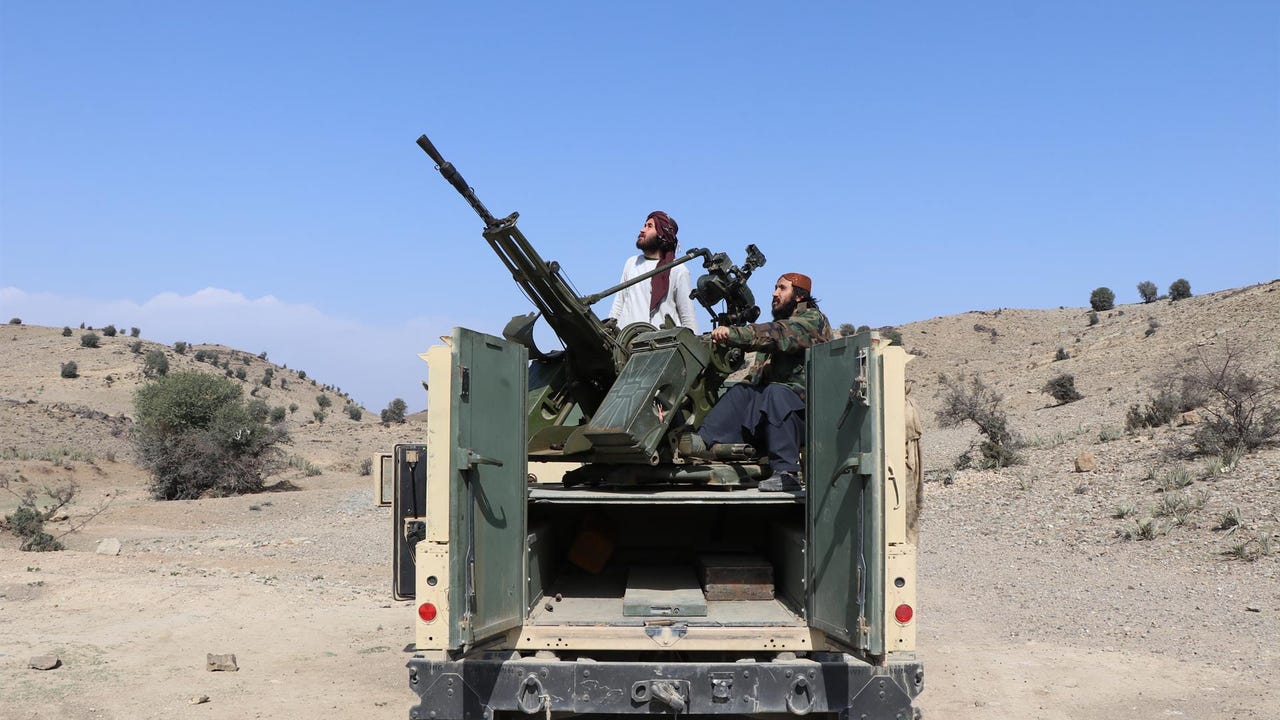
The open war between Pakistan and Afghanistan threatens to further raise the temperature in the region in the midst of the Iranian crisis, with the possibility of US military intervention against the Islamic Republic gaining integers as the hours pass. The tension between both Central Asian countries has not stopped increasing since last autumn and, after weeks of crossfire on both sides of the border, the escalation of recent days – now converted into a conflict of unpredictable scope – makes it clear that the truce reached in October after a week of violence was a false closure of the bilateral crisis.
Islamabad is convinced that leaders of the fundamentalist Pakistani Taliban Movement – also known as Tehrik-e-Taliban Pakistan (TTP) – and many of its fighters are based in Afghanistan, and that armed insurgents seeking independence for the province of Balochistan in southwestern Pakistan also use Taliban Afghanistan as a refuge.
Attacks by the TTP and Baloch insurgents – led by the Balochistan Liberation Army – have seen an increase since 2022, according to Armed Conflict Location & Event Data. According to the expert on security issues in Central and South Asia Sami Omari told the Qatari network Al Jazeera, since 2021, the year of the Taliban’s return to Kabul and the hasty departure of NATO forces, episodes of violence have occurred between the armies of Pakistan and Afghanistan on a total of 75 occasions.
In a country where, according to data from the UNDP and the University of Oxford, Almost 65% of its inhabitants, that is, about 26 million people, live in conditions of multidimensional povertyan open war can cause new population displacements in Afghanistan, both internally – the cities of Kabul and Kandahar were bombed in the early hours of this Friday – and towards neighboring countries such as Iran or Pakistan itself.
The war coincides with the massive return of Afghans – since the beginning of the year alone, it is estimated that some 150,000 individuals have returned to their country from Pakistan, many of them forcibly deported. It is estimated that, in the midst of political and military escalation between the two countries, almost a million Afghans will return to their country from their southern neighbor throughout 2025. The war will aggravate the already precarious situation of the two million Afghans who remain on Pakistani soil. On the other hand, the weakening of Taliban forces in areas such as Nangarhar and Paktika may benefit the local branch of Daesh, the Islamic State of Greater Khorasan, which remains the main internal threat to the Taliban regime.
In the current context, the situation can become a serious added problem for the authorities of Iran – which is experiencing critical hours in the face of the apparent imminence of a US attack – whose citizens have also suffered for several years from the deterioration of their conditions of life due to runaway inflation caused, in turn, by sanctions and economic mismanagement. For years, the Ayatollah regime has also been accusing the Pakistani authorities of not doing enough to stop the violent activity of the Baloch insurgent organizations – of Sunni jihadist ideology – that operate in their province of Sistan and Balochistan. Yesterday, the Iranian Foreign Minister, Abbas Araqchi, urged both countries to resolve their differences through dialogue and the principles of good neighborliness.
Besides, The escalation will force Pakistan to divert massive resources from its eastern border with India to its western border. Islamabad accuses India of using Afghan territory to support groups such as the TTP and Baloch insurgents. New Delhi rejects these accusations, stating that Pakistan is trying to “externalize its own internal failures.” While observing with utmost concern the possible US military intervention against its Iranian ally, China and Russia have called for de-escalation between Islamabad and Kabul in recent hours. Qatar and Turkey, key countries in achieving the ceasefire last October, have been working in recent hours – along with another key actor in the region, Saudi Arabia – to avoid an even greater escalation.