
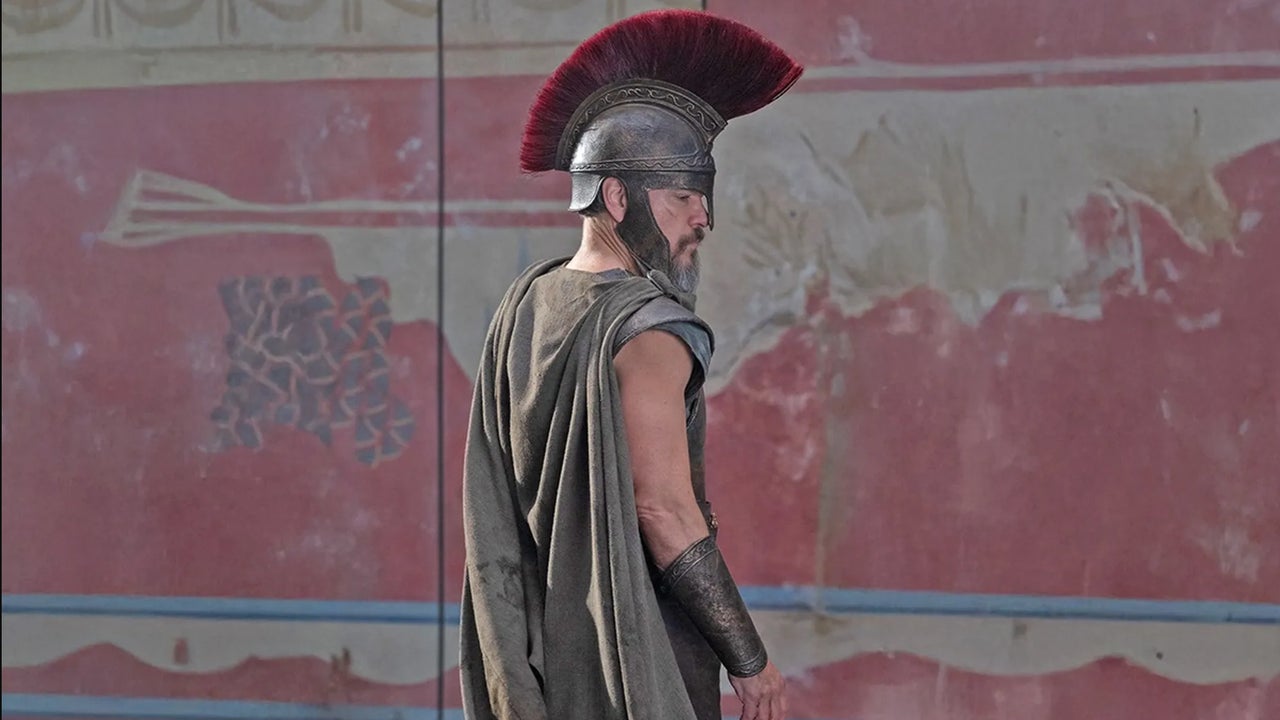
Interstellar, Oppenheimer, Inception, Tenet … This is, barely, part of the curriculum of the renowned director Chris Nolan, who is finishing filming The Oddisey, the film based on Homer’s classic. The work already has two records: the first is that one year before its premiere the tickets have already been exhausted. And the second is that it will be the first film filmed, completely, with IMAX technology.
After Oppenheimer’s success, which raised more than 190 million dollars on IMAX screens, about 20% of its total collection, Nolan challenged the company to improve its cameras, to make them lighter and more silent, and to solve the problems of 70 mm movie scan and processing of the camerasto easily see the newspapers while rolling.
“Chris called me and said: ‘If you find the way to solve the problems, I will do The Odyssey 100% in IMAX‘. And that is what we are doing, “said the company’s executive director, Rich Gelfond.
Reportedly, The new imax cameras are 30% quieter, which allows dialogues to be heard much better, a recurring complaint in this type of projections. The new film cameras are reserved for Nolan for now, but after the Odyssey ends, IMAX will begin to rent them to other directors.
Max, abbreviation of Image Maximum, is recognized for its ability to offer crisp images and an enveloping sound. The projection of IMAX uses 70 mm movie, doubling the usual 35 mmwhich resulted in exceptional clarity and detail. The film is projected horizontally, with each frame perfectly positioned by a vacuum system on a glass plate in front of the target.
That must be added A powerful bulb of 15,000 watts illuminates the movieproducing vivid images. Humidifiers are also used to ensure that the film will be projected fluently, without adhesion or static problems.
The digital projection system Current IMax uses two 4K projectors with dual laser digital technology which offers a broader chromatic range and a higher dynamic range.
But there is more. IMAX film screens are specially designed to show this high quality immersive format. But what many people do not know is that there are different types of IMAX.
The authentic “imax” Requires giant screens with a specific appearance ratio (1: 43: 1) and special film projectors capable of reproducing extragrade film rolls.
For its part, the type of IMAX that you have probably seen in your local cinema uses digital projectors, and the screens usually vary in size, although they remain larger than the average. A typical IMAX screen measures approximately 21.95 meters wide by 15.85 meters highwhile the standard screens measure around 15.24 meters wide by 6.10 meters high.