
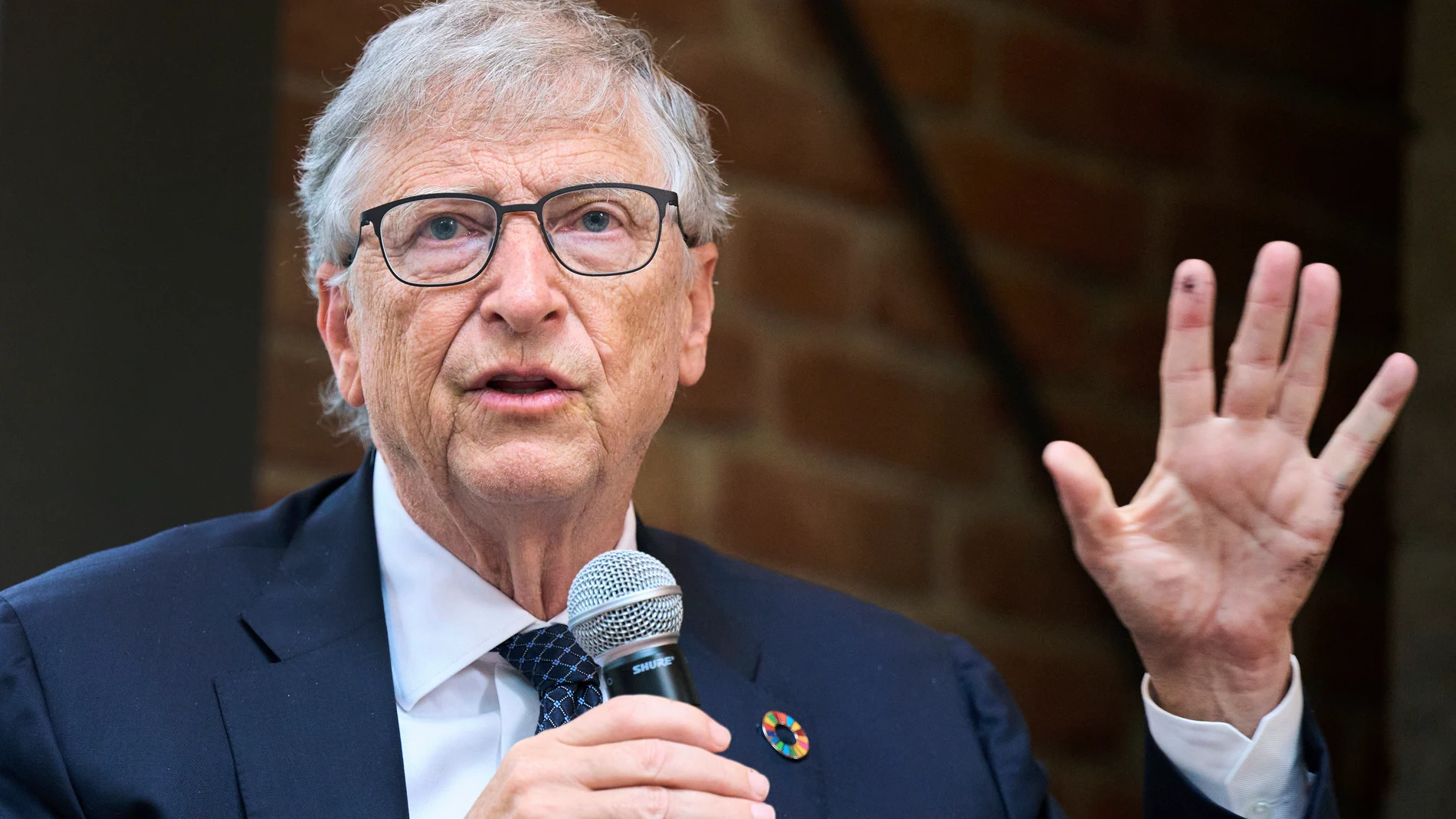
Bill Gates believes that at the speed at which artificial intelligence advances our ability to respond to your risks is lagging behind. In an interview with Nilay Patel for the Decoder podcast published this Thursday, the co-founder of Microsoft has defended that Governments must intervene before their capabilities allow them to cause damage that is difficult to contain..
His warning comes after several months demanding a more forceful response to this technology. Gates criticizes that there is still debate about whether authorities should pay attention to its dangers and that supervision depends on the voluntary collaboration of companies, an approach that he considers ‘clearly unsuitable for the most dangerous weapon of all time’.
Their most immediate concern is that these tools allow certain groups to carry out cyberattacks or biological attacks that previously required the resources of large States. ‘The big short-term risk really comes from models without safeguards’he says, referring to AIs whose protections can be removed to be used for malicious purposes.
Unlike other voices that criticize the development of AI, Gates does not place the loss of control over this technology as the most imminent threat. Your priority is to prevent Someone takes advantage of current capabilities to attack banks or power gridsrather than resolving debates about whether these systems have consciousness or have achieved intelligence comparable to that of humans.
To prevent these threats from materializing, Gates calls for mandatory controls and rejects that the responsibility falls exclusively on companies that are alson competing with each other. Proposes that especially powerful models can only work on platforms that prevent removing their protections or deactivating their supervision when modifying them.
The Microsoft co-founder also does not believe that the threat of lawsuits against AI companies is enough to prevent damage of that magnitude. ‘The idea that we are going to manage AI safety through liability laws will be seen as absurd’he maintains, because identifying those responsible for an attack is already difficult and going to court later does not avoid its consequences.
In relation to AI agents capable of executing tasks for the user, Gates supports their usefulness and praises Museof Goalalthough he acknowledges that there will be teething problems. To keep them under control, an external layer of security with strict rules on their actions and resources is promising, but admits that we still do not know how to guarantee that isolation.
Adding to the security risks is an economic and social change which Gates estimates will take about two decades. ‘My big concern is this twenty-year transition period, in which there will be winners and losers and many disruptions’he explains, pointing the way towards a possible economy of abundance.
During this transformation, he foresees that Automation advances from intellectual work to physical activities through humanoid robots. It proposes reducing working hours or reserving certain professions for humans and warns that Even the best scenario will involve a period of turbulence comparable to the most intense in history.
Despite these warnings, Gates refuses to identify with the so-called ‘AI doomers’a label used for those who emphasize catastrophic scenarios associated with artificial intelligence, including a possible existential threat to humanity. ‘No, I’m not a doomer’he responds when Patel asks him directly.