
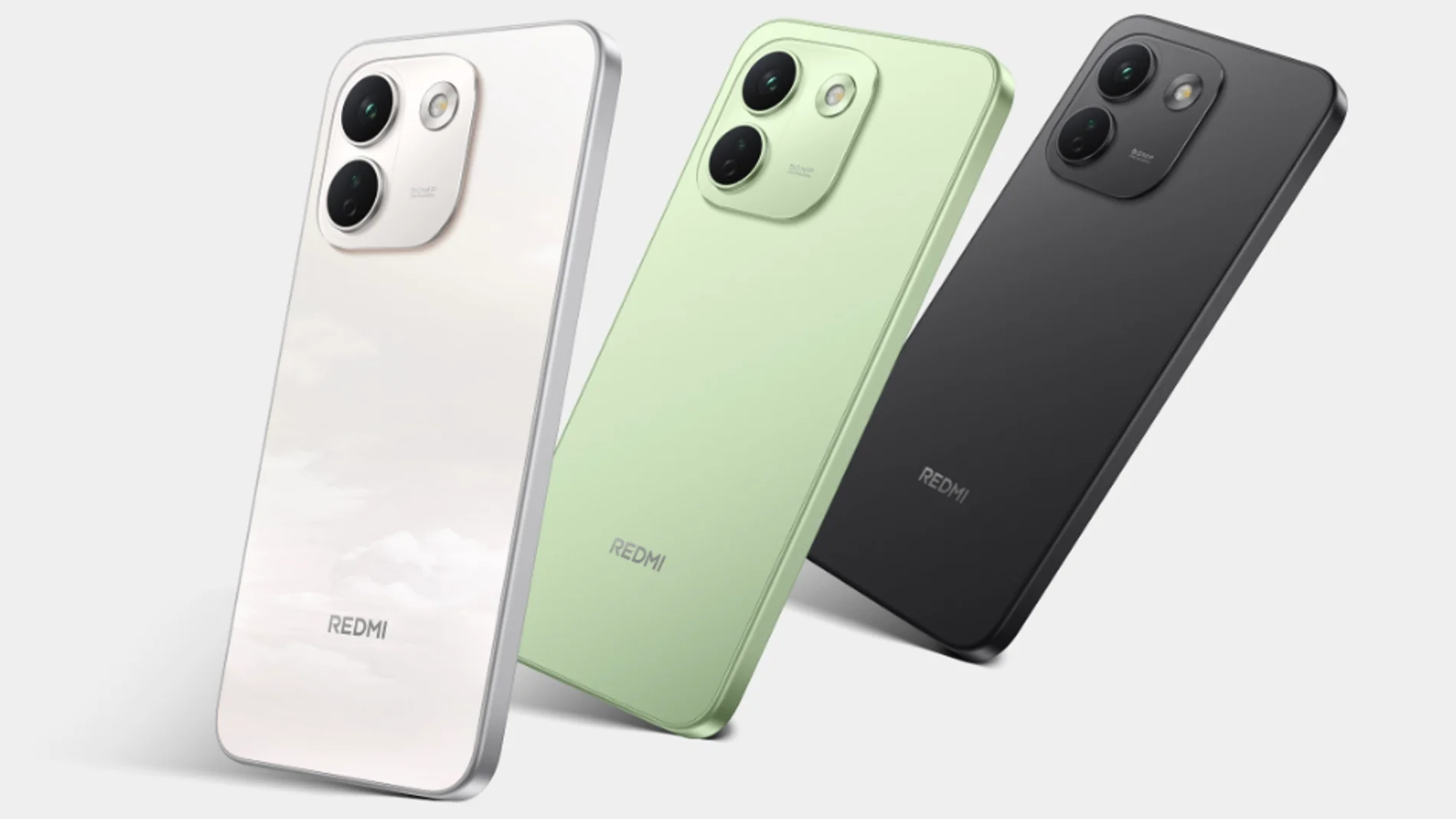
In the mobile phone market there is a paradox. Every year, faster processors appear, cameras with more megapixels and screens capable of reaching brightness figures that a few years ago seemed reserved for televisions, but one of the characteristics that most affects the real life of a smartphone remains much less spectacular: How long can it last working like the first day?
Xiaomi wants to turn precisely that question into one of the central arguments of its new generation Redmi Note 17. The company has presented four models (Redmi Note 17 Pro Max 5G, Redmi Note 17 Pro 5G, Redmi Note 17 5G and Redmi Note 17) and has placed resistance and longevity at the center of the proposal. The series also already exceeds 500 million units sold worldwide..
The protagonist is the Redmi Note 17 Pro Max 5G, the first model in the family to incorporate the Pro Max name. Its battery reaches 9,210 mAh, the highest capacity installed so far in a Xiaomi smartphone according to the company, and is combined with 100 W HyperCharge charging and 27 W reverse charging. The Redmi Note 17 Pro 5G “lowers” to 8,340 mAh and 67 W, while the Redmi Note 17 5G and Redmi Note 17 incorporate 7,700 mAh and 45 W charging.
But the battery is not just a matter of size. Xiaomi uses silicon-carbon technology in the new generation and ensures that its batteries can retain at least 80% of its original capacity after 1,600 charge cycles, equivalent to approximately six years of regular use. It is a figure that matters more than the initial capacity: a huge battery loses part of its appeal if two years later it forces the user to look for an outlet several times a day.
The other bet is physical. The two Pro models incorporate IP66, IP68, IP69 and IP69K protection against dust and water, as well as a specific mode for using the phone underwater. They also have technology that detects water, oil, foam or sweat to maintain tactile response. More striking is the resistance against falls. Xiaomi points out that the two Pro have been subjected, with SGS certification, to drop tests from up to three meters on granite. Inside they also have a reinforced base platean MDA central frame and a structure intended to cushion impacts. The screen is protected by Gorilla Glass Victus 2.
These characteristics are part of a TÜV SÜD certification that Xiaomi presents as “Titan Quality”, with five stars. The Redmi Note 17 Pro Max 5G and Pro 5G have passed the tests corresponding to resistance to drops, water and battery degradation. The other two models are five-star certified specifically for battery performance.
The company did not want, however, for resistance to turn the Redmi Note 17 into simply robust phones. The design changes compared to previous generations, with a flat screen, rounded corners and a redesigned photo module. The Pro Max also adds a version called “Photoactive White”, whose back changes from white to an orange-pink tone when it receives ultraviolet light.
There is also room for the usual figures in this category. The Pro models incorporate 6.83-inch screens with 1.5K resolution and up to 3,500 nits of maximum brightness, while the Redmi Note 17 and 17 5G go up to 6.99 inches. The Pro Max uses the Snapdragon 6 Gen 5 and can reach up to 24 GB of RAM through memory expansion.
Artificial intelligence also appears, although here the approach is less revolutionary: Xiaomi HyperAI comes to the Pro models, while Gemini and Circle to Search are present in the entire family. In photography, the Pro Max adds 4K recording at 30 frames per second and various AI editing tools, including removing reflections and elements from images. The prices help to understand where the family wants to be located. The Redmi Note 17 starts at 279.99 euros; the 17 5G, 349.99 euros; the Pro 5G, 479.99 euros; and the Pro Max 5G, 599.99 euros. It’s not strange, With these prices and features, it is Xiaomi’s best-selling family.