
The facts are well known. Some 80,000 people, according to unofficial figures, massively crossed the border between Spain and Morocco between the 30th and 31st of last July. A few hours later, the president of the Government, Pedro Sancheztraveled to the city of Ceuta, spoke of “an attack, a violation of territorial integrity” and went to rest in La Mareta, the official summer residence in Lanzarote. For more than three weeks.
Fernando Grande-Marlaska, Minister of the Interior, remained on guard for a day and a half. The idea that Sánchez conveyed is that he would not leave until the situation was under control. They reached this conclusion on August 1. At a press conference, Marlaska proclaimed that almost all of those who entered had returned and that, at most, about 2,000 remained. The Minister of Transport, Óscar Puente, wrote in his trench: «Another crisis that Pedro Sánchez solves». And on August 3rd everyone was on vacation.
All, except an Austrian politician who decided to postpone his summer period for a few days due to the Ceuta crisis. His position: European Commissioner for Home Affairs and Migration. Your name: Magnus Brunner. As LA RAZÓN has learned from sources in the community executive, the commissioner, in the days after the crisis broke out “He wanted to travel to Ceuta and the Government of Spain told him no.”
The argument was: “The situation is practically solved.” Same argument from the outside as from the inside. But, in addition, the Government informed the commissioner that there would be no one to accompany him on a hypothetical visit. “The ministers are on vacation.”
On August 4, in fact, the commissioner declared at a press conference from the Commission delegation in Brussels that Europe had “passed the test” after the Ceuta migration crisis by managing to control the situation and avoid movements towards the rest of the Schengen area.
However, then, he defended that the episode forced us to extract “the right lessons” and to accelerate the implementation of the new European policies on borders and migration. And he criticized the massive regularization undertaken by the Government: “It’s not a good sign.”
A speech that in no way resembled the reality of Ceuta, where more than 10,000 immigrants still remain today. Although there is no official data. There are 6,000 people in the shelters set up by the Government. The local administration’s reception services have more than 2,000 unaccompanied minors registered. And the streets of the autonomous city are still packed with people sleeping rough or in illegal settlements.
Nothing close to the normality that the Executive wanted to decree in the days after the invasion. And that served as a pretext to dissuade the European head of Immigration from making a trip to the epicenter of the emergency.
On September 8, the president of Ceuta, Juan Jesus Vivaswent to Brussels to meet in person with the President of Parliament, Roberta Metsolawith Commissioner Brunner and with the Commissioner for the Mediterranean. The first step on a path outlined by its formation to achieve greater involvement of Europe in resolving the crisis. Vivas then extended an invitation for the president of the Commission, Ursula Von der Leyencome visit Ceuta.
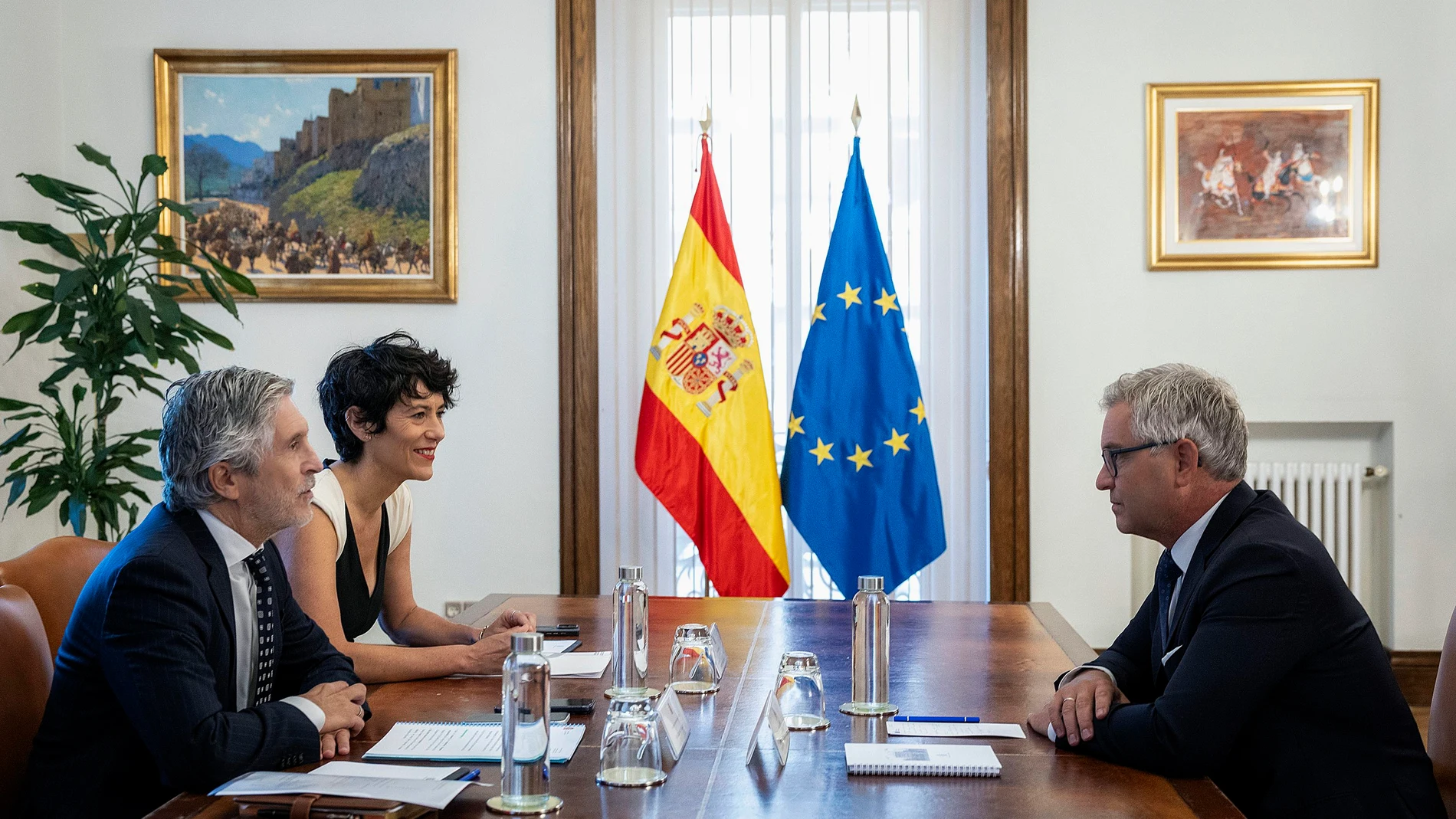
For his part, Brunner traveled to Madrid last Thursday, where he had different meetings: with the Ministers of the Interior and Migration: Marlaska and Elma Saiz, and with the leader of the PP, Alberto Núñez Feijóo. Génova, in a note sent to the media, reported: “Both have agreed on the need to enable all State resources to proceed with the immediate return of all people who entered irregularlyin accordance with national and European legislation.
The objective of the PP is to obtain the support of the European authorities so that the Ceuta solution comes through a policy of “returns” and not “distributions”, as the person responsible for Sectoral Coordination denounced in these pages, Alma Ezcurra.
«International, European and even national law is often used as an argument as an excuse to say that it is not that easy or that it cannot be done. It’s not true. There are national and European instruments that allow return and family reunification in the case of minors. I want to remind you that the European Pact on Migration and Asylum is in force.which provides that all people who enter the borders of a Member State irregularly have two routes: return or asylum,” he stressed in the interview published this Sunday by LA RAZÓN.
Last week, the European PP, with the favorable vote of liberals and conservatives, managed to approve a resolution in the plenary session of the European Parliament that placed duties on the Sánchez Government. He urged him to use all the means at his disposal to resolve the crisis. It also qualified as “invasion” what happened and reminded Morocco of the Spanish sovereignty of Ceuta and Melilla.
Today, a delegation from the European PP headed by its head will travel to Ceuta: Manfred Weber. Next to him will be the president of Ceuta, Juan Jesús Vivas y Feijóo. Another step in their desire to “Europeanize” a crisis that is still far from being resolved.