
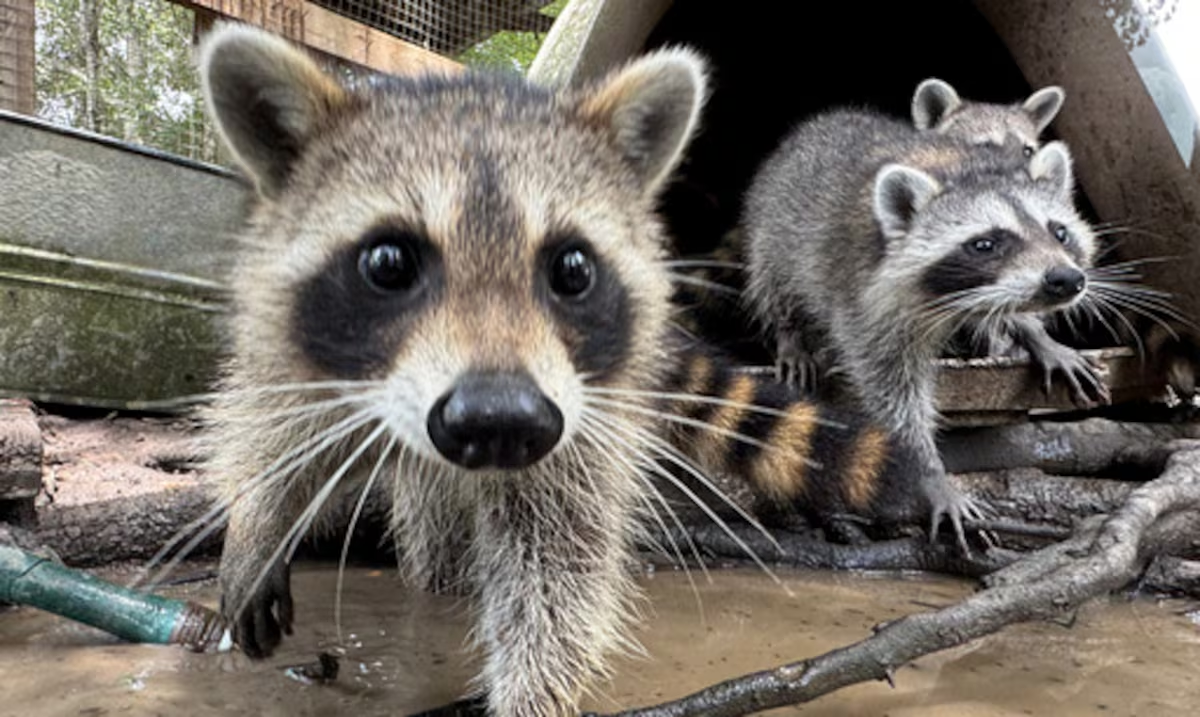
PASS CHRISTIAN, Miss. — Covered in mud, drenched in sweat and sometimes bloodied, the dedicated employees at a Mississippi wildlife center are true drill sergeants. And his soldiers? Raccoon babies.
Welcome to Raccoon Boot Camp, which aims to help sick or injured animals learn to survive in the south Mississippi wilderness. a series of skills that they would have learned from their mothers, most of whom died or were separated from their offspring due to storms, traffic accidents or other traumatic events.
It’s a challenge that has left Woodside Wildlife Rescue founder Paula Woodside with wounds from frightened, defensive raccoons and their sharp claws, and, when she fails to save a baby, emotional damage as well.
1/11 | 📷 A baby hippopotamus is rescued in Colombia: it is a descendant of the animals introduced by Pablo Escobar. The animal received veterinary care and was later transferred to the Hacienda Nápoles Theme Park, where it remains under specialized care. – Supplied/Cornare
“When these babies come, so desperate, it’s heartbreaking,” said Woodside, who most days is covered in sweat from caring for the animals in the Mississippi heat, and dirt from the curious babies that crawl up her legs and onto her shoulders. “It’s very important that they have a little head start.”
Wildlife rescue staff teach raccoons by example
Woodside, a former American merchant sailor, founded the rescue center in 2019 after helping reenable a baby raccoon he had found aboard his boat. The rescue center, located in the coastal town of Pass Christian, typically raises dozens of babies each year — 76 so far this year — as well as other native wildlife.
Municipal animal control and citizens call Woodside or the rescue center director, Raquel Priest, when they find a raccoon that needs rescuing. Together, they try to reunite the cubs with their mothers, if they can find them, or take them to the rescue center.
The younger raccoons will spend a few weeks, mostly indoors, being bottle-fed by caretakers at the rehabilitation center until they are vaccinated against diseases carried by cat colonies and dogs and are ready to move to outdoor enclosures.
Although the pups remain close to their adoptive human parents, they are eventually allowed to roam freely during the day around the rescue center’s 20-acre (8-hectare) rural estate, a sprawling mix of meadows and lush forest dotted with ponds and a nearby river. Thanks to that environment, Woodside and Priest are able to take their “troop” on educational field trips, a luxury that many wildlife rescue centers lack, Woodside explained.
Woodside and Priest lead by example. They hide worms in the ground to teach their young to dig for food, and they break open pine cones or acorns to show them the seeds inside. Raccoons’ eyes light up when they find a tasty new food, and they run to show their find to their keepers before quickly returning to scare away any other babies that might try to steal their find.
While a drill sergeant might yell “Attention!”, Priest and Woodside emit a high-pitched trill, imitating the raccoon’s distress call, causing the babies to run for cover in the trees. A short whistle tells the troops that there is no danger.
The hatchlings also practice fishing in shallow pools, where their still uncoordinated legs cautiously touch the water until they are fast enough to grab a bite. Hunting live quail gives them hunting experience. Although these are skills the raccoons would likely learn on their own, Woodside staff hope the training will give the pups a better chance of survival.
In the farm’s pond, raccoons learn to swim, a critical skill in hurricane-prone southern Mississippi. The keepers get into the canoes and encourage the babies to swim from one side to the other. They also make excursions to the deepest forest, where the chicks learn to run from tree to tree to avoid being seen by birds of prey and to have a quick escape route from snakes or other dangers on the ground.
The Raccoons perform the “Pomp and Circumstance Marches”
In their final session, a volunteer—who is neither Woodside nor Priest—traps the raccoons in cages, scaring them enough to encourage them to avoid the traps and humans. The experience helps young raccoons become independent from their human rescuers, a process Priest said occurs naturally as they mature.
When a group of cubs is ready to be released, about six months after their rescue, Woodside and Priest organize a graduation ceremony. They play “Pomp and Circumstance Marches” by Edward Elgar and read one by one the names of all the graduating children.
A reverend then blesses their journey as they are released into another forest-covered area of the rescue center’s property. In the case of pups that die in their care, the staff holds a second ceremony to bless and scatter their ashes.
This story was translated from English to Spanish with an artificial intelligence tool and was reviewed by an editor before publication.