
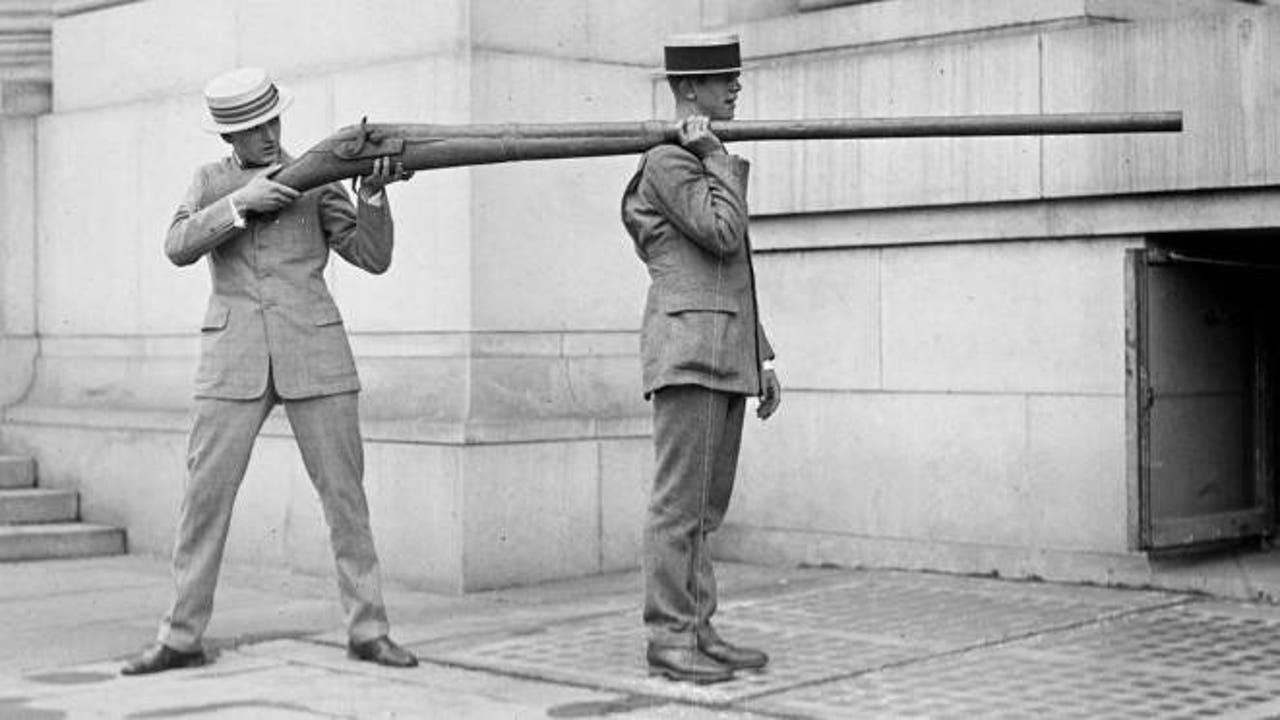
The modern shotgunsuccessor of the musketry and blunderbusses of the century XVIarrived in the XIX with the invention of percussion key systemwhich uses a piston to detonate the propellant charge instead of the piece of flint that struck the cat’s foot against the rake, as in the flintlock. It was mainly used for hunting waterfowlan activity that, due to its widespread practice, came to put Migratory bird populations in danger in the United Statessomething that was put to an end at the beginning of the 20th century with various legislative reforms. But in that period a shotgun was invented like no other and that could almost be classified as an artillery weapon: the boat shotgun or punt gun.
Symbol of commercial waterfowl hunting in the 19th century and also used in private sport hunting, the punt gun was a shotgun muzzleloader 3 meters long and 45 kilos in weight. These weapons were too large to hold and the recoil was so strong that they had to be mounted directly on punts, a type of small, flat canister that gave them their name. A group of migratory waterfowl was targeted and, with a single shot, one could annihilate flocks of more than 50 birds perched on the water surface. Boat shotguns could have calibers greater than 51 mm and shoot 450 grams of shotwhich left a large number of bird carcasses that hunters later collected.
Since the weapon was fixed to the boat, the hunter had to move the entire boat to aim. The weapons were so powerful and the boats so small that Firing them often moved the boat back several centimeters or more.
To further increase efficiency, punt hunters used to work in groups of 8 to 10 boats. By placing their boats in line and coordinating the firing of their single-shot weapons, they could ‘collect’ entire flocks of birds with a single volley. It was not unusual for these groups of hunters to capture up to 500 birds in a single day.
Popular in the 19th century and until the beginning of the 20th, these cannons were an efficient and economical means of meeting the needs of a country. Not just food, since feathers were in high demand in the world of women’s fashion at that time. Because of that demand and the commercial hunters determined to satisfy it, Waterfowl populations in the United States plummeted in the late 19th and early 20th centuries.
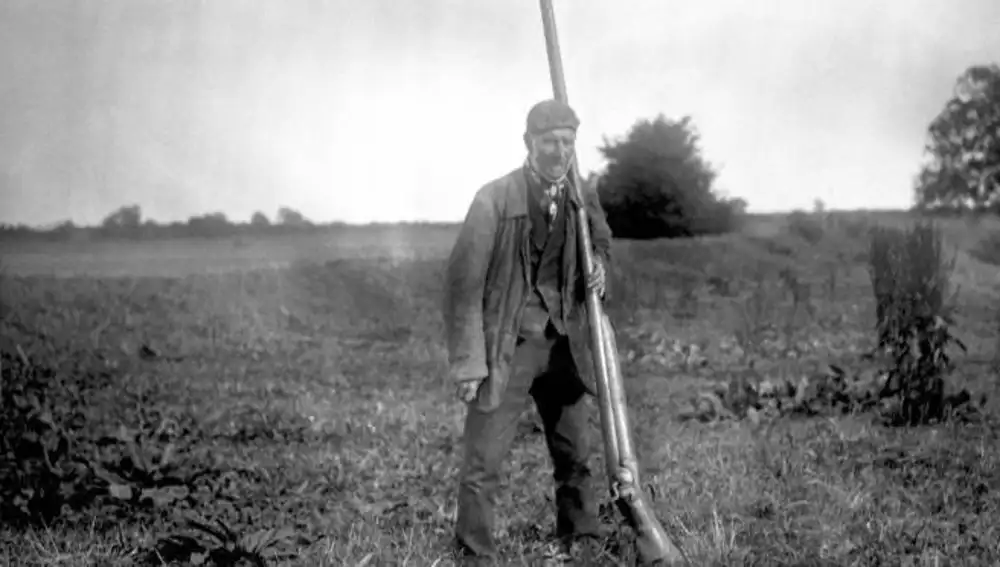
For 1860many states had prohibited the use of boat shotguns to hunt, but it was a measure that only affected part of the country and proved insufficient. In 1900, the Lacey Lawwhich sought to limit commercial hunting by prohibiting the interstate transportation of illegally hunted animals, laid the legal foundations for the conservation of fauna and flora in the United States. However, was ineffective due to the huge profits of commercial hunters and the lack of officers to enforce it.
This led to the approval of the Weeks-McLean Law in 1913which regulated the hunting of migratory birds and tried to bring them under federal jurisdiction. In 1918arrived Migratory Bird Treaty Act with Great Britain, acting on behalf of Canada, to establish federal control over hunting of migratory birds. This law replaced Weeks-McLean and decreed that all migratory birds and their parts (including eggs, nests and feathers) were completely protected, which led to boat guns falling into permanent disuse.