
The rains have never been good to the Spanish southeast. The Segura basin in which the Region of Murcia is located has always lived between floods that caused torrential rains and the raging drought that has hardened its farmers for years. Actions such as the Tajo-Segura Transfer, with their contributions, were decisive in the development of current irrigated agriculture, which has known how to modernize. Proof of this is that today 87% of systems squeeze every drop of water they have.
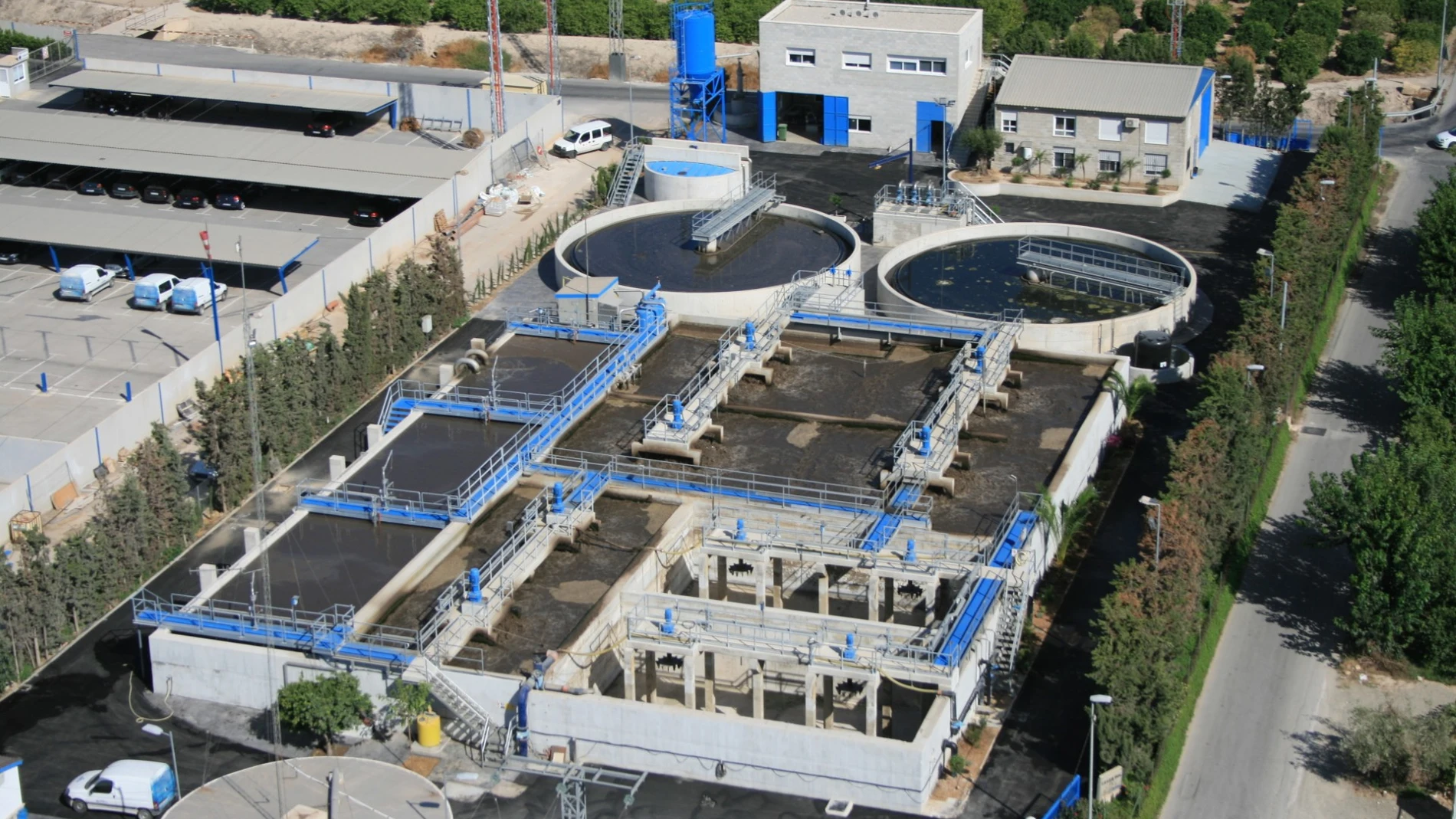
But for 25 years there has been another key figure in the water governance system that has been implemented in this Community and it is the Sanitation Law through which the Sanitation and Purification Entity of the Region of Murcia, Esamur, was created. Through this Entity, a solidarity system has been created that has allowed more than 99% of urban water to be treated today in one of the 100 Wastewater Treatment Plants (WWTP) that exist in the Region.
Solidarity system
This is going beyond what is established by the European directives that only require treatment in centers of more than 2,000 inhabitants. Treatment plant 101 will be built in the Murcian district of Cañadas de San Pedro, a population center that does not reach 500 residents. The planned treatment facility will have an investment of 2.9 million euros and will meet the needs of the current and future population, putting an end to the current septic tank system.
The key to the financial sustainability of the model lies in the Sanitation Canon, a tribute of solidarity and finality. Unlike other taxes, each euro collected in this way is reinvested exclusively in the operation, maintenance and modernization of the Treatment Plants of all the municipalities, which guarantees the updating of each and every one of the stations, regardless of their proximity to large or small towns.
Reuse is the key
These Purification Stations are also the ones that, through the different systems with which the water is treated, manage to obtain water of the highest quality that can be reused in the irrigation of crop fields with all health guarantees. Every year, between 96% and 98% of the treated water is made available to the different irrigation communities in the Region.
More than 120 cubic hectometers of water are treated each year, which represents a constant source of water that can be used in agriculture and has made the Region of Murcia an example and world reference in the optimization of resources related to water reuse. The Spanish average is around 10% and the European average remains at 5%, for this reason every year dozens of international delegations from all over the world want to know the system implemented with a in the Region.
The year 2026 is also the year of the technological revolution in water purification in the Region of Murcia. This summer the installation of the new systems with which Artificial Intelligence will be integrated into the water purification of the 45 municipalities will be completed.
During this year, the RegenIA project is being implemented, with 7.3 million euros being invested in technology that improves purification systems, reduces energy expenditure and helps make water purification facilities in the Region more efficient and sustainable.
Key data of a global reference system
The Region of Murcia has 100 Water Purification Stations. The 101 will be built in the district of Cañadas de San Pedro, an urban center of 500 inhabitants. 99.2% of urban water is treated in the Region’s WWTPs, this being a solidarity system that allows both large towns and small municipalities to have modern purification systems. In the Region of Murcia, around 120 hm3 per year is made available to irrigation communities, 15% of the water demand for regional irrigation.