
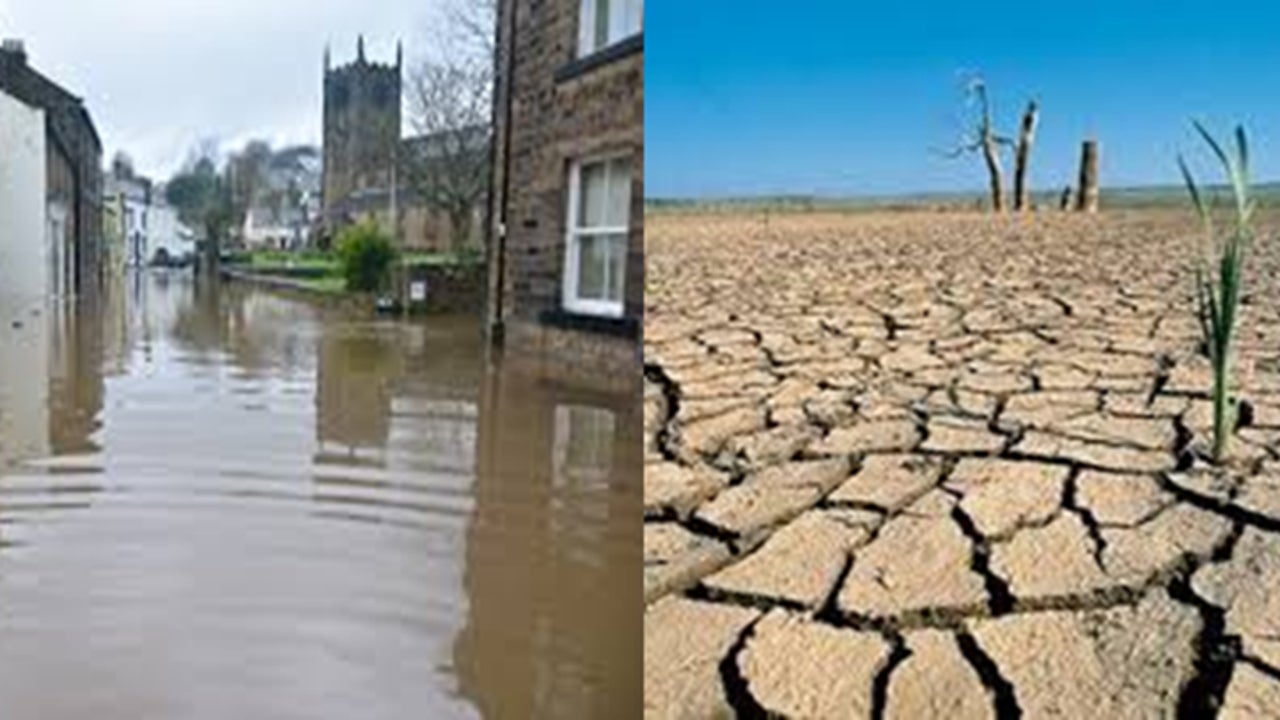
Throughout this century, Spain is expected to reduce the average level of annual rainfall, while the extreme rainfall of rains increase. In addition, the increase in temperatures will cause the extension of arid climates in our country, which will increase the risk of fire and exposure to heat. These are some of the conclusions of the evaluation of climate change models and projections for the 21st century collected in the Clivar-Spain 2024 report.
The report, presented in recent dates, offers a key update on the climate state in Spain, highlighting the effects of climate change in the country’s terrestrial and marine ecosystems. The importance of the report for Spain is that it brings together the most recent scientific advances and complements the conclusions of the intergovernmental group of experts on climate change (IPCC) globally, providing a detailed vision of climatic impacts and risks in the Spanish territory.
The Clivar-Spanish Committee, responsible for the report, is part of an international initiative aimed at improving the understanding of climate change and its effects. Since its creation in 2004, it has established itself as a reference in climate research in Spain, coordinating studies on climate variability, changes in the atmosphere and ocean, and future projections.
Climate change in Spain
The study highlights the significant impact of climate change in Spain, with an emphasis on the accelerated recoil of glaciers and the heating of surrounding ocean waters. Droughts are expected to be more serious and the most extreme rainfall, with impacts on agriculture and tourism. In addition, there is an increase in the frequency of coastal floods and loss of land in low areas due to sea level rise and ocean acidification.
According to the analysis carried out by experts, only in the last decade, glaciers in Spain have experienced an accelerated setback, with a significant loss of extension and thickness. This process has reduced its number and has led to the appearance of dynamics of the final phases before its disappearance. Likewise, the permafrost, permanently ice cream, is disappearing in Sierra Nevada and presents clear signs of heating in the Pyrenees, which accelerates phenomena of instability such as rock and avalanche detachments.
Long -term records also show a decrease in the duration of the snow layer and its maximum accumulation in the Iberian Peninsula, which puts at risk the water resources that depend on the thaw in mountain areas.
The report also warns about the disappearance of the paleoambiental archives stored in the ice caves of the Pyrenees and Picos de Europa, which contain valuable climatic information of the last millennia. Ice reduction in these cavities is directly related to the increase in winter temperatures and rainfall reduction.
The data collected by CLIVAR-SPAIN confirms that all the oceanic waters surrounding Spain are being at a speed 67% higher than the global average, with a rate of 0.25 ° C per decade, compared to 0.15 ° C of the rest of the oceans of the planet.
Some exceptions
Experts point out in the report that there are some exceptions to this trend in coastal regions, such as the West and North Coast of the Iberian Peninsula and the Canary Islands outcrop system, where cooling trends have even been observed.
However, the Mediterranean stands out for being one of the regions most affected by climate change, since its heating rate is between two and three times higher than the global since the 1980s. This phenomenon is causing an increase in the frequency and intensity of marine heat waves, as well as greater salinization of its surface waters.
A warmer Mediterranean means, according to experts, that convective events and extreme rainfall are intensifying, especially in autumn, which could aggravate the risk of adverse weather episodes.
Urgent measures
The Clivar-Spain 2024 report also analyzes the climatic challenges that will significantly affect the ecosystems and populations of Spain in the coming decades. The cities, where more than 81% of the population resides, are experiencing an increase in unprecedented temperatures, driven by climate change and aggravated by the urban heat island effect. This trend is intensifying heat waves, with direct impacts on the health and quality of life of people.
Likewise, the Iberian Peninsula shows a sustained decrease in relative humidity, a phenomenon that, combined with the increase in oceanic evaporation, is accentuating the episodes of drought and desertification, particularly in southern Europe. In this context, studies point to greater aridity in large areas of the country, with a progressive reduction in water resources and growing exposure to extreme climatic events.
In parallel, the projections indicate that the aridity and severity of drought in the south of the Iberian Peninsula will continue to aggravate. The combination of higher temperatures, lower water availability and greater evaporative demand will strengthen this process, increasing the vulnerability of ecosystems and agricultural activity.
The report underlines the urgency of adopting immediate measures to mitigate the effects of climate change, urging to strengthen scientific research, improve international cooperation and develop adaptation strategies that allow these challenges to be effectively and sustained over time.