
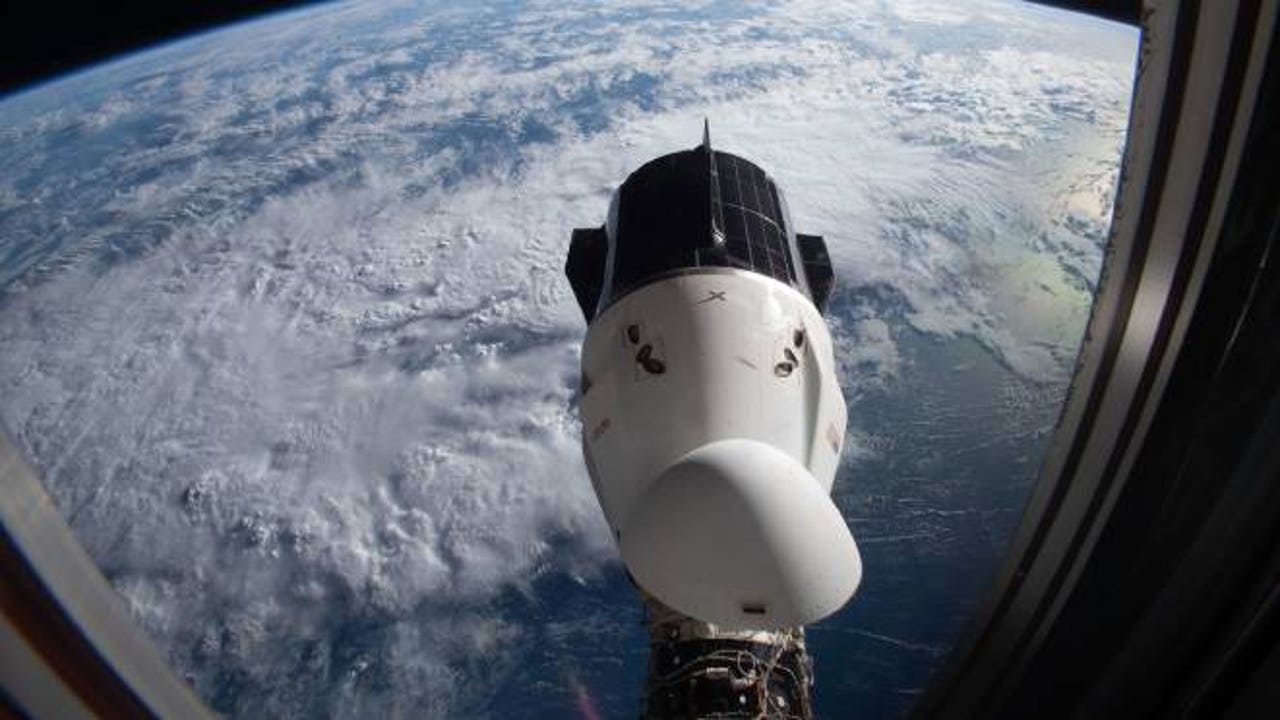
The public confrontation that the president of the United States are maintaining, Donald Trumpand the richest man in the world, Elon MuskI could have as the first victim the International Space Station (ISS) and its astronauts. After Trump threatened to end the government contracts of the Magnate companies, he replied stating that ‘in the light of the President’s statement about the cancellation of my government contracts, @Spacex will begin to dismantle your Dragon spacecraft immediately‘.
In Light of the President’s Statement About Cancellation of My Government Contracts, @Spacex Will Begin Decommissioning its Dragon Spacecraft Immedialy pic.twitter.com/ng9sijjkgw
– Elon Musk (@elonmusk) June 5, 2025
Dragon is, from 2012the spacecraft that transports supplies to the International Space Station and, from 2020to astronauts. NASA has few alternatives, beyond resorting to Soyuz and Progress Russians, as it did before having the Dragon, to transport, respectively, crew and load.
Boeing’s failure with Starliner
Last year, Boeing He tried to perform the certification flight of his capsule Starlinerwhich should be an alternative to Dragon. However, The mission initiated last June was full of incidentsincluding up to five helium leaks and failures in some propellants during the approach maneuver, which made it NASA discarded the idea that astronauts who piloted it, Butch Wilmore and Suni Williams, will return with it to Earth.
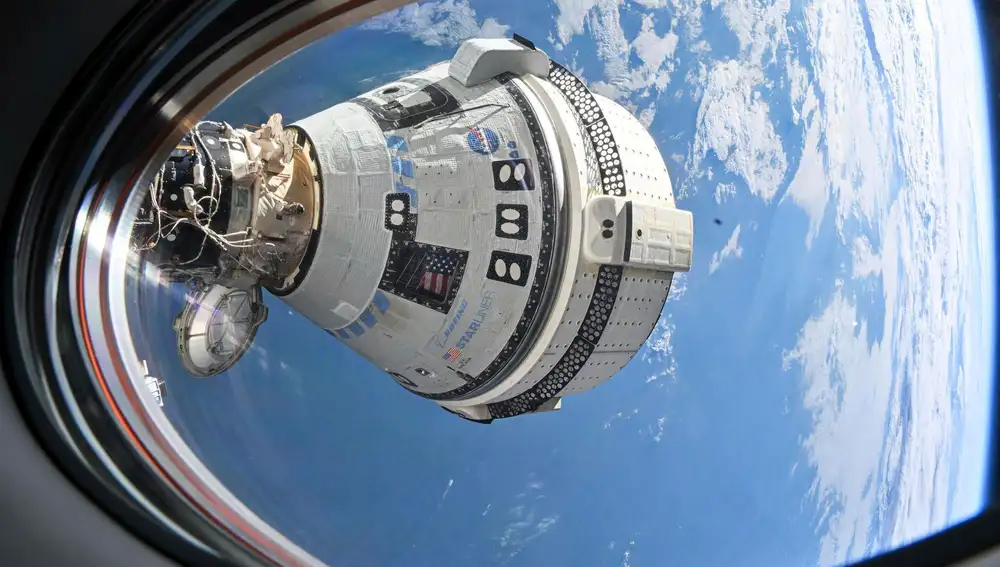
Starliner returned empty in September. Wilmore and Williams, who were initially going to remain in the ISS for 8 days, They finally abandoned the ISS last March aboard a dragon capsule. Needless to say, Boeing did not get the certification of the US space agency.
Why Spacex developed dragon capsules
Spacex began to develop the dragon capsule in the mid – 2000after NASA signed in 2006 An agreement under the program Cots (Acronym for Commercial Orbital Transport Services) that sought to introduce private cargo vehicles in the logistics of the International Space Station.
The reason, find an alternative to the space ferry whose withdrawal in 2011 left NASA without its own means to transport load and astronauts to the ISS. In 2008Spacex obtained a contract of 1,480 million euros for cargo missions. In 2010NASA started the CREW COMMERCIAL PROGRAM with which private companies also entered the transport of astronauts.
Dragon 1 vs. Dragon 2
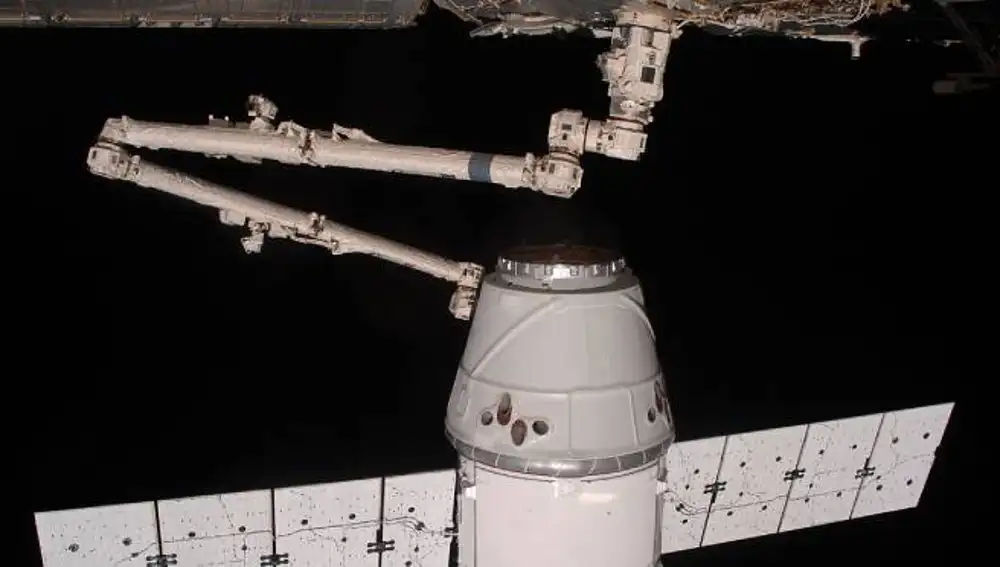
The Original Dragon (also known as dragon 1 or dragon charge) was initially designed as Reusable load capsulealthough with the aim of transporting astronauts in the future. This first version measured about 4.4 m high by 3.7 m in diameter, had a pressurized load compartment and a service module with drop -down solar panels.
He lacked an escape system at the launch that would allow him to move away from the rocket in case of emergency and, To attach it to the ISS, it had to be captured with the robotic arm of the stationinstead of doing it autonomously.
The second generation, Dragon 2introduced substantial improvements. In its version Crew Dragon (manned) can carry Up to 7 astronauts (They usually travel 4), it has life support systems, seats, digital controls and an abortion system in launch with launch 8 Superdraco motors Integrated in the emergency exhaust capsule.
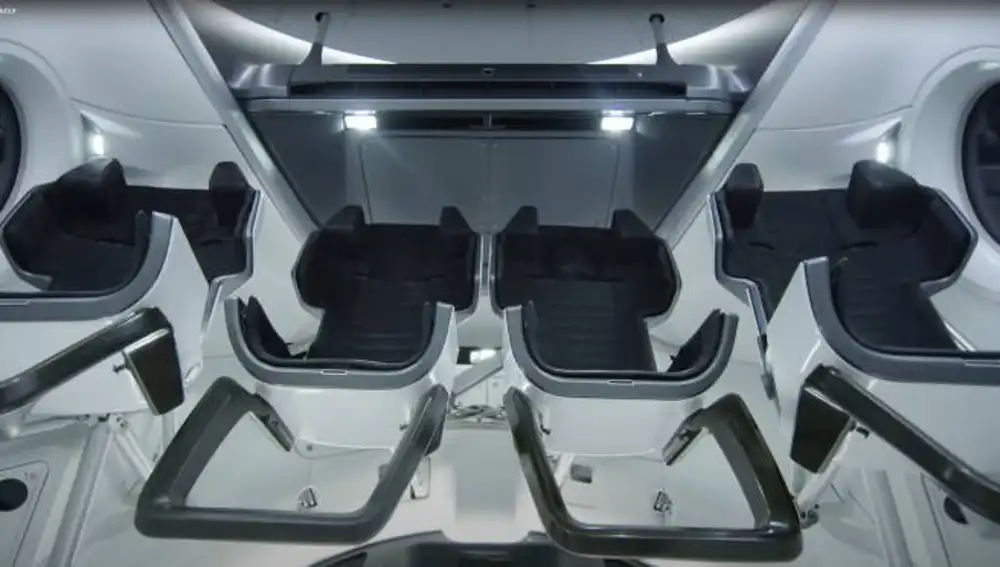
Dragon 2 has Automatic coupling to the stationeliminating the need for manual capture. There is also A second generation dragon position (not man) derived from the crew dragon which replaced from 2020 to the original dragon capsule in replenishment missions.
Both variants of Dragon 2 are reusable And they are equipped with an advanced PICA-X thermal shield, which allows them to return to land with delicate loads or scientific results. In fact, Dragon is the only current load ship capable of bringing significant load volumes from the ISS.
The role of Dragon in the ISS
NASA uses dragon for load transport to ISS For 13 yearsinitially with the original dragon, then with a dragon charge 2. From the certification in 2020Crew Dragon returned to the United States the manned flight capacity that depended, since 2011, exclusively on Russia and its Soyuz ships.
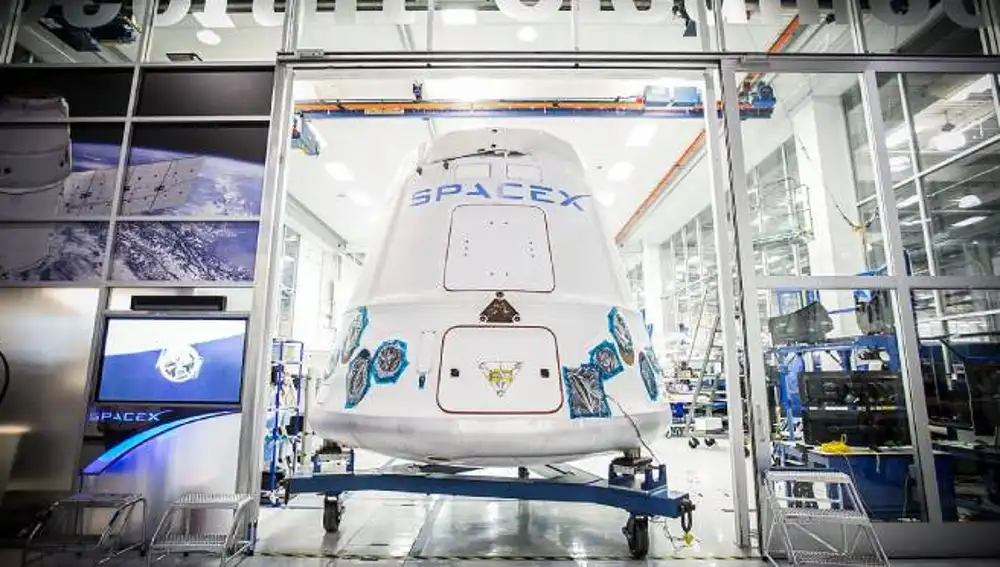
Dragon capsules (both cargo and manned) have become A key component for continuous operability of ISSproviding regular delivery of supplies, equipment and experiments, as well as rotation of astronauts. Not only in this aspect are fundamental, but Spacex obtained a contract with the Trump administration for Exorbit the ISS in 2030 using a larger dragon capsule than usual to push the station towards the ground. This is also in the air with the current fight between Trump and Musk.
Transport alternatives to ISS
In addition to the aforementioned Soyuz and Progress of Russia, the United States has some alternatives for unmanned trips, but not for manned. The load capsule Cygnus of Northrop Grumman It operates since 2014 under the CRS program (acronym for commercial repayment services).
The European Space Agency It has the cargo vehicle ATV (Automated Transfer Vehicle), used in 5 missions to ISS between 2008 and 2014. Japanmeanwhile, developed the HTV (H-II Transfer Vehicle, ‘Kourtori’), having made 9 successful supply missions between 2009 and 2020.
All these alternatives -rusas, American, European and Japanese- have contributed together with Dragon to guarantee regular crew access and supplies to the International Space Station for almost 3 decades. But Without Spacex, the only current way that astronauts have to travel and return from the ISS will be the Soyuz Russas.