
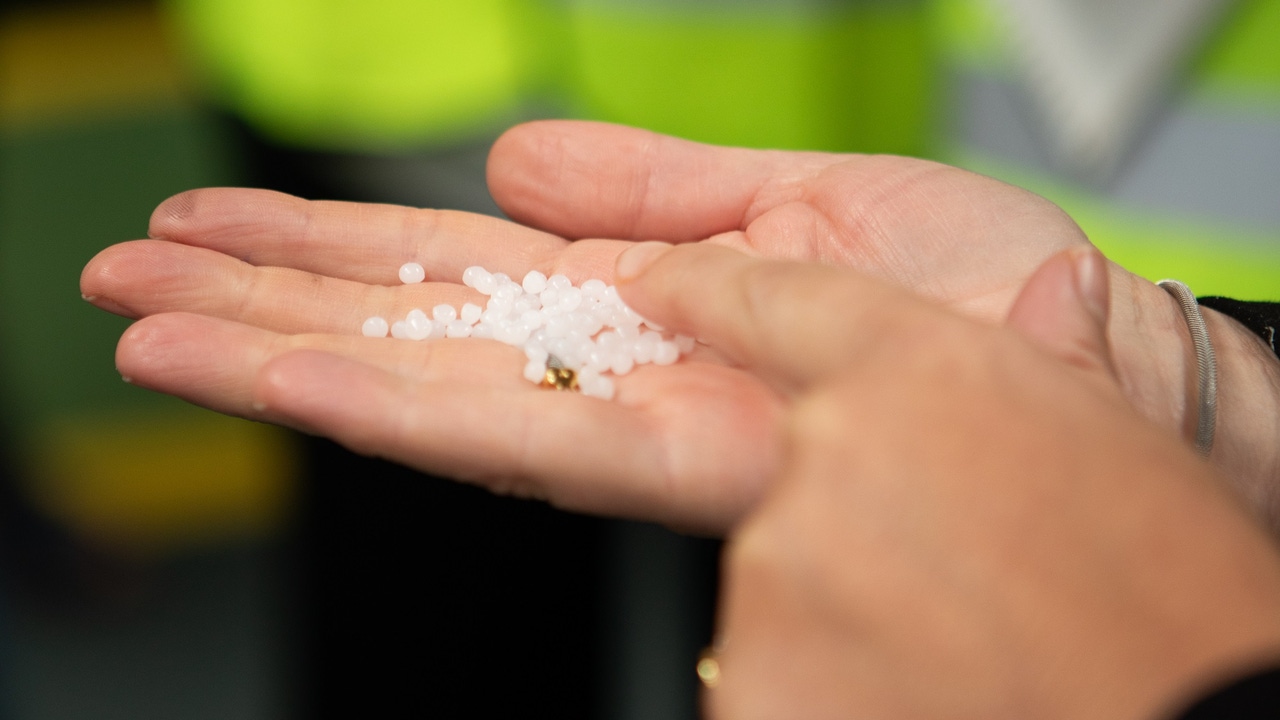
December 8 marks one year since pellet pouring that reached the beaches of Galicia. That day, the Toconao ship lost six containers in Portuguese waters. Each one stored about 1,000 25 kilo bags of pellets; those elusive spheres that are used as raw material to make plastic objects. The incident, which affected northern Spain, put the media spotlight on a problem that is not new.
The beaches in Spain that have the highest concentration of pellets from a historical point of view are located outside the Galician coast. They are Itzurun (Basque Country), La Pineda (Tarragona), Famara and Lambra (Lanzarote). Its levels are not a consequence of maritime discharges. They are related to the proximity of the plants that produce or use these small pellets of plastic, which can be accidentally lost when loading and unloading trucks, in the surroundings of factories or through drains, which end up in the sea.
This is why the Spanish industry has promoted pioneering solutions to “hunt” pellets that are involuntarily spilled at the different stages of the plastic value chain, from its manufacturing to its transportation, transformation and recycling. The objective is to achieve zero pellet losses; that is, microplastics.
“The majority of losses take place in logistics; in the path that connects the producer with the transformer,” he points out. Luis Cedielgeneral director of ANAIP, the Spanish association of plastics industrialists that brings together companies that work in the transformation of pellets. “But all entities that handle pellets or pellets run the risk of suffering emissions into the environment and, therefore, have to implement measures to avoid and control them. Furthermore, the industry’s responsibility to ensure that pellets do not reach the environment is directly,” he asserts.
To prevent the leakage of pellets in the value chain, the international industry promoted a voluntary initiative called Operation Clean Sweep (OCS). “It was born in the United States, but we brought it to Spain in 2016 and, in collaboration with Plastic Europe, we made it known in Europe,” explains Cediel. Adhering to this program means committing to making the goal of zero pellet losses a priority in the company. ANAIP is the licensee to apply it within our borders.
Broadly speaking, the initiative consists of carrying out a internal audit to locate critical pellet leak points and put control measures. “It is an extra job that requires investment, training and awareness from the owner to the last operator,” says Íñigo Querejeta, CEO of Contenur, the Spanish company that uses recycled pellets and pellets to create containers for selective waste collection. cities like Madrid or New York.
The measurements can be simple. In the Contenur factory in Madrid They have located brushes, collectors and a specific bucket for pellets in the hot spots. They have also raised the curbs in the areas with the highest risk of spills and have placed trays under the silos where the trucks unload, to retain the pellets. In addition, they have installed filters for microplastics in drains, sewers and manholes.
After this, Contenur employees were trained and protocols were established to explain what the OCS initiative consists of. The result? In five years, since the implementation of the measures, the weight of plastic raw material spill has been reduced by 30-40%. Every year, around a ton of spilled pellets are collected.
In Spain there are also solutions that use sophisticated technology, such as the electric vacuum cleaners sold by Glutton (based in Barcelona) or the cleaning through robots industrial plants that map the space of a complex and move through it, avoiding cranes and humans thanks to artificial intelligence, in a similar way to how an autonomous vacuum cleaner would do at home.
Another of the advanced technologies that are developed in Spain is Pelltinelpromoted by Repsol in the Tarragona industrial complex. This monitoring system with AI detects the presence of microplastics on solid or liquid surfaces through intelligent cameras, in all links of the chain: production, logistics or recycling.
The commitment of the Spanish plastic industry
The OCS program has had a great Spanish boost. Of the more than 5,000 companies in the world that are part of this initiative, 521 are national. Furthermore, the industry in Spain promoted the first European OCS certification. “ANAIP published the AENOR accreditation scheme in 2019, without foreseeing that any European regulation for the control of pellets would come,” highlights Cediel.
Contenur was the pioneer in obtaining the OCS certificate worldwide. We now have 61 certified organizations. Of them, more than half are transformer plantsone of the subsectors that benefits the most from avoiding material spills. “Any loss of pellets is always involuntary because the raw material is what the processor values most; the value of the pellets represents approximately 60% of the total cost of the product plastic,” reports the general director.
ANAIP has also created the Spanish and Sustainable Plastics Industry seala certification mark that recognizes companies that work to reduce their environmental footprint and improve their economic and social impact.
At this time, the European Commission studies whether to adopt legislation that regulates the activities of the entire plastic pellet supply chain. The proposal that has been put on the table includes obligations for the handling of plastic raw materials at all stages.
It will also require companies that handle pellets or pellets to estimate their loss and require them to obtain third-party verification (certification) proving that they implement measures to prevent leaks into the environment. And in this, the Spanish industry leads the way.