
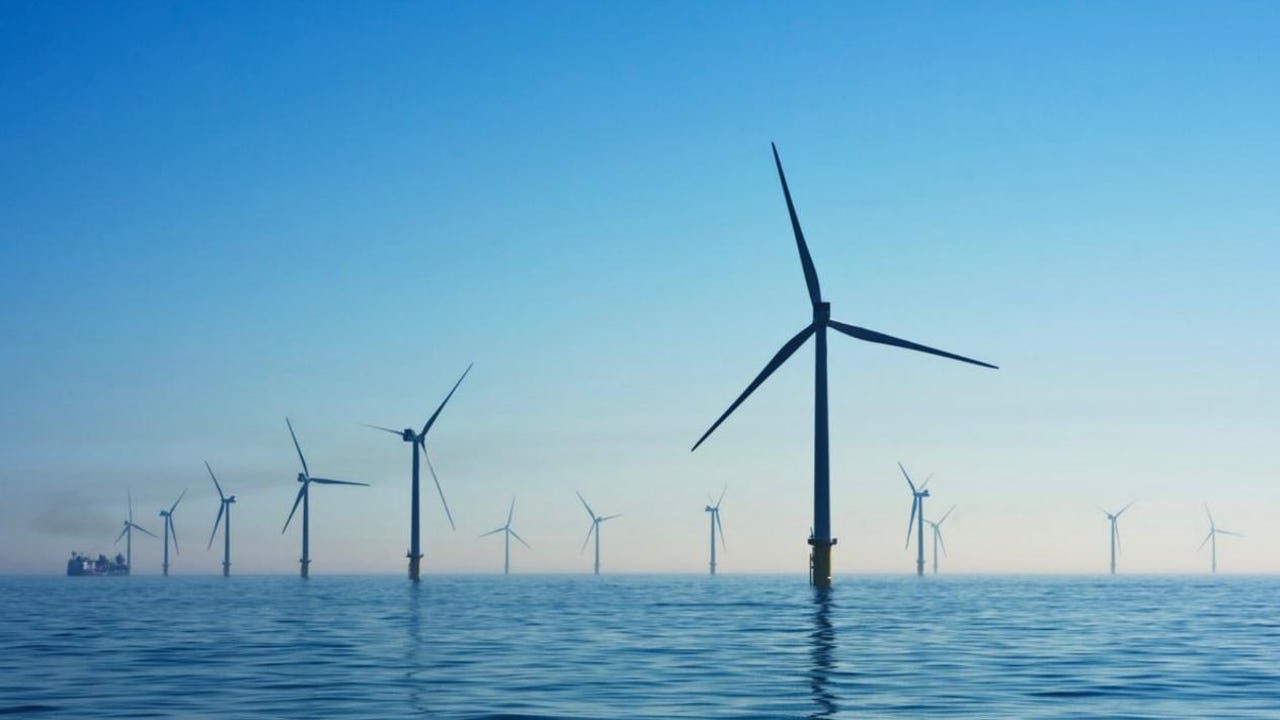
Marine technologies have come a long way in the last decade. Europe has 37 GW of installed offshore wind. In Spain, due to the depth of its coasts, floating technology is required, even less mature than fixed technology, but with great potential for decarbonization and industrial development.
A few days ago, the Ministry for the Ecological Transition and the Demographic Challenge launched for public consultation the order approving the bases of the first procedure that will regulate the concessions of “offshore” projects for offshore wind installations on our coasts, thus marking the starting signal for carrying out the first auction for this technology in Spain and which, if materialized, could attract billion-dollar investments in the coming years, according to sectoral calculations it could be more than 20 billion euros to develop three gigawatts of power in 2030.
In this way, the Government advances one of the sector’s requests that had not yet seen the light of day and that had been demanded for a long time. Specifically, the Spanish Wind Business Association (AEE) and the Offshore Wind Forum (FEM) came together a few months ago to urge the Government to call the first offshore wind auction in Spain, since, in their opinion, a serious risk of relocation of industrial and port investments to other countries such as Portugal, France or Morocco, which have already launched plans to deploy this technology, was being generated.
“There are areas in Spain that can clearly benefit from the activity that offshore wind can contribute to the local socio-economy. Continuing to postpone the necessary steps means losing industrial, employment and technological leadership opportunities at a key moment for the energy transition and the strategic autonomy of the country,” both organizations stated in a joint statement.
According to the sector, Spain, due to its future market growth scenario, its industrial capacities, its infrastructure and the availability of suitable areas in the POEM, has everything necessary to be at the top of the floating technology ranking at the European level.
Regulatory framework
The regulatory framework for offshore wind in our country is defined by the Maritime Space Management Plans (POEM) that establish the priority areas for the installation of offshore wind farms and establish the environmental, technical and social criteria that the projects must meet. In addition, the Ministry of Ecological Transition has made regulatory changes to streamline concession and licensing procedures, thus facilitating the arrival of international investors and the development of new technologies. The main objective is to reach between 1 and 3 GW of installed capacity before 2030, with special emphasis on floating technology.
Key regions identified in the POEM include Galicia, Andalusia, the Canary Islands and the Valencian Community. These areas have optimal wind and sea conditions, as well as port infrastructure that can be adapted to the manufacturing and assembly of floating platforms.
From the sector they assure that the deployment of offshore wind will bring a significant boost to the naval, metallurgical and energy industries, as well as to the technology centers and universities involved in research. In addition, coastal regions will benefit from the creation of direct and indirect employment, the development of new supply chains and the attraction of specialized talent.
However, the implementation of this technology is not exempt from environmental challenges such as the conservation of marine habitats and the protection of sensitive species. To address these challenges, environmental impact studies have been implemented and dialogue with local communities, fishermen and environmental associations is encouraged. Furthermore, technological innovation becomes a fundamental factor of competitiveness for Spanish industry.
National and international interest
Several companies, both national and international, have already shown interest in the planned developments. Energy companies such as Naturgy, in alliance with other companies, have been exploring this option for years, especially in the Canary Islands. Also, European giants such as Ørsted and Ocean Winds have shown their interest and are drawing up strategies to participate in future auctions.
In the coming months, public auctions are expected to be held for the allocation of offshore wind areas and projects, as well as the start of connecting the first parks to the national electricity grid. The main future milestones include the consolidation of a local supply chain, the attraction of new investors and the integration of offshore wind into the Spanish energy mix.
To support the sector, the Government has already granted 147 million in aid from European funds from the Strategic Project for the Recovery and Economic Transformation of renewables. More than two hundred million euros have also been awarded to adapt port infrastructure to the deployment of this new technology.