
Solar panels have a little-known advantage that has just been confirmed by research. Chinese scientists have discovered that large solar power plants have a positive impact on the environment of desert areas when they are installed in them. The results were presented in the report ‘Assessment of the ecological and environmental effects of large-scale photovoltaic development in desert areas’, published in Nature.
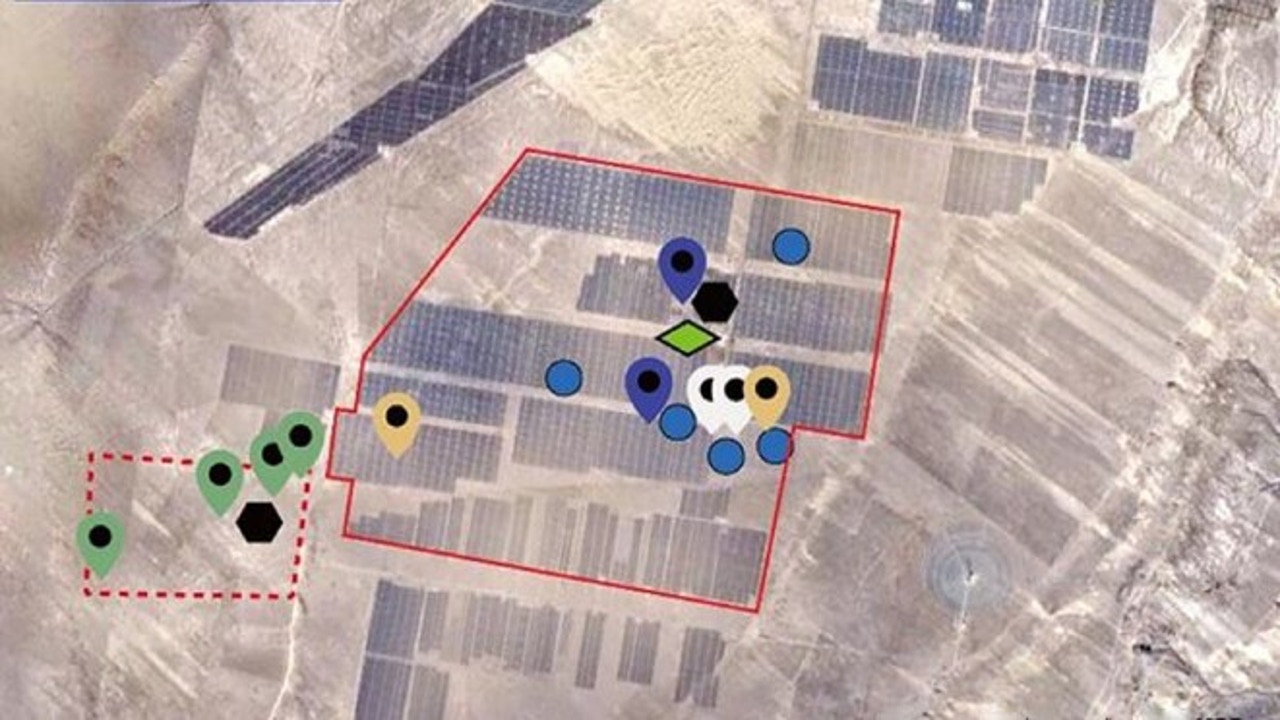
The team of researchers from Xi’an University of Technology in China has evaluated the ecological and environmental effects of developing large-scale photovoltaic plants in these types of environments. As a case study they took the Gonghe Photovoltaic Park of Qinghai, a huge facility of 1 GW located in an arid alpine desert in Talatanin Qinghai province, northeast China. For the results, they compared different points within the photovoltaic plant (WPSfor its acronym in English), in transition zones (TPS) and outside of it (OPS).
‘To ensure the sustainable growth of the photovoltaic industry, it is essential to establish a system of indicators to evaluate the ecological and environmental effects of photovoltaic development‘, says the study. For this reason, its analysis is based on the model DPSIR (acronym in English for Driving Forces-Pressure-State-Impact-Response), recommended by the European Environment Agency (EEA). This framework breaks down environmental problems into the five aspects mentioned in the name.
The driving forces they refer to the underlying causes of environmental change; the pressures are the direct effects of these forces on the environment; he state refers to the current condition of the environment as a result of pressures; while the impact refers to its effects on human health and biodiversity; finally, the answer is the action taken to address or reduce impacts.
In total, they analyzed 57 indicators in those fields. Some of the data was taken from official documents and others came from real-time monitoring, sample testing and field investigations. When weighting the result, the indicators with lower variability had more weight than those with higher variability.
In the DPSIR model, the environmental rating ‘worse’ is achieved if the score range is 0 to 0.2while the rating ‘poor’ is achieved if it is 0.2 to 0.35. The rating ‘general’ is obtained when the score is between 0.35 and 0.55the ‘good’ when the score is 0.55 to 0.75and the ‘excellent’ If it ranges between 0.75 and 1.
‘Overall, the large-scale development of desert photovoltaics in Gonghe County has had a positive impact on the ecological environment‘, concludes the study.
The scientists found that the score on the WPS, with 0.4393, was ‘general’; TPS and OPS scored ‘poor’ with 0.2858 and 0.2802respectively. All DPSIR indicators scored better in WPS zones than in TPS and OPS.
According to the scientists, this suggests that ‘photovoltaic development has mainly induced positive effects on the microclimate of the region, the physical and chemical properties of the soil, and the diversity of plant and microbial communitiesas supported by recent findings’.