
Coexistence can be one of the most complex aspects when residing in a housing complex, especially when the community of neighbors prevents certain works from being carried out, even if these are carried out inside the individual property. Something that can end in quite high economic sanctionss.
This is what happened to Jinah Kim, a homeowner in the state of California whose management was led by a homeowners association. One day, due to use, one of the doors inside his property broke, but in order to change it, he had to ask permission from your community and ask them to accept the works.
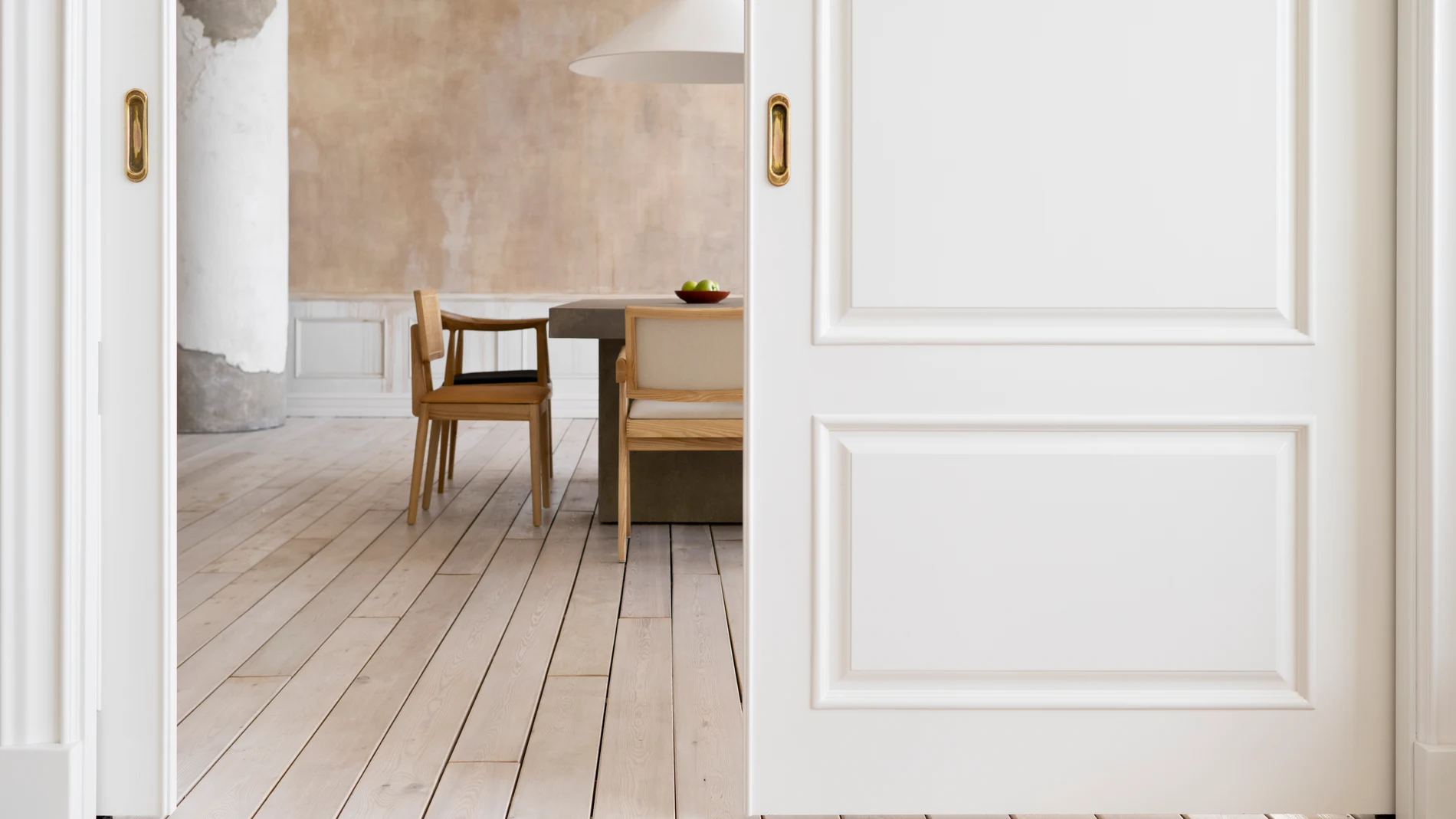
Specifically, it was the door that separated his office from the dining room, which is why he was surprised when, even though it was an interior element of the home, the homeowners’ association denied his request. However, thinking that it would not cause any inconvenience to his neighbors, he decided to change it. That’s when neighborhood conflicts began.
The association fined him $500 a day.
The administrator of the association observed the reform that Kim had carried out without his authorization and decided to financially sanction it. The fine was an initial 100 dollars to which had to be added 500 dollars per day, that is, 437 eurosuntil he decided to reinstall the previous door, even though it was broken.
Fortunately, a change in California state law reduced the ability of homeowners associations to impose financial penalties. Specifically, it established that fines could not be more than $100 per violation, unless it posed a risk to the integrity of the neighbors. Hence Kim only had to pay the initial amount.
Could it happen in Spain?
American legislation regarding the management and administration of neighborhood communities is quite different from that of Spain. In our country, the Horizontal Property Law is responsible for establishing a series of obligations and rights for homeowners who are in a building that has different properties or premises. And, specifically, it regulates those works that can be carried out without authorization prior to the neighbors.
Article 7.1 of Law 49/1960, of July 21, better known as the LPH, establishes that “the owner of each apartment or premises may modify the architectural elements, facilities or services of the building when it does not undermine or alter the security of the building, its general structure, its configuration or the state of the exterior.” However, dYou should notify your neighbors before starting the renovations..
Differences between interior and exterior doors
This means that the doors inside the property are considered private elements whose modification is the complete responsibility of the homeowner. Therefore, he could change it whenever he wanted, as long as he previously communicated it to his neighbors and the installation is not carried out in a way that could be considered annoying, unhealthy, harmful, dangerous or illegal. Besides, This change cannot be prohibited in the community statutes.
In the case of the exterior door, its modification is restricted, as it is considered part of the common elements of the building. To avoid neighborhood conflicts, this may be changed without authorization when present the same dimensions, design and color as the originalsince it would not affect the aesthetics of the building or the common areas.