
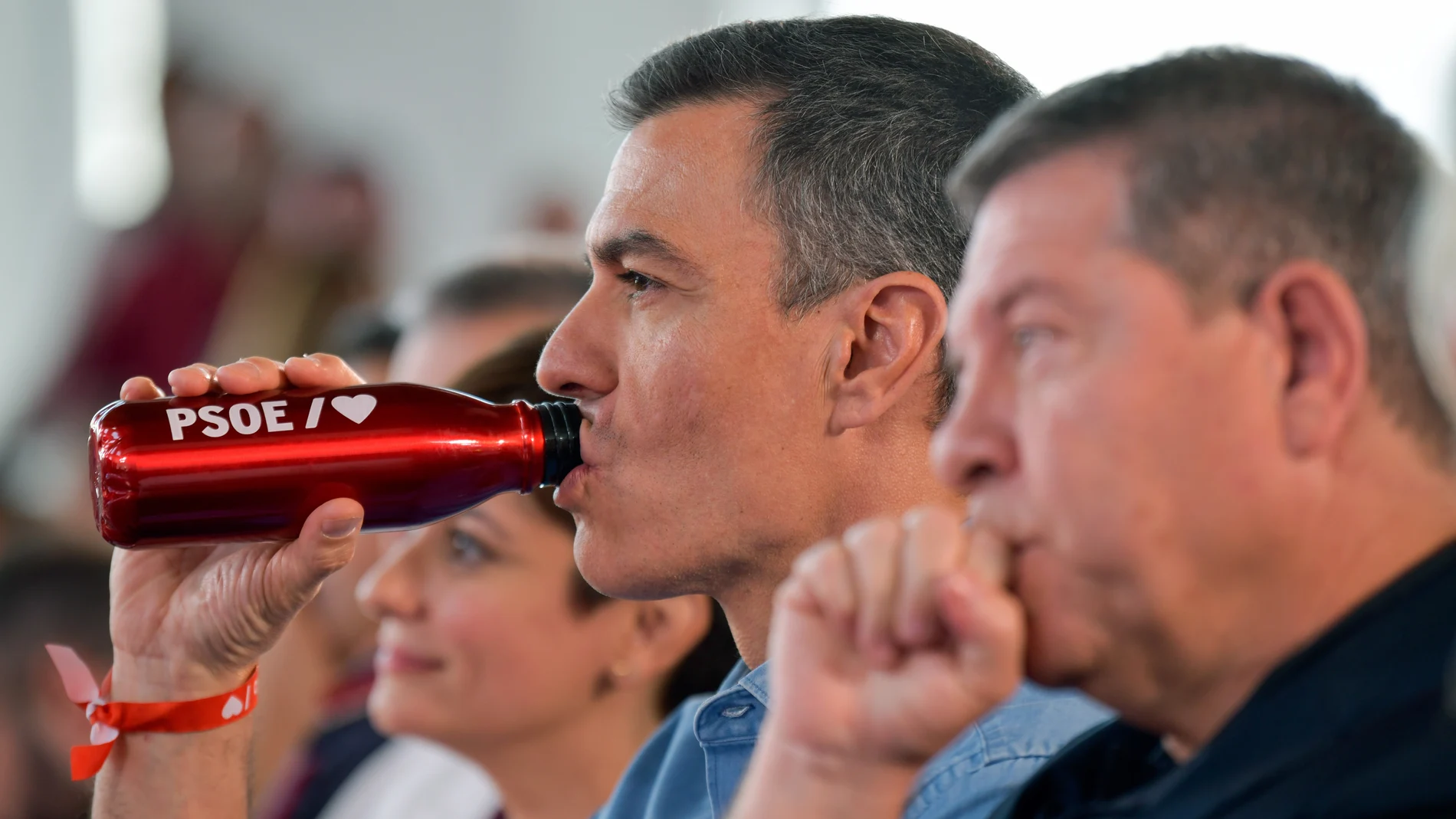
Pedro Sánchez has begun to talk to some of his interlocutors about his political future from a hypothesis that until now was not part of their conversation: the need to continue leading the PSOE from the opposition after the next general elections. It is precisely this movement that has returned to some conversations within the PSOE a possibility that Sánchez has also expressly denied on several occasions: that it ends up making the general elections coincide with the municipal and regional elections of May 2027.
Sánchez reiterated on September 9 that “there will not be a super Sunday election,” after having already ruled it out in June “actively and passively.” But The concern comes from something much deeper and politically more uncomfortable for the PSOE: leaders who know the general secretary well consider that he will always put the conditions of his own political survival before the electoral interest of mayors and regional candidates. In fact, the question that part of the party is beginning to ask itself is no longer, therefore, which calendar offers Sánchez the best chance of winning, but rather which one would allow him face a defeat in better conditions to later retain control of the PSOE.
The calculation made by these sources is simple. If Sánchez calls the general elections in February or March and loses, the defeat will be fundamentally his and he will have immediately behind the municipal and regional elections in May, with hundreds of socialist candidates needing to protect their electoral possibilities and territorial leaders with enough power to demand responsibilities.
He would no longer be anyone and the PSOE would have to decide whether to face that second major electoral event with a general secretary who has just lost La Moncloa: all the candidates would have every reason to distance themselves from Ferraz and turn their campaigns into a defense of their own management. If, on the contrary, Sánchez waits until after May and the polls confirm the strong territorial decline that the party fears, he would reach the general elections with fewer mayors, less institutional power and an organization hit by a first defeat.
Super Sunday avoids both intervals because it concentrates all responsibilities in a single night: Sánchez is risking La Moncloa exactly at the same time that the others are risking their communities and their town councils. That is where some leaders already introduce, in private, a much harsher component in their analyzes and speak survival and revenge. They seriously doubt that he is willing to sacrifice his own interests to protect those who could become internal counterpowers after his defeat.
The distrust reaches the point that some socialists believe that, faced with the prospect of abandoning La Moncloa, Sánchez could prefer a scenario in which the entire party shares the defeat before another, in which it loses, while sufficiently strong regional presidents, mayors and federations survive to immediately discuss the leadership of the PSOE.
This fear has its own name and is called Emiliano García-Page. The president of Castilla-La Mancha is today an exception within the socialist territorial map for two reasons: he retains the Government with an absolute majority and has turned his disagreement with Sánchez into a sustained political position, to the point of being practically the only critical voice heard in the Federal Committee in June, when the rest of the organization closed ranks with the general secretary. The coincidence of generals with regional governments makes it more likely that the PSOE will lose its absolute majority and Page will end up in the opposition. Sánchez would take charge of this uncomfortable piece at the expense of the general interest of the party. Asturias has lost it, according to most of the surveys that circulate; and Navarra is more than likely to remain in the hands of the pro-ETA left, with the PSOE as a support stick.
The dimension of revenge that some socialists attribute to the Super Sunday hypothesis is not limited to Page, because The same mechanism would affect leaders who during these years have disagreed with Ferrazto mayors who have built an electoral brand independent of Sánchez and to territorial structures that could play a role in the succession. But it has a characteristic that makes the scenario even more disturbing for the party: it would not protect the loyalists either. Oscar Lopez Madrid would have to compete within the same campaign in which Sánchez is playing La Moncloa and the same would happen with regional and municipal candidates elected or supported by the current leadership. Super Sunday would not allow selecting who pays for wear and tear and who is protected; It would turn the May elections into a single national political operation and subject the entire PSOE to Sánchez’s result.
Hence, those who contemplate this possibility do not speak so much of an operation aimed at individually punishing their adversaries as of a colder strategy: If Sánchez’s political cycle ends, let the territorial cycle that could outlive him end at the same time. The PSOE is already immersed in the election of its candidates for May 2027 and the Federal Committee itself approved the primary process for communities and municipalities in June, with successive windows in July, September and November, which means that While Moncloa keeps the date of the general elections open, the party is already selecting those who will have to risk their territorial future.