
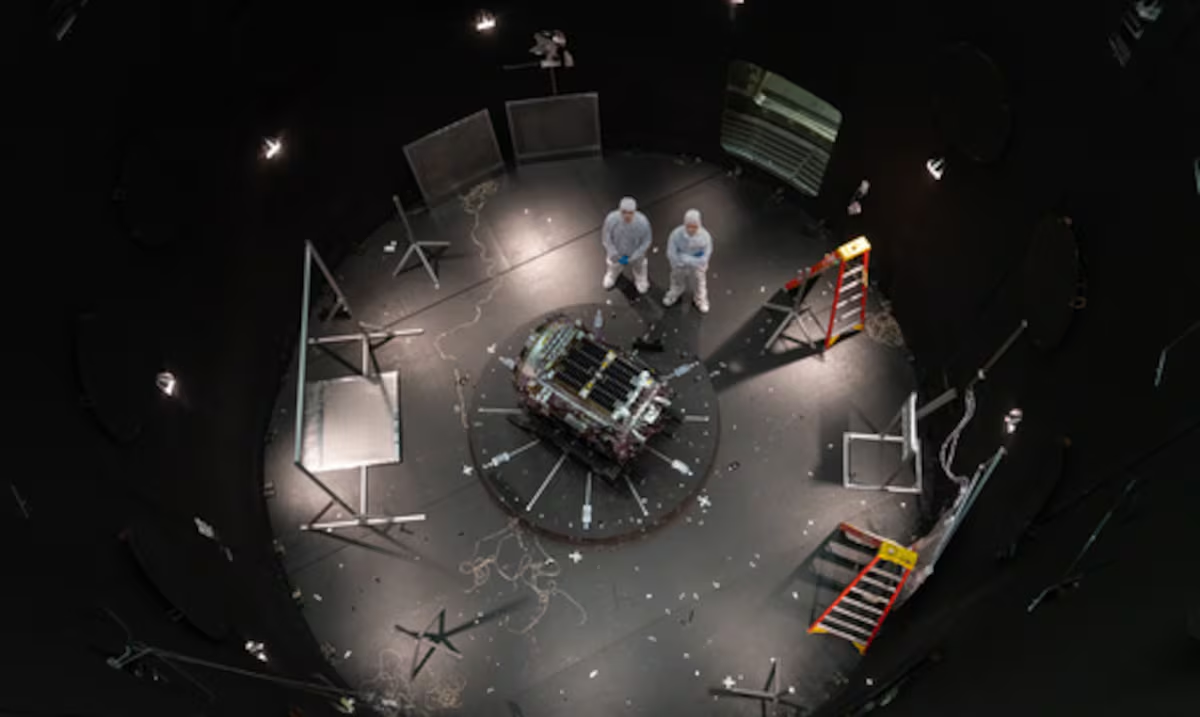
Cape Canaveral – The spacecraft rushing to rescue an aging and sinking NASA telescope has run into a problem of its own.
Katalyst Space Technologies reported this Tuesday that its Link satellite is experiencing problems with its thrusters and has entered an uncontrolled rotation that is disrupting communications.
The problem occurred over the weekend, three weeks after the three-armed robotic spacecraft entered orbit.
The startup has said it is working tirelessly to get Link back up and running so it can capture Swift and lift the telescope into a higher orbit. Without help, Swift will crash to Earth this fall. NASA is paying $30 million for the rescue operation, which has been put together in less than a year.
Launched in 2004, the Swift is descending faster than expected due to recent solar activity. You need a boost as soon as possible so you can continue exploring the universe for some of the biggest explosions, like gamma ray bursts and exploded stars. Scientific observations are on hold until then.
Neither Katalyst nor NASA is losing hope. According to the company, the rest of the Link’s main subsystems appear to be working correctly.
“The mission remains ongoing and we continue to believe that with these changes, Link has a viable path to reuniting with Swift,” Katalyst said in a statement.
This story was translated from English to Spanish with an artificial intelligence tool and was reviewed by an editor before publication.