
Drafting Science – A team of researchers has turned some molecules of the Aspergillus flavus fungus into a powerful cancer composed. He Aspergillus flavus It is a toxic fungus that affects crops and has related to deaths in excavations of ancient tombs.
Researchers, led by the University of Pennsylvania (United States), modified some of its molecules and tested them against leukemic cells. The result was a promising cancer composed that opens new borders in the discovery of more medications derived from fungi.
“Fungi gave us penicillin. Now these new results show us that there are still many more medications derived from natural products”underline Sherry GaoBioengineering professor at the University of Pennsylvania and main author of the study whose details have been published on Monday in the journal Nature Chemical Biology.
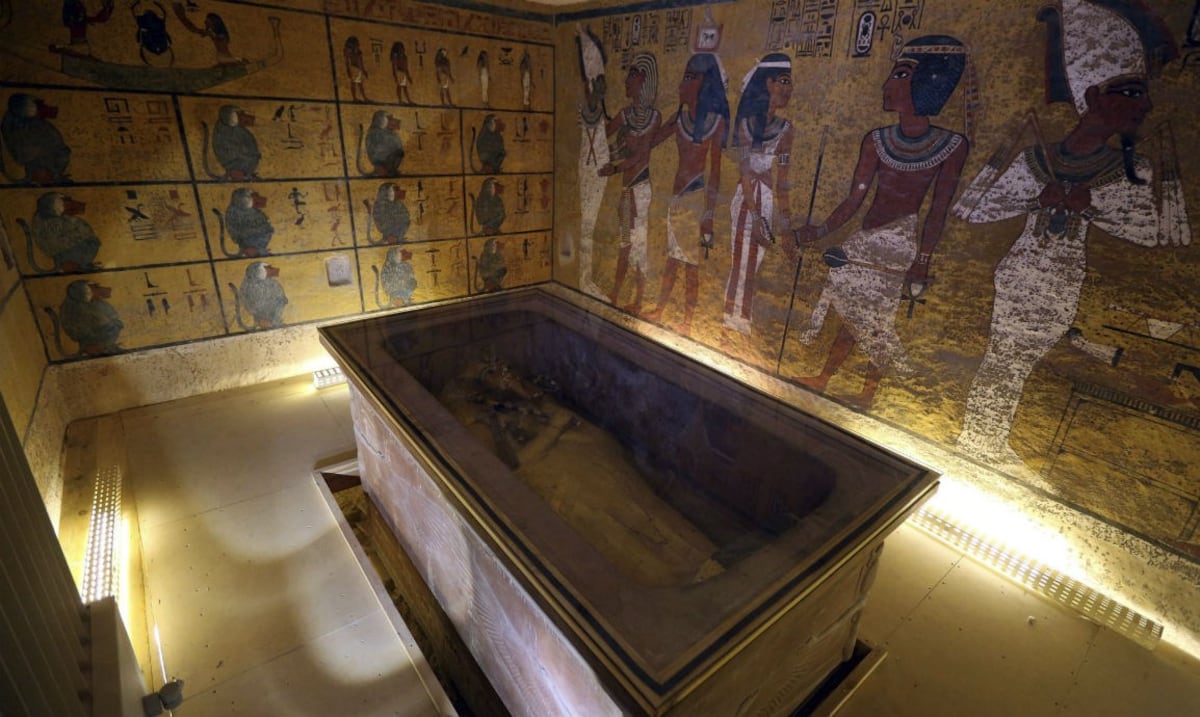
The Aspergillus flavus, named for its yellow spores, has long been a villain microorganism. After archaeologists opened the tomb of King Tutankhamun in the 1920s, a series of premature deaths between the excavation team resulted in the Pharaoh curse.
Decades later, doctors theorized that fungal spores, latent during millennia, could have played an important role.
And in the 1970s, a dozen scientists entered the tomb of Casimiro IV in Poland, and happened again: in a few weeks, ten of them died. Subsequent investigations revealed that the grave contained A. Flavus, whose toxins can cause pulmonary infections.
Now, that same fungus is the unexpected source of a new and promising cancer therapy.
The therapy in question is a class of peptides synthesized by ribosomes and modified, or RIPP. The name refers to how the compound is produced – by ribosome, a small cell structure that manufactures proteins – and the fact that it is subsequently modified, in this case, to improve its cancer properties.
“Purifying these chemicals is difficult”he explains Qiuyue Niepostdoctoral researcher in Pennsylvania and first author of the article.
Although thousands of RIPP have been identified in bacteria, only a few fungi have been found.
To find fungal RIPP, the team first analyzed a dozen strains of Aspergillus, which according to previous investigations could contain more of these chemicals.
When comparing the chemical substances produced by these strains with the known basic components of the RIPP, the researchers identified A. Flavus as a promising candidate to continue studying it.
The genetic analysis indicated a concrete protein of A. Flavus as a source of fungal RIPP. When the researchers deactivated the genes that create that protein, the chemical markers that indicated the presence of RIPP also disappeared.
This novel approach, which combines metabolic and genetic information, not only identified the fungal RIPP source in A. Flavus, but could be used to find more fungal RIPP in the future.
A powerful medication?
After purifying four different RIPPs, the researchers discovered that the molecules shared a unique structure of intertwined rings that were baptized as ‘asperigimicines’.
Even without modifications, when mixed with human cancer cells, asperigimicins demonstrated their medical potential: Two of the four variants had powerful effects against leukemic cells.
Another variant, to which the researchers added a lipid that is also found in the royal jelly and that nourishes the developing bees, worked as well as the citarabine and daunorubicin, two drugs approved by the US health authorities that have been used for decades to treat leukemia.
Through additional experiments, The researchers discovered that asperigimicins probably interrupt the cell division process.
“Cancer cells are divided uncontrollably. These compounds block the formation of microtubules, which are essential for cell division”explains Gao.
It should be noted that compounds They had little or no effect on breast, liver or lung cellsnor on a series of bacteria and fungi, which suggests that the disruptive effects of asperigimycins They are specific to certain types of cells, A fundamental characteristic for any future medicine.
In addition to demonstrating the medical potential of asperigimycins, researchers identified similar groups of genes in other fungi, suggesting that there are still fungal ripps.
The next step is Try asperigimycins in animal models, hoping to spend some day to clinical trials in humans.