
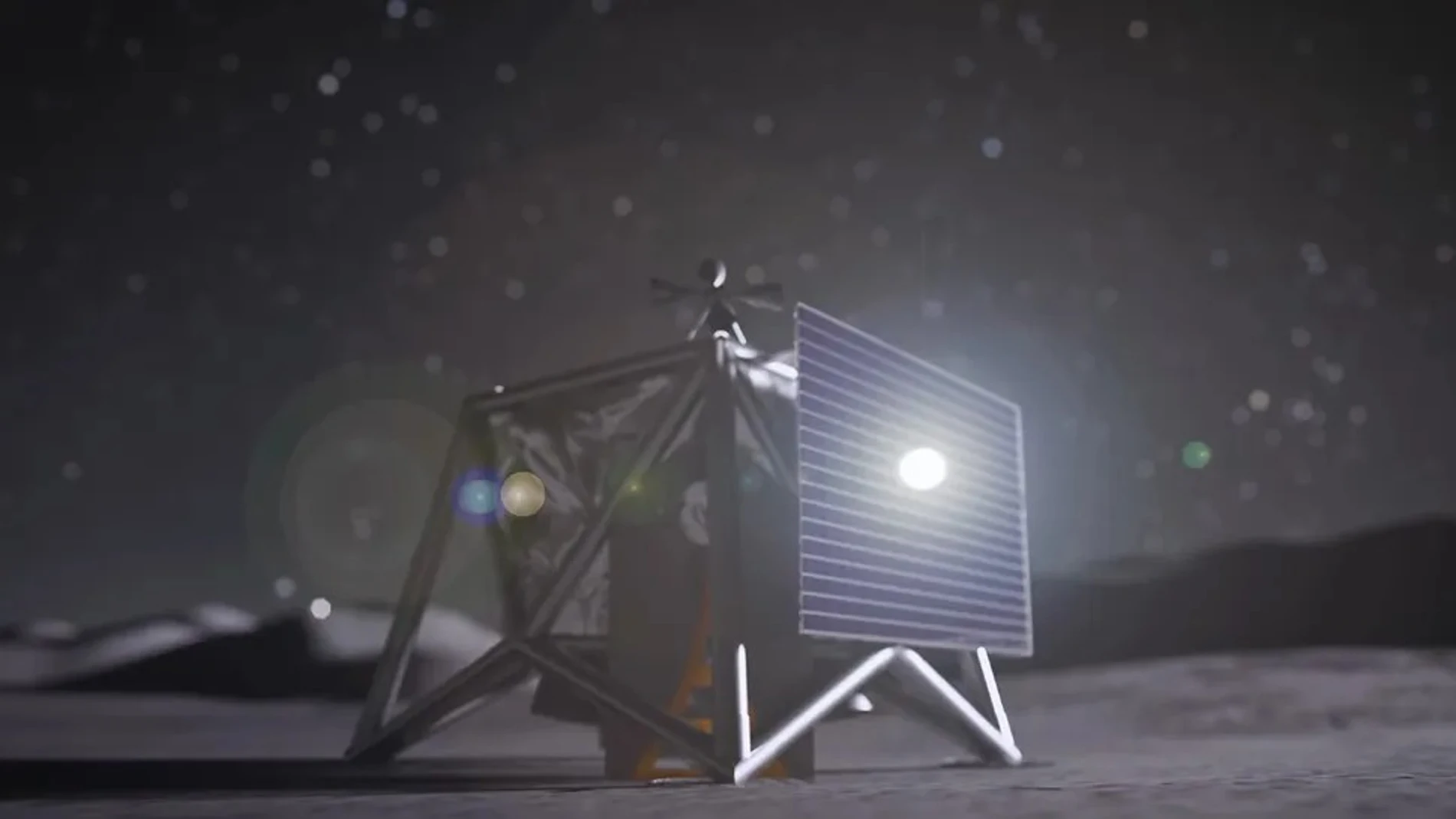
During the event Ignitionheld last month, in which the POT gave more details about the remodeling of the program Artemis announced in February, Jared Isaacmandirector of the space agency, mentioned a series of robotic missions to explore and prepare for surface operations before the astronauts set foot on it, if the plans are fulfilled, in 2028. Under this approach, NASA seeks to use hopper or jumper dronesmachines that can move by means of brief propelled impulses, carrying out ballistic trajectories from one point to another. This is the initiative MoonFallfor which NASA published a request for proposals on March 24, coinciding with Ignition.
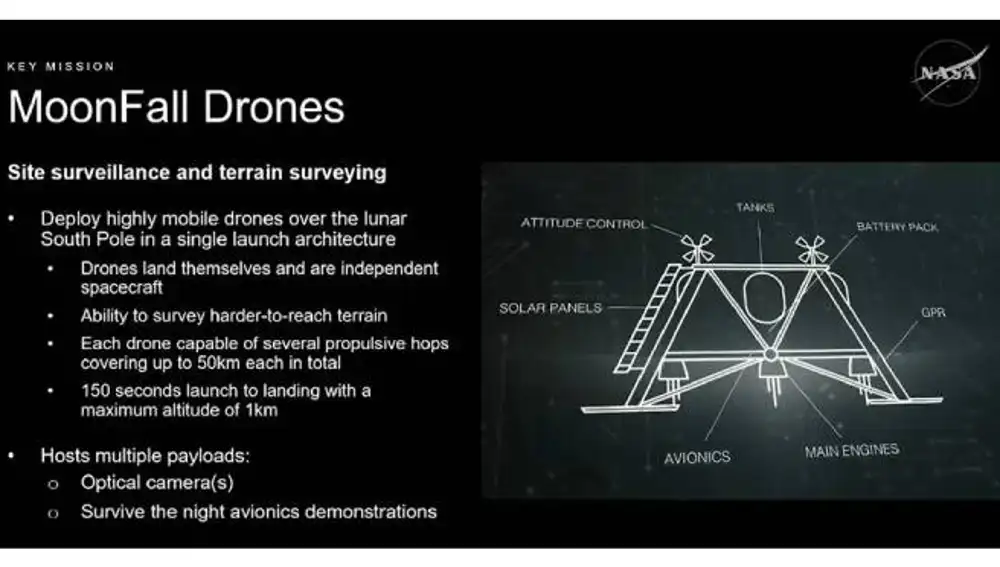
Ray Bakerresponsible for the MoonFall project in the Jet Propulsion LaboratoryNASA’s JPL in Pasadena, California, has given more details about this to Space.com. The program contemplates the deployment of drones with cameras and sensors about a place yet to be selected at the south pole of the Moon. ‘Our goal is that each drone can cover a radius of about 50 kilometers and achieve it by the end of 2028‘, Baker told the media.
Its development will be supported by the experience learned with Ingenuitythe helicopter that NASA sent to Mars in 2021, which planned to carry out five flights and which ended up reaching 72until the rotor blades were damaged in January 2024.
‘We have to stand on their shoulders. We’re going to combine our success with Ingenuity, all that knowledge, all that expertise and that success, with the capability of the industry. Let’s get it‘ says Baker.
The head of MoonFall explains that the lunar fleet of drones will consist of four UAVs, with a set of 10 cameras and scientific instruments each, 40 in totalspread across the lunar landscape. The images they capture will be combined to obtain an unprecedented view of the lunar environment that will allow decide future landing sites for the Artemis missions, as well as to install the infrastructure of the future lunar base.
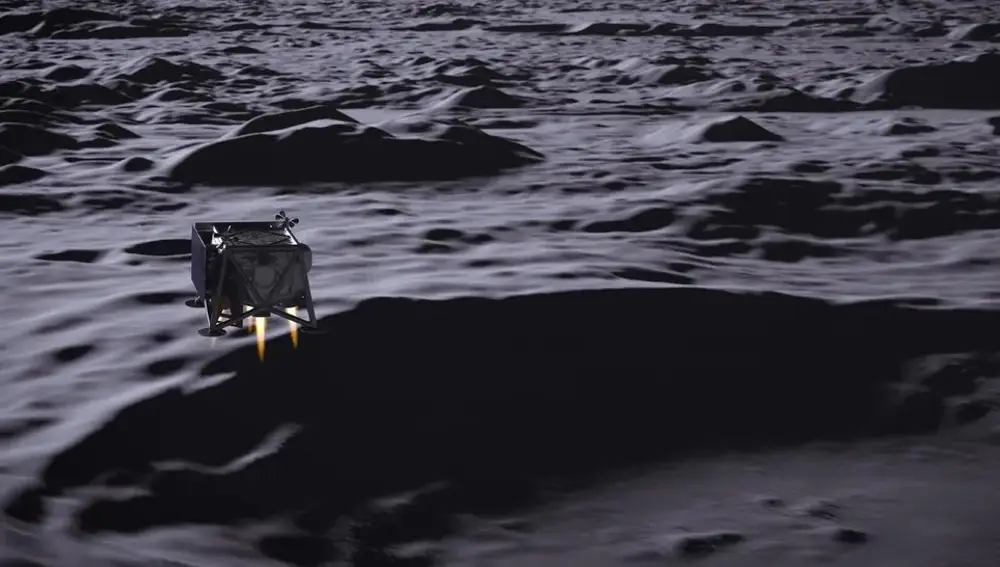
When they make their ‘jumps’, in the aerospace sense of the term, and approach the landing site, each will evaluate what it sees and will land in the safest area. They can reach an altitude of up to 1 kilometer in each one and the time between launch and landing will be 150 seconds.
MoonFall is moving quickly, as has everything related to Artemis since NASA reshaped the program. ‘We are looking forward to selecting our industrial partners and taking this forward. It’s going to be a really exciting journey. We hope to have our main partners selected by June of this year‘ says Baker.
Integration and testing of the spacecraft are planned for late summer 2027with the launch scheduled for 2028. ‘It will be a fast pace. We believe we can do it,’ says Baker.
‘NASA is still finalizing cost and budget detailsso we cannot provide that information yet. But we are confident that, in collaboration with industry, JPL has the capabilities and technology necessary to meet the schedule,’ Baker tells the outlet.
The drones will be able to be deployed during the intermediate phase of the descent on the Moon, avoiding the additional cost and risk of a powered lander. ‘In addition, the mission will take advantage of industry capabilities for the transfer and braking stage, as well as for the mechanical and propulsion systems of the drones. As such, This mission fits well with the NASA administrator’s goals of reducing costs for a better chance of success.‘concludes Baker.