
There is life after the BOE. Some senior government officials return to university. Others recover old professions. And a few change the official office for a board of directors or a consulting firm. Having worked at the core of power provides experience, knowledge of the Administration and a contact list that is difficult to acquire outside of it.
The law allows you to take advantage of that baggage later, although during the two years following the termination it requires you to first go through a last window of the State: the Office of Conflicts of Interest. The Transparency Portal allows you to follow the trail. In the first four months of 2026, 12 authorizations were granted to 9 former senior officials to carry out private activity – some requested permission for more than one.
Their destinies draw a particular geography of professional life after passing through the Government: Técnicas Reunidas, NTT Data, Cajamar, Intelcom, Redeia, universities, foundations and consulting firms appear on the other side of the door. The phenomenon is neither new nor small. Since 2014, the office has authorized 644 activities for former Administration bigwigs. Only in 2024 he conceded 76. And 71 in 2025. The record was in 2019, Sánchez’s first full year in Moncloa, with 87 authorizations. The data corresponding to 2026 are still provisional: Transparency has only updated information until April. The Government machinery, meanwhile, continues to move.
Dismissals and replacements happen almost month by month. The BOE has certified the departure in March Carlos Moreno Medinas director of the Cabinet of the First Vice Presidency –reappointed by María Jesús Montero as advisor to the party–.
In February, the Daniel Losada Millar as director of the Cabinet of the Secretary of State for Ibero-America – now special envoy in Sudan – and, in July, that of Antonio Francisco Ansón Latorre as director of the Cabinet of the Secretary of State for Finance to become the new head of the Tax Agency. Not all layoffs are about abandoning ship.
Although most do involve leaving the happy circle of power. And that’s right when the afterlife begins. Fernando Morán knows Algeria well. He was Spain’s ambassador to the North African country until December 2025 and during his diplomatic period he attended some of the most delicate years of relations between Madrid, Algiers and Rabat. Barely two months after leaving the Embassy, in December, the Conflict of Interest Office authorized him to work at Técnicas Reunidas, one of the large Spanish multinational engineering companies with important interests precisely in Algeria. He also received permission to direct the Spain-Africa Foundation.
The jump is especially striking due to the chosen destination, although the administrative authorization would prove that the Conflict of Interest Office did not appreciate any incompatibility. The rule does not prohibit a former senior official from working in the private sector. Although it establishes controls during the two years after leaving the position to avoid conflict situations with the responsibilities previously exercised.
Enrique Belda Esplugues has also followed the same path: from the Ministry of Transport to the technological world. After directing the Port Authority of Valencia and after an extensive career in the Administration also linked to technological security systems, he received authorization in February to work at NTT Data Spain, a multinational in the sector with a very relevant presence in public administrations that is part of the Japanese group NTT DATA. The multinational is dedicated to the development and maintenance of computer systems, cloud, artificial intelligence, data and cybersecurity.
Karim Fabrice El Kouche has not had to change sectors too much either. He was general director of Correos Express Parcel Urgent and the authorization that he received in January maintains the same thread: Intelcom, international company specialized in last mile logistics and distribution. The financial world also appears on the map. Pilar Sánchez Núñez has gone from sitting in one of the most important regulatory bodies in the State to obtaining authorization to join the Banco de Crédito Cooperativo, head of the Cajamar Group. Sánchez had been an advisor to the National Markets and Competition Commission (CNMC), in charge of ensuring the correct functioning of the markets.
Not all roads lead to big companies. Paula Fernández-Wulff Barreiroformer general director of Agenda 2030, has found a place in the classrooms. The Government granted him two authorizations on the same day to carry out activities at the Catholic University of Leuven and at the IE Law Faculty. Antonio Hernández Espinal spent years within Pedro Sánchez’s Cabinet. He joined the Presidency in 2018 and came to direct the Political Coordination Department, one of the mechanisms in charge of following and designing the president’s political strategy.
Before coming to the Government he had already worked as a political consultant in campaigns in Spain and Latin America. After leaving Moncloa, the Conflict Office authorized him to return to consulting and strategic communication, including an activity linked to Formación Política, SL The list goes on. José Luis Navarro Riberaformer president of Enresa, received authorization to join Redeia. Ana Isabel Berenguer Giménez, former general director of Planning and Evaluation of the Ministry of Housing, will be able to work with the Conexus Foundation. AND Celia Gómez Gonzálezwho directed Professional Planning in Health, was authorized to assume the direction of the Foundation for Biohealth Research and Innovation of Asturias.
None of these authorizations implies any irregularity. In principle, all of them have passed the control established by legislation for those who abandon public responsibilities. During the two years following termination, former senior officials who intend to provide services in private entities must communicate this in advance and receive approval from the Conflict of Interest Office. The revolving door is not necessarily a forbidden door. Below the Council of Ministers there is a whole tangle of secretaries of state, general secretaries, general directors, presidents of public companies, heads of organizations and advisors who come and go. continually from the Administration.
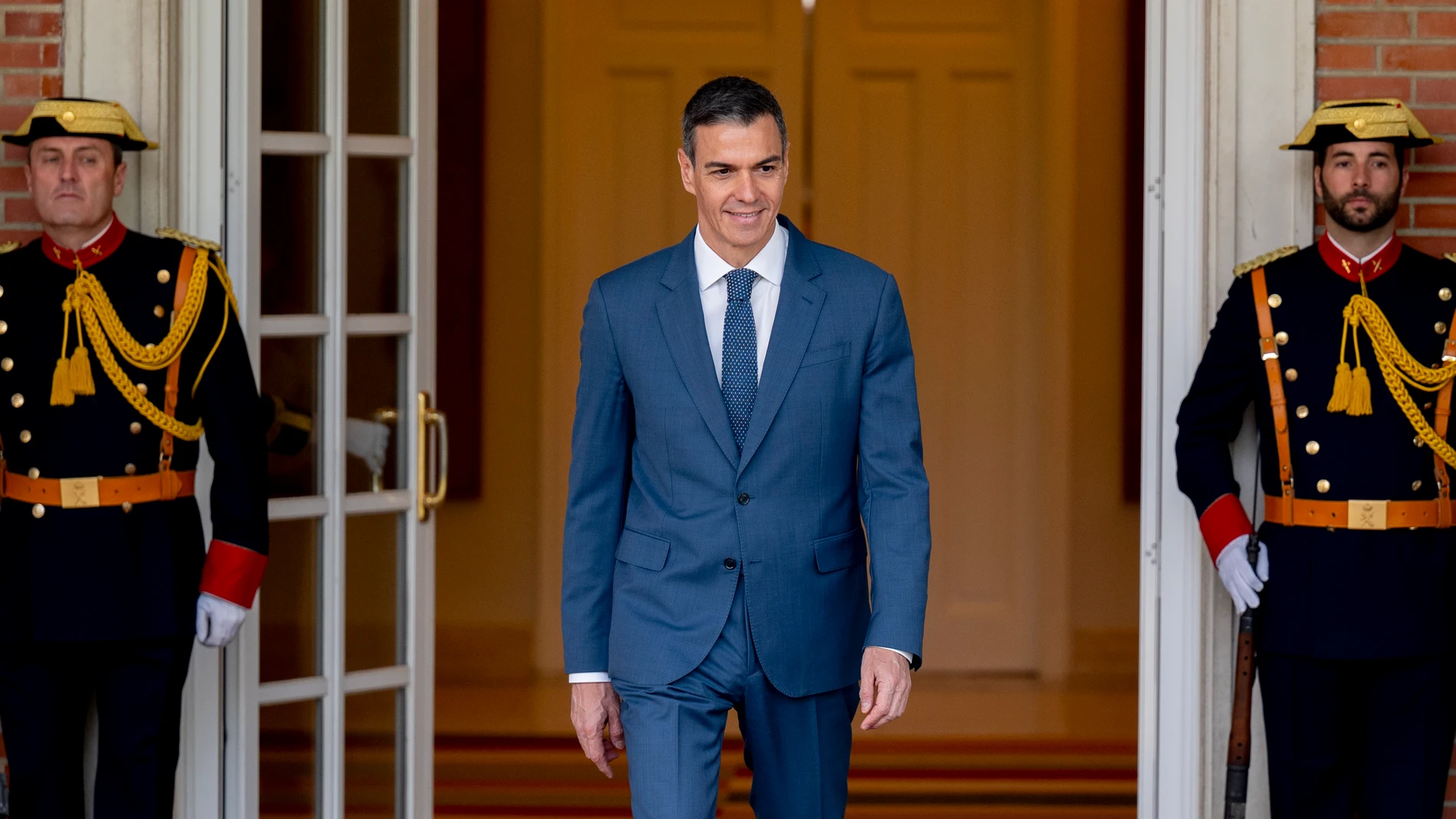
Pedro Sánchez arrived at Moncloa in June 2018. Eight years later, several generations of public officials have already passed through the different structures of his governments. Some continue in politics; others have been relocated within the Administration itself; some have returned to their positions as civil servants and another group has begun a second professional life away from the BOE.
The Transparency Portal allows us to contemplate a small part of that journey. Registration for 2026 is still incomplete and will grow as the Office of Conflicts of Interest updates its resolutions. Until April, twelve doors appear open after another was closed. When governments end, positions cease and names disappear from the organizational chart, the BOE looks like a human resources report. But the truth is that almost no one stops working when they leave an official Government office. The question then stops being what they did inside it. And it becomes another: where they go next.