
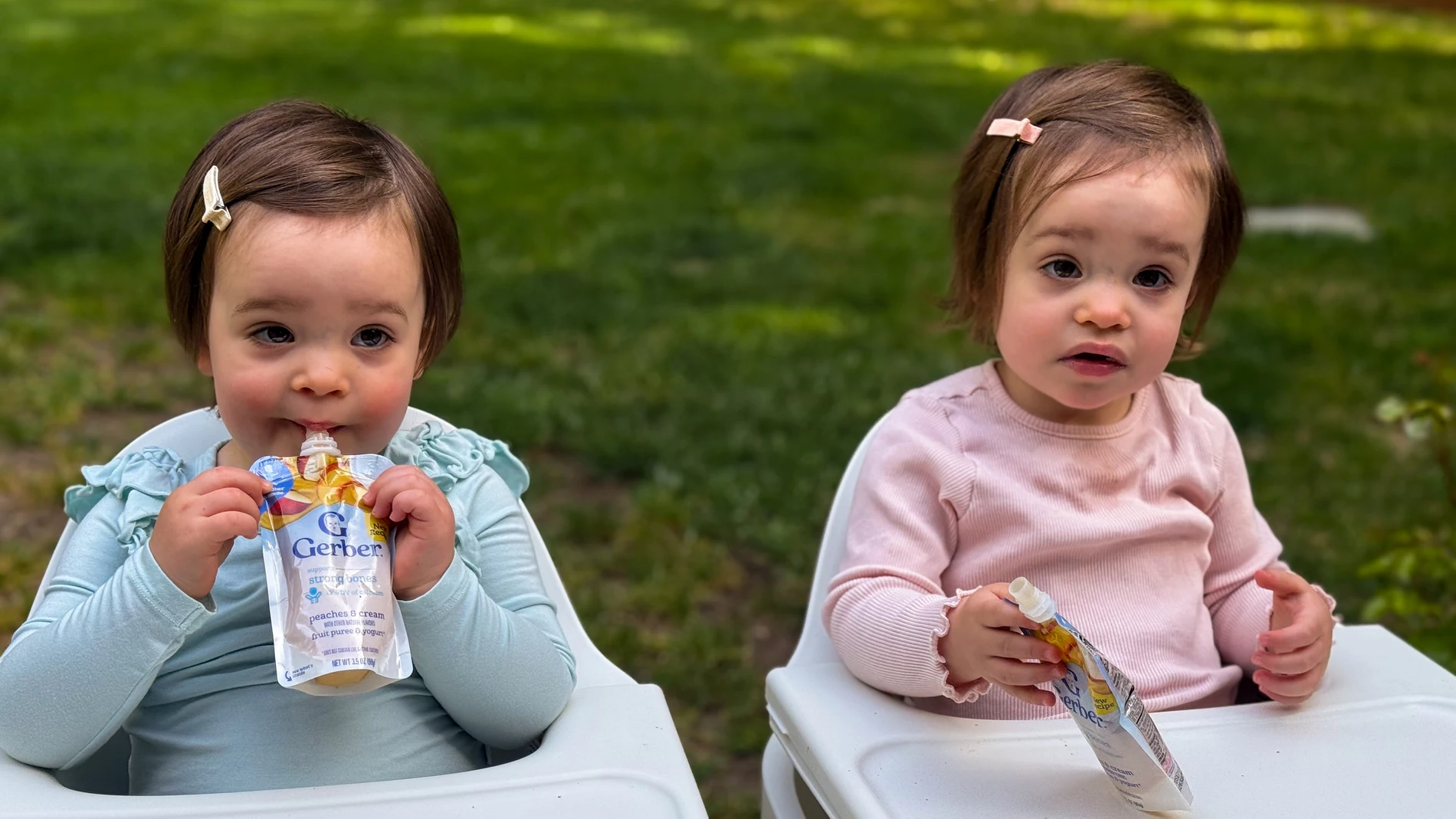
Pioneering research by Greenpeace International, based on laboratory tests carried out by the Norwegian center SINTEF Ocean, calls into question the safety of baby food packaged in flexible plastic bagspopularly known as pouches. In this regard, they suggest that leading brands such as Nestlé and Danone are selling products that contain thousands of microplastic particles per serving.
The study looked at fruit purees and yogurts marketed in this “squeeze and suck” format, which has become very popular in supermarkets around the world for its “ready-to-drink” format. After analyzing the samples, the results of the research indicate that in each gram of food analyzed they found, on average, up to 54 microplastic particles in Gerber (Nestlé) bags and even 99 particles in those from Happy Baby Organics (Danone).
This means that, according to the researchers, a child could be ingesting more than 5,000 plastic particles in a single container from Nestlé Gerber and more than 11,000 particles in one from Danone Happy Baby. These figures have been described by the environmental organization as “a direct source of pollution” that raises “urgent doubts” about the safety of these products for children’s health.
«This study supposes a blow for Spanish families who trust these brands to feed their sons and daughters with products they consider safe and nutritious. In Spain, we have seen how these bags have colonized the supermarket aisles, replacing the traditional glass jar under the false promise of convenience,” declares Julio Barea, head of Greenpeace’s Waste campaign.
«What the brands do not tell is that their business model dependent on plastic cannot guarantee that its contents are free of microplastics and disruptive chemicals. “We are feeding a generation with plastic waste in the face of the passivity of regulators,” considers the environmentalist responsible.
Link to packaging not proven
The report notes that spectral analyzes identified a direct relationship between the type of plastic that lines the inside of the bags —polyethylene (PE)— and microplastics found in food. This suggests, according to the researchers, that the degradation or mechanical abrasion of the packaging itself is contaminating the food it contains.
In addition to the physical risk of the particles, the technical study also detected chemical substances associated with plastic in the packaging and food, including a possible endocrine disruptor (2,4-DTBP) in Gerber yogurt samples.
Although the study is rigorous, SINTEF Ocean researchers maintain the necessary academic caution. They indicate that the identification of particles as polyethylene is “tentative” or “presumptive” because its spectral signature may resemble that of certain natural lipids in foods. However, the fact that these particles systematically appear in the food and coincide with the polymer of the packaging is a “red flag” that requires review.
The report also highlights that many of the chemicals found are unintentionally added substances (NIAS)which arise during the manufacturing or degradation of the material and which often escape the usual regulatory controls.
The vulnerability of babies
The scientific concern is that, as the report says, “babies are not simply ‘small adults’.” Their organs are still developing and therefore their detoxification systems, such as the liver and kidneys, are not yet fully functional.
That is why the report warns that “even low doses of endocrine-disrupting chemicals at critical stages of development, such as infancy, can have disproportionate effects on reproductive systems, growth, metabolism, and health future of babies and children.
Despite this evidence, the flexible bag format is the one that is growing the most in the children’s food industry, with a rate of 8.18% per year planned until 2031. In markets such as the United States, sales of these bags skyrocketed by 900% between 2010 and 2023, almost completely replacing traditional glass jars.
The Greenpeace study highlights that current regulation is “insufficient” and has not kept pace of innovation in complex plastic packaging. Furthermore, they point out that many of the food safety regulations were written before the pouches will arrive massively on the market.
Therefore, the organization urges companies and governments to apply the precautionary principle. Requires the food industry to stop ensuring that its packaging is completely safe to heat or consume directly and that begin a transition towards reusable and toxic-free packaging systems.
At the political level, the organization asks that the future UN Global Plastics Treaty Be ambitious: “You must cut plastic production by at least 75% by 2040” and specifically ban dangerous chemical packaging in baby food. The health of future generations, the report concludes, depends on stopping “feeding the world with plastic.”