
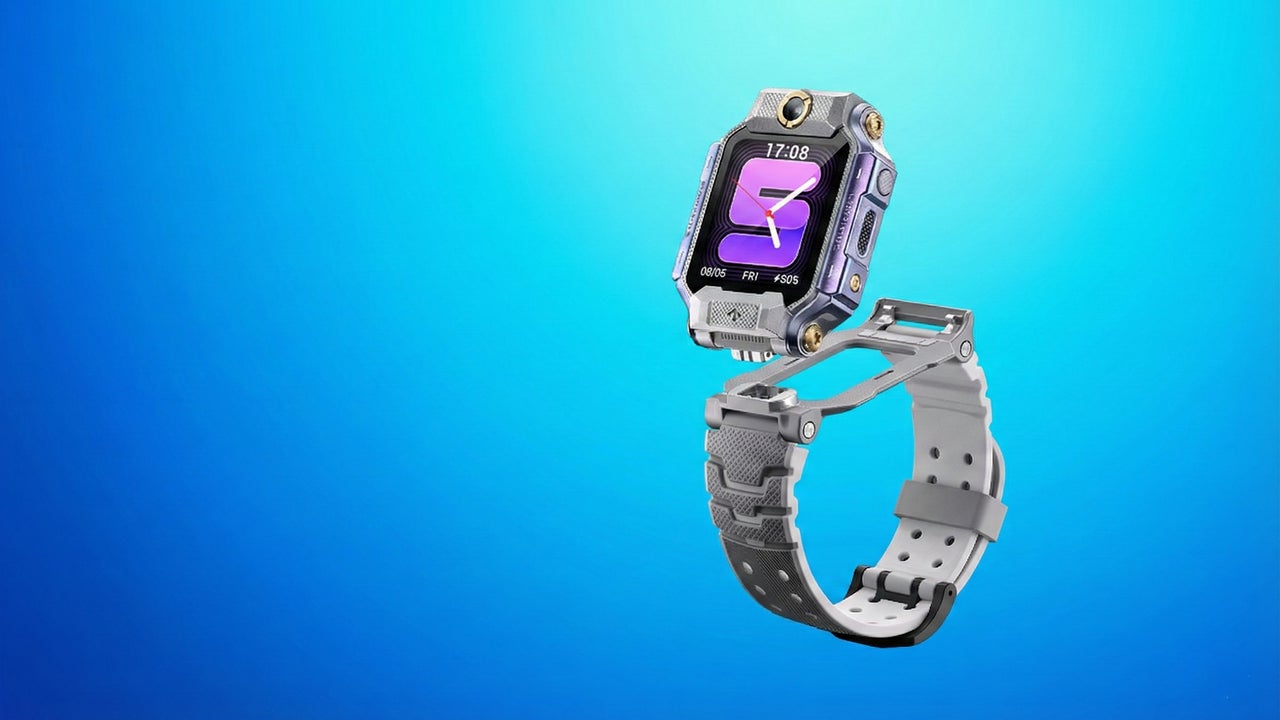
It is practically unknown in other markets, but a phenomenon in Chinawhere parents buy their children smart watches as early as five years oldaccording to Wired. But not brands as expected as Apple either Samsungnot even Chinese like Huawei and Xiaomi. There, the smartwatch you have almost half of the global market share of these children’s devices is Xiaotiancaiwhich can be translated as Little Genius either little genius. Abroad, the brand launched in 2015 is known as Imoo.
According to Counterpoint Research, Little Genius is already positioned as the fourth smart watch brand in the worldwith a 7% quota, ahead of Samsung but behind Huawei, Apple and Xiaomi. In the children’s segment, however, Little Genius has no rival, with more than 48% of the global market in the first half of the yearcompared to more than 27% in 2021.
Why parents like it
This spectacular growth is due to the fact that it satisfies both the needs of parents and those generated in children. ‘First it meets the main demand of parents in terms of security: real-time location, voice calls and video calls. It also offers children their own social functions, with interfaces according to their tastes.’has explained Bai ShenghaoSenior Analyst at Counterpoint.
Little Genius’ latest flagship model, the Z11sold for 2,399 yuan (about €292) and incorporates advanced location functions. Not only does it identify the minor’s GPS location, but also the floor of the building, the nearest pedestrian crossing, walking speed, ambient temperature and local traffic conditions.
The company owns numerous patents related to high precision positioning. It combines hardware and algorithms – with indicators such as barometric pressure changes, gait analysis or nearby Wi-Fi signals – to locate children with exceptional accuracy. That is to say, peace of mind for parents.
Additionally, the Z11 offers health and fitness monitoring, water resistance, a rotating crown with dual cameras for front and rear photos, as well as a transportation card and mobile payments.
Why it engages children
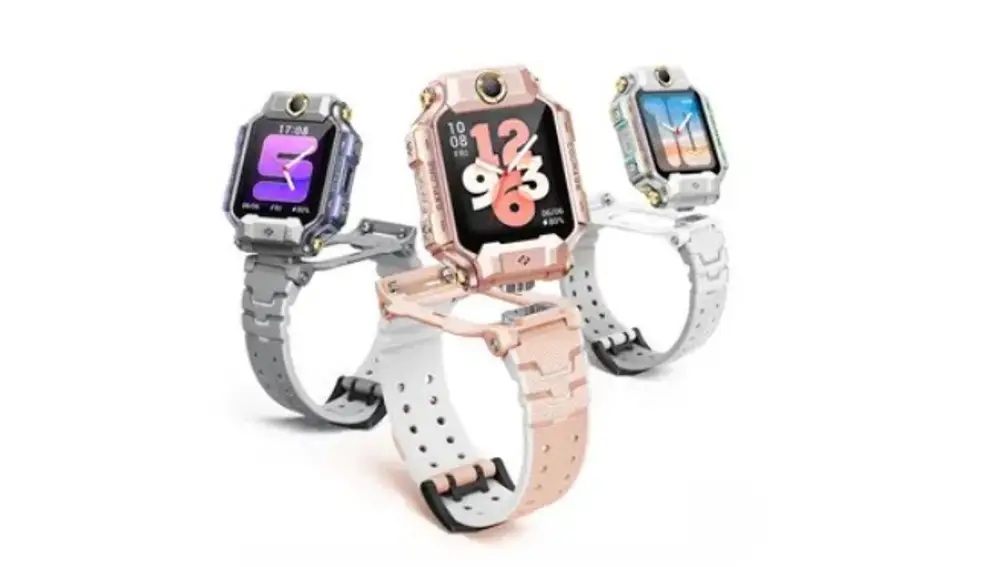
Little Genius has also created a broad social platform based on a closed messaging service that excludes users of other devices. Kids can exchange contacts by simply touching each other’s watches or searching by account number.
The social functions of Little Genius watches, rarely highlighted in the brand’s advertising, constitute their main attraction for children. Young users interact in a virtual world practically invisible to adults.
According to the media, Little Genius watches are used by children to shop, chat, share videos and play games, in addition to keeping in touch with their parents. But for many, The main activity is to accumulate all the possible ‘likes’ on your profile on the platform.
Children seek to accumulate ‘I like it’ because within the Little Genius ecosystem they have become a status symbol and the more they have, the more popular they seem to their peers. The system works as a reciprocal social game – you give me, I give you, with limits on how many can be given per day – that encourages them to add contacts and maintain constant activity. For them, ‘likes’ are not a simple gesture, but a way to measure their position within the Little Genius community.
Little Genius has gamified almost every measurable activity in a child’s life (walk, play, post updates…), so earning points and leveling up increases the number of ‘likes’ they can give and receive. Is a constant reward loop that can lead a kid to become a small celebrity within that ecosystem.
Low level users can give 5 daily and high-level likes 20. There is a limit to the number of friends you can have, which is 150which pushes them to maximize the number of high-level ones and harm low-level ones who fight to achieve a better status due to the quantity and quality of their friendships. In the heat of this phenomenon, companies have emerged that promise children to improve their metrics, some users make cash by selling their old accounts, others pay bots to inflate their figures and videos with tricks to overcome the limits of the platform are common.
So, ‘a device designed for location and communication has become, in practice, a competitive game between classmates’indicated a study published in July in the Chinese magazine Public Communication of Science and Technology. He also pointed out that, in this way, children grew increasingly under the influence of technologywhere each interaction was converted into data and every data in a control tool.