
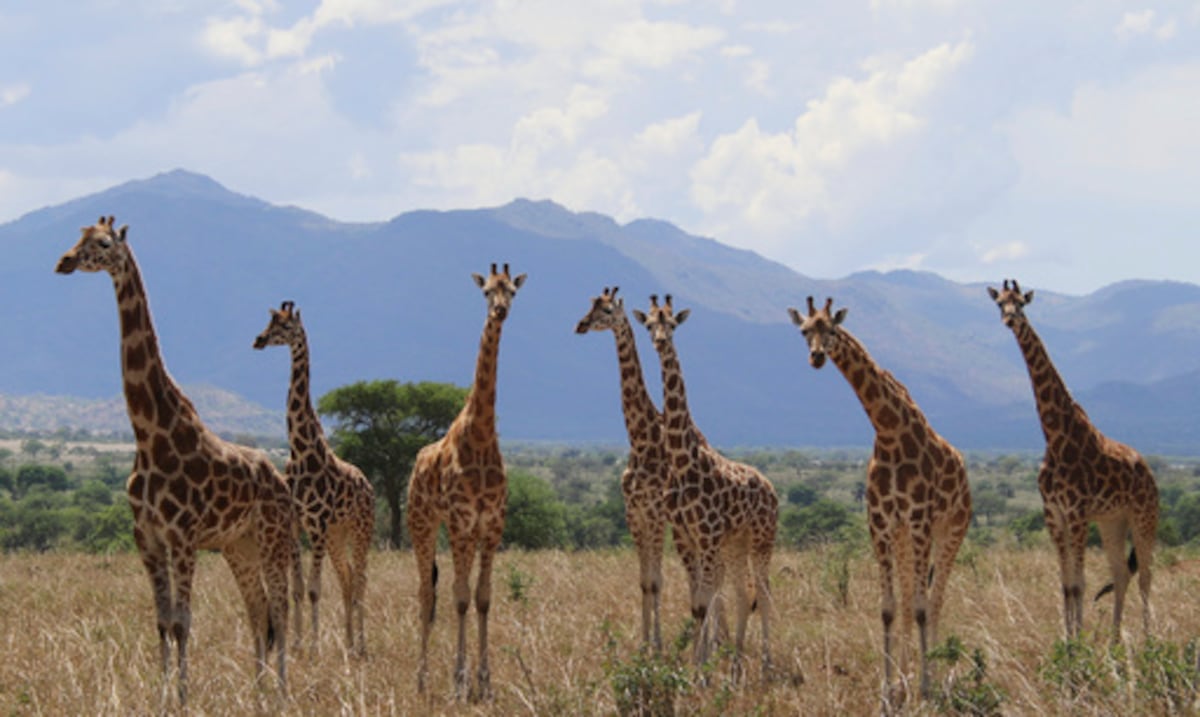
Washington – The giraffes, with their long necks and distinctive spots, are a majestic image in Africa. Now, a new scientific analysis published Thursday reveals that there are four different species of giraffes in the continent.
Previously, researchers considered that all Africa’s giraffes belonged to a single species. New data and genetic studies have led a working group of the International Union for the Conservation of Nature to divide the highest land mammal into four groups: northern giraffes, reticulated giraffes, Masái giraffes and southern giraffes.
According to Michael Brown of the IUCN, a researcher at Windhoek, Namibia, who directed the evaluation, in the last decade key studies that highlight significant differences between the four species have emerged.
Appointing different giraffes is important because “each species has different population sizes, threats and conservation needs,” he said. “When all giraffes are grouped, the narrative is clouded.”
The northern giraffes, whose range includes parts of the Democratic Republic of Congo, South Sudan and the Central African Republic, face threats due to political instability and poaching. The Masái giraffes in Kenya and Tanzania face pressure from the loss of habitat, since open savannas become grasslands and cattle fields.
Stuart Pimm, an ecologist at the University of Duke who did not participate in the analysis, said that considering four species of giraffes “is absolutely the right decision and it was time.”
While in the past the researchers examined the spots of giraffes, the new categories used more recent methods, including an exhaustive analysis of genetic data and studies that highlight key anatomical differences, such as the shape of the skull.
What seem horns that stand out from the forehead of the giraffes are actually permanent bone protuberances of the skull, different from the antlers of the deer that fall annually.
During the last 20 years, scientists have also collected genetic samples of more than 2,000 giraffes throughout Africa to study the differences, said Stephanie Fennessy of the non -profit organization Giraffe Conservation Foundation, who helped in the investigation.
It used to cost tens of thousands of dollars sequence each genome, but advances in technology have reduced cost to around $ 100, making it more accessible to conservation groups and non -profit, he said.
According to population estimates of the Foundation, the most threatened giraffe is the northern giraffe, with only about 7,000 individuals in the wild.
“He is one of the most threatened big mammals in the world,” said Fennessy.
South giraffes are the most populous species, with around 69,000 individuals. There are about 21,000 reticulated giraffes in the wild and 44,000 Masái giraffes, according to the Foundation.
“If not all giraffes are the same, then we have to protect them individually,” said Fennessy.
1 /22 | Moo Deng turned a year!: Thus they celebrated the adorable hippo baby who conquered the world. Thousands of excited fans went into mass to a Thai zoo on Thursday to celebrate Moo Deng’s first birthday, the adorable pigmeo hippopotamus that has become a sensation on social networks. – Sakchai Lalit