
The company hyundai is known worldwide for the cars and other vehicles it produces, but what is not so well known is that one of its subsidiaries belongs to the defense sector and is the manufacturer, for example, of the MBT or Main Battle Tank K2 of the Republic of Korea Army. This subsidiary of hyundai motor is Hyundai Rotemalso focused on the railway sector, and has now set its objective mass produce hypersonic missiles by 2035. The new initiative will be carried out in collaboration with the Korea Defense Development Agency (ADD), state-run.
The collaboration will focus on developing missiles that surpass Mach 5five times the speed of sound or, approximately, 6,100 km/h. These weapons would allow rapid attacks at great distances in a very short time, thanks to their high speed and evasive maneuvers that put current interception systems in trouble.
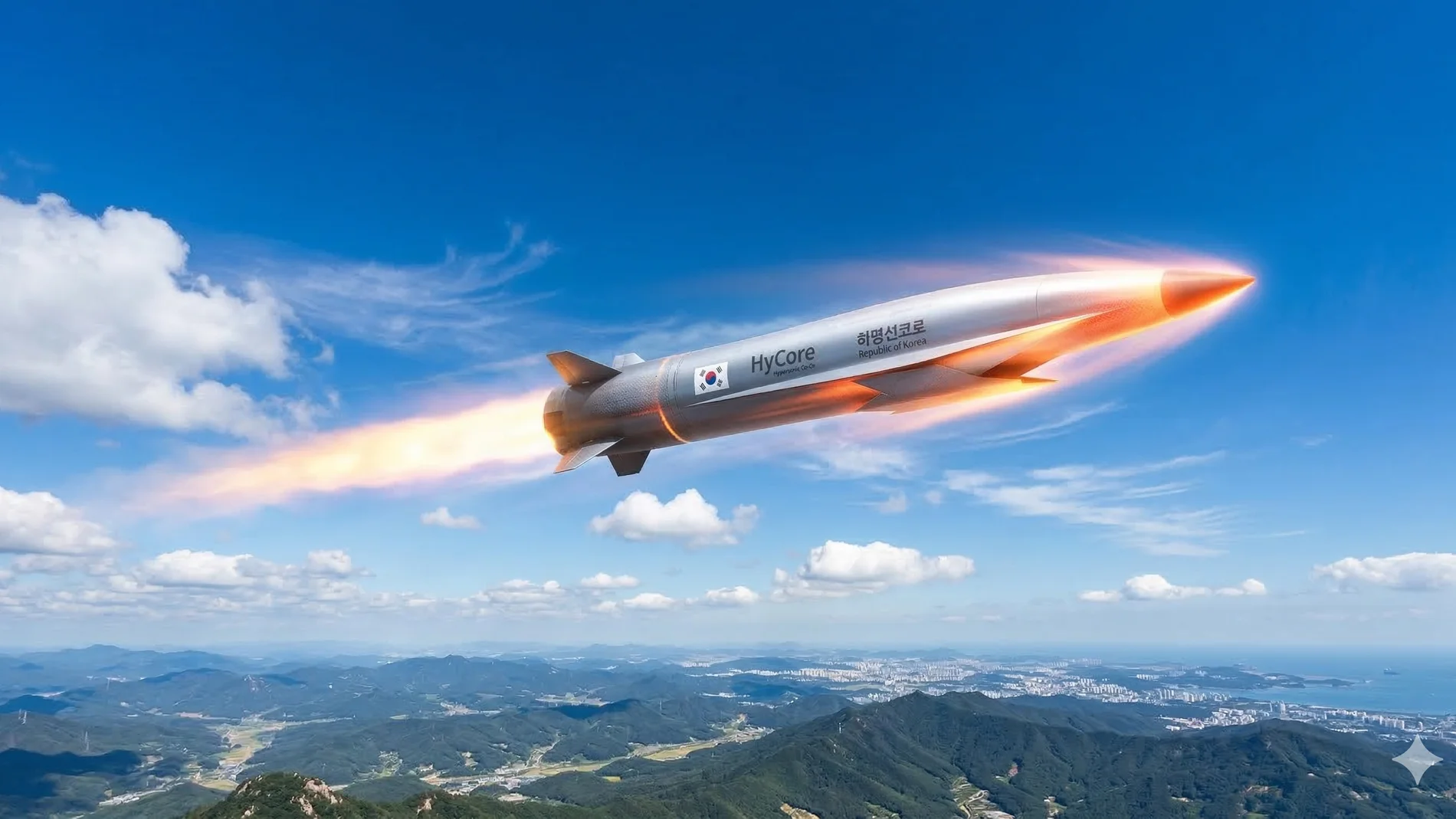
Hypersonic missiles for South Korea with HyCore technology
Nations that already operate hypersonic missiles are USA, Russia and China. Other powers also seek to develop this capacity; between them India, France, United Kingdom and North Korea.
According to Korea Times, South Korea wants to strengthen its own hypersonic capabilities in the face of growing concern that its neighbors are developing or already operating this technology.
Hyundai Rotem and ADD have recently developed a key technology that enables stable propulsion for hypersonic vehicles. The system, called HyCorecaptures oxygen in the upper atmosphere, which allows missiles to maintain combustion and promotes greater range. Hyundai Rotem and the ADD have been working on it since 2018.
In a test carried out in 2024, HyCore exceeded Mach 6, about 7,400 km/h, at an altitude of about 23 kilometerswhich provided a wealth of data for the next phase of development. Based on these, the company’s internal evaluations suggest that The 2035 calendar is viable if it maintains the current pace.
The competition for the hypersonic advantage
South Korea seeks to increase its military advantage amid arms races in other countries in the region. North Korea pursues hypersonic technology from 2021has carried out tests and last year claimed to have achieved a successful launch of a ballistic missile, although South Korean officials questioned the announced performance.
China, for its part, already has operational hypersonic systems such as the DF-17introduced in 2019. It is also producing variants of Mach 7some 8,600 km/hat lower costs. Japan develops its own hypersonic missiles and plans to deploy nationally developed interceptors as soon as in 2027.
Yang Uka researcher at the Asan Institute for Political Studies, told the Korea Times that ‘these weapons would allow South Korea attack key North Korean facilities with great speed and effectiveness. South Korea has already secured significant strike capabilities against North Korea through the missile series Hyunmoobut developing hypersonic missiles is necessary to further strengthen those capabilities.’
Yang adds that ‘advancement in hypersonic weapons is also necessary to expand deterrence beyond North Korea‘.
The HyCore initiative is another example of how Hyundai is expanding its portfolio far beyond car manufacturing. With his participation in Boston Dynamicshas also positioned itself as a leading player in the humanoid robotics marketwhose value is estimated at 5 trillion dollars by 2050.