
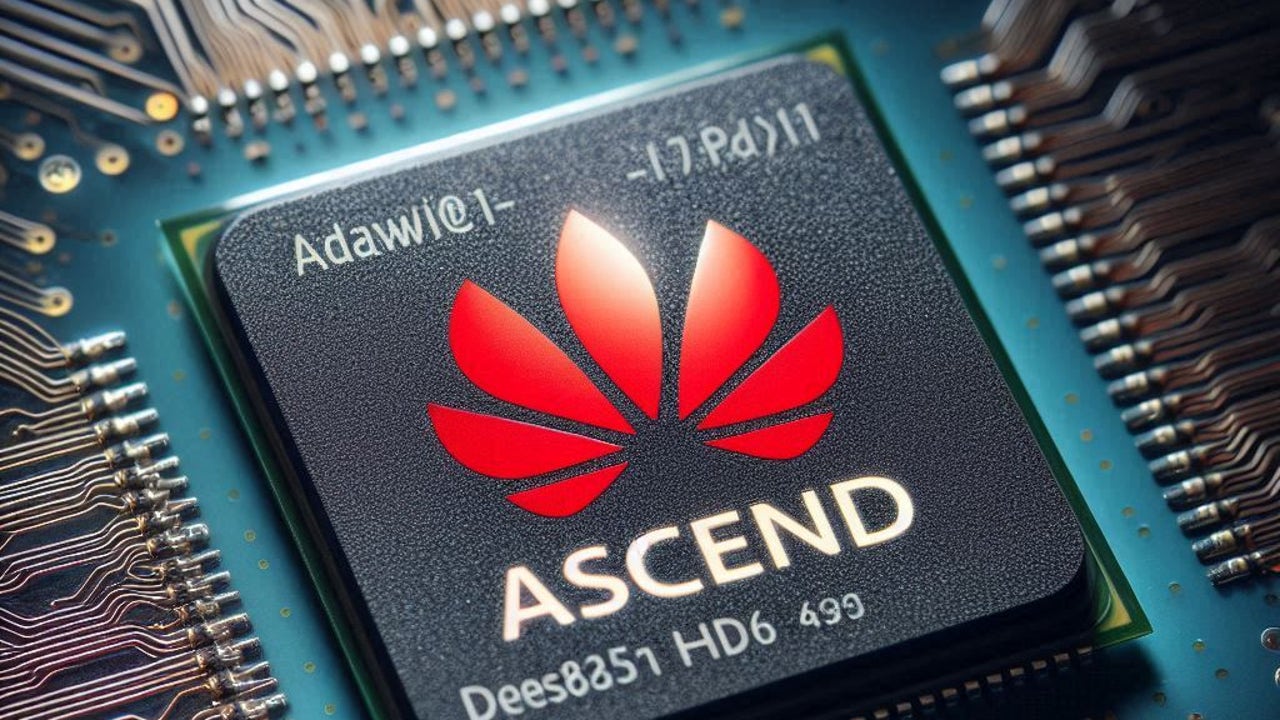
It was a matter of time. In 2019, the embargo began to Huawei, which prevented him from using American companies, Google (read Android) among them. Since then, allegations of espionage, involvement of the Chinese government and others, but nothing was never demonstrated … Beyond such a fierce competition that Huawei would displace Apple from the top positions in the technological market. But there was never a response from the Asian giant (read China or, in terms of companies, Huawei). Until now.
This week, Huawei has opened its main development tools set, Cann so that developers can “play” with it. By turning it into an open source, Huawei hopes to attract more developers and challenge Nvidia’s dominance, just when Beijing seems to be pressing the American chips giant. And it also gives a transparency lesson in a market that is characterized just otherwise.
“This will accelerate the innovation of developers and facilitate the use of our AInd chips”, Said Eric Xu Zhijun, president of Huawei, at the company’s developer conference held on Tuesday in Beijing.
Huawei said he has already had conversations with the main companies of AI, commercial partners and universities of China to Build an open source ecosystem around Ascend.
The announcement occurs a few days after China’s Internet regulator will raise his concerns about the safety of NVIDIA H20 chipand after the country’s growing efforts to reduce the dependence of American technology.
Huawei’s transition to the open source directly supports the broader impulse of Beijing towards technological self -sufficiency. The company seeks to create an alternative to the CUDA software package, owned by NVIDIA, which For a long time it has been the standard for AI developers worldwide.
Cann, presented for the first time in 2018, is A fundamental component of Huawei’s strategy. The latest version, Cann 8.0, was launched in September last year and the company described it as “the cornerstone of the Ascend ecosystem.”
While Huawei’s statement did not mention Cuda, the implications are clear. Many Chinese developers use NVIDIA GPU. However, Nvidia has taken measures to restrict him.
In 2023, the company added a clause to its CUDA license that prevents developers from executing it in hardware that is not NVIDIA by translation layers. Now, Huawei seeks to offer developers a local alternative that works with national AI chips, and does so at a time when the Nvidia position in China is under review. AND When the AI of Chinese origin, as Deepseek, are much more effective than US versions.
To that we must add that the administration of the cyberspace of China (CAC) has initiated an investigation into the NVIDIA H20 GPU, specifically designed for China by the American company To meet Washington’s export restrictions.
The CAC cited “serious security problems” reported in the media as a reason for its research. The agency also pointed out the growing concern of US legislatorswho have urged Nvidia to integrate monitoring functions into advanced chips. American experts have affirmed that remote control technologies related to NVIDIA chips have evolved.
“Cybersecurity is of vital importance for us – said a company representative in an email -.Nvidia does not have ‘back doors’ in our chips that allow anyone to access or control them remotely. ”
Huawei’s open source announcement occurs after Creation of a new industrial group that promotes the adoption of national AI chips. The Alliance for Innovation of the Model-Chips Ecosystem was announced last week by Stepfun, the Shanghai-based AI startup, at the World Conference on Artificial Intelligence (WAIC).
In June, Nvidia executive director Jensen Huang said that the company is still a generation ahead of Chinese chip manufacturers. However, he warned that continuous US export restrictions could Give companies like Huawei greater growth margin. And that could come before what we think.