
Since 2015, the concept of health management has become increasingly popular. As people pay more and more attention to their health, the demand for smart devices to monitor it has intensified. In this sense they have highlighted giant such as Apple or Google, but there is one that is at the head for its investment (conscientious should be added) in regards to the test laboratories. It’s about Huawei. The Chinese manufacturer has become a reference in health -related measurements, addressing the sector from two fronts: advanced sensors and laboratory tests.
Since 2016, at least publicly, Huawei has been dedicated to creating a new set of health systems based In intelligent wearable devices that connect the body data of users with their life situations. The technological part is based on the aforementioned sensors and its trusport algorithm.
Initially, for the development of this algorithm, it was necessary to collect Body data generated by different people in different states of movement and environments. The second is to collect this data for scientific analysis and present precise and easy to understand interpretations.
The first requirement is to invite enough people to participate in the test, simulate environments and collect precise data. The second requirement requires a team of professionals that Simultaneously understand health and fitness technology, algorithms, physiology and medicine. All this implies a large investment and long -term research and development.
This was how, in 2021, Huawei established the health laboratory in Songshan, China. With a total area of 4680 m², the laboratory has more than 80 types of tests for volunteers that can be taken to different scenarios that cover degrees of moisture, oxygen levels, height, etc.
For example, in high altitude environments, in conditions of hypoxia and low pressure, is it the beneficial or harmful career training for the human body? Huawei has an oxygen chamber in the blood. This environment can simulate the climatic changes in the natural environment By providing stable and specific temperature and altitude simulation control requirements, and can simulate the plateau environment to evaluate the state of movement of the human body.
If we add to this Volunteers have different ages, weight, physical status and backgroundthe universe of data obtained with the trials is enormous and is precisely what allows a high degree of reliability. The presence in the laboratory of scientists from different fields (from data acquisition engineers to algorithms engineers, through doctors from different areas), adds more information and detail to the Trusport algorithm.
This “recipe for health and sport” can collect with precision various physical indicators generated by the human body when performing a physical activity and draw conclusions based on the parameters entered by the volunteers, the conclusions of the experts and the results of adding both.
Based on Trusport, Huawei developed the career capacity index (RAI). In simple terms, This index clearly understands the difference between capacity and objectives: What we can get and the goals to which we must aspire.
With this in mind, the algorithm provides the adequate training load for the desired objective. In this way, the training load is not simply based on the distance or duration of the race, but considers the stimulation and pressure that the training exerts on the body, which objectively reflects the load caused by training. In addition, Trusport can determine the degree of recovery and monitor short -term fatigue.
But this laboratory is not the only one. It is also necessary to highlight that of Xi’an (China) and the pioneer at European level: the Huawei Health Lab, located in Helsinki. This It is the largest health and fitness research center in Europe: almost 1,000 m², more than 20 professional sports stations and A multidisciplinary team formed by more than 25 experts who collaborate from seven countries in the European Union. Its areas of specialization cover medicine, physiology, artificial intelligence, automatic learning and software engineering. Thanks to this combination between knowledge and technology, the Chinese manufacturer guarantees that their health and sports research develops under the most advanced scientific standards worldwide.
The laboratory is divided into five specialized test areas, designed to replicate environments and real competition situations. The performance evaluation is performed by advanced infrastructure together With the most recent portable devices: the Huawei Watch 5 and the Watch Fit 4 series.
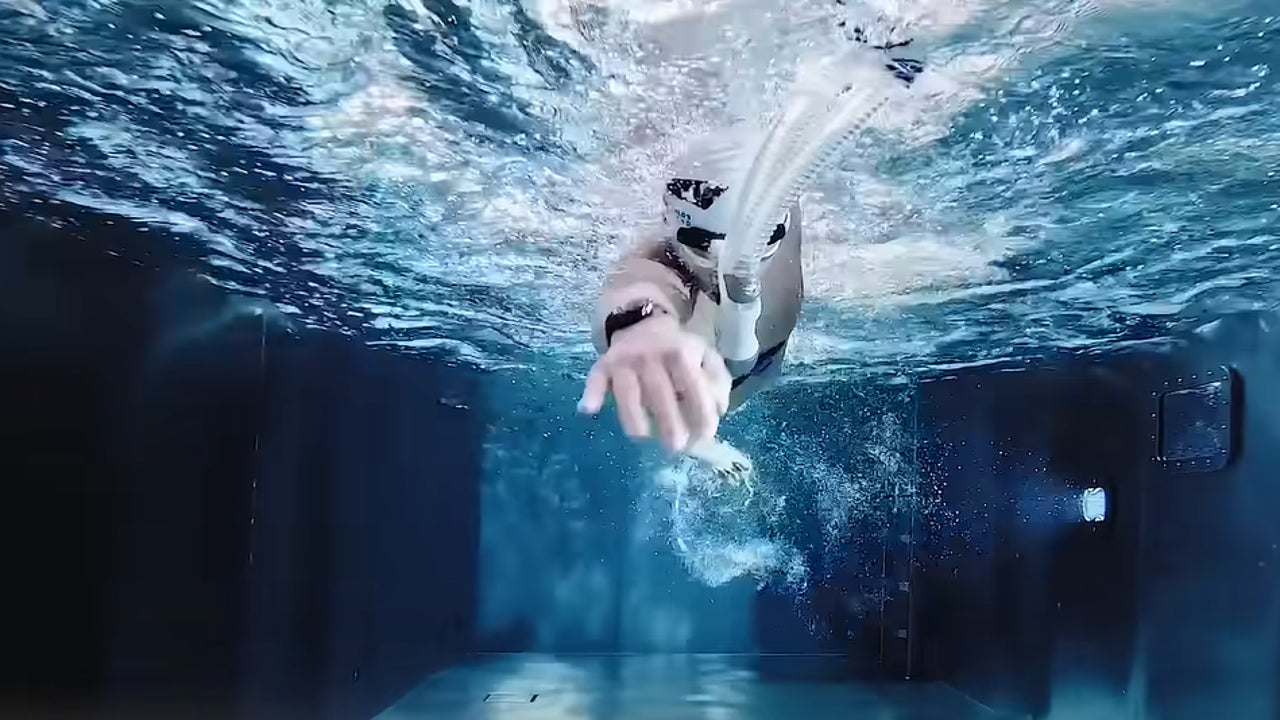
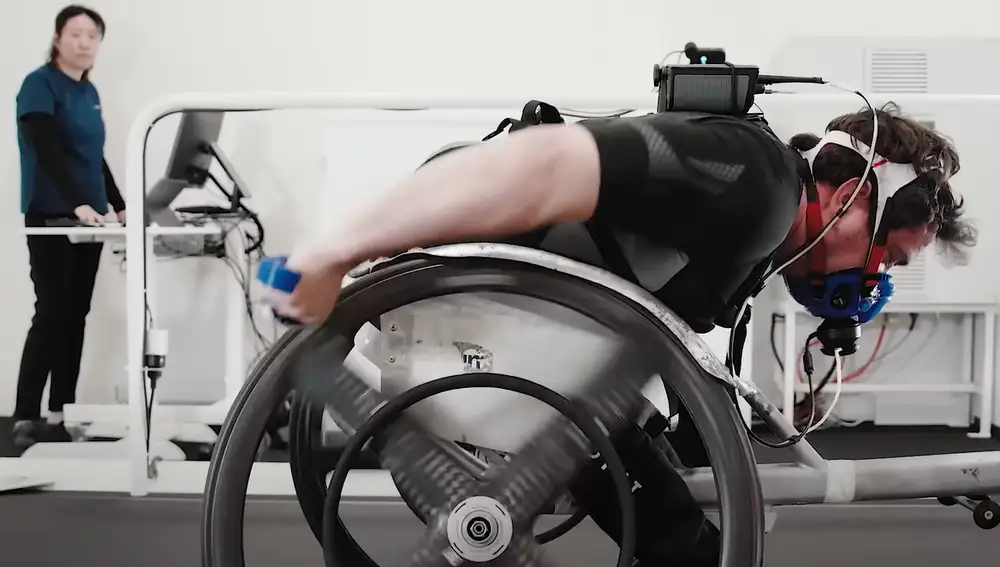
These five specialized areas include a PProfessional countercurrent iscina, andQuipada with water jets that generate a controllable flow of up to 350 m³/h, in addition to allowing adjustments in water temperature and quality. There is also a Sski imulatory, adjustable in speed and inclination, interactive routes and canes. Another test area is that of Cmultifunctional running: You can test different modalities, such as foot race, bicycle and even wheelchairwith speeds up to 50 km/h. In addition, the running ribbon allows to load real routes captured with GPS devices using GPX files, faithfully recreating the land for a more realistic training. Its integrated cameras monitor real -time performance, providing instant feedback to correct and optimize the technique immediately.
Thanks to the data flow and the strength of the information provided by scientists, the results are not only part of the algorithm, the sensors and the Huawei devices. The manufacturer also collaborates with this data in European research groups, including the European Union cardiovascular health study and participating in ICARE4CVD, a project that brings together the medical, technological industry and the European Union to address innovatively cardiovascular diseases through the use of artificial intelligence.
We often see how scientific advances are translated into technological innovations: Science as seed and technology as its fruitbut we rarely see the reverse step. These types of laboratories use technology (the same one that we carry on our wrists) to return to science starts from your investment in health.