
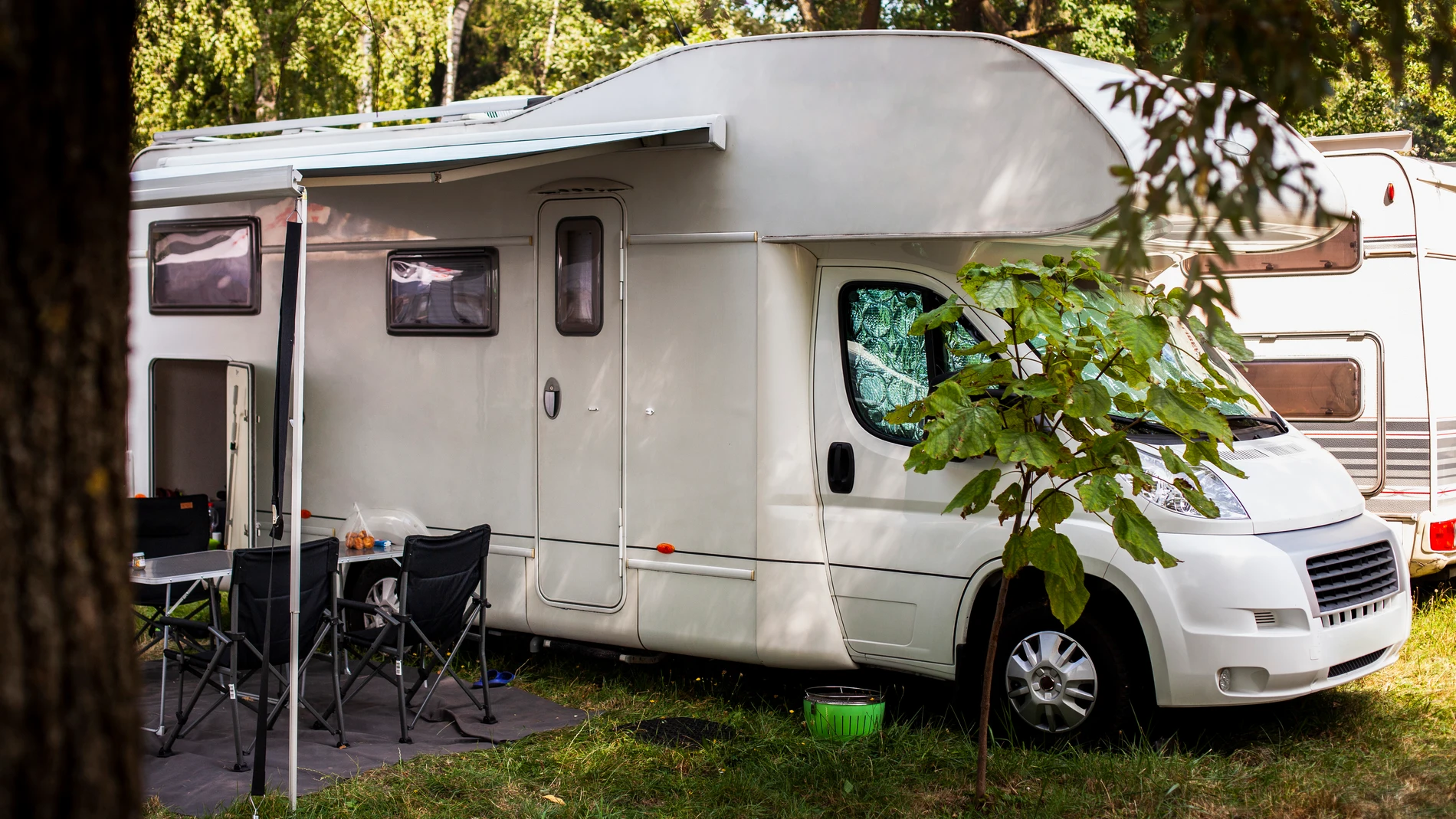
Caravans are one of the most chosen alternatives for those who want to travel without depending on transportation and accommodation. So much so that this summer it was expected that more than 100,000 people would use them in the Valencian Community. The problem lies when they begin to be used as housing, since may lead to sanctions by the City Council.
This is what happened to a French father who wanted to help his son, who was in the process of searching for a home that suited his financial capacity, by placing a caravan in the back of his garden. After four months, a letter arrived indicating that he had completed the maximum amount of time a caravan could be parked and in use.
According to the media “20 minutes”, French legislation is very strict with the length of time that this type of trailer can be parked and function as a mobile home: three months a year. Before exceeding this period, the owner must present a declaration at City Hall for him to examine the case.
Economic sanctions and possible demolition
Likewise, another issue that the owner had to take into account before parking the caravan was its mobility. Well, when modifications are made such as removing the wheels or placing supports, it loses its status as a mobile home and is subject to general urban planning regulations. Hence its original state must be maintained.
In the case of the French father, by not having previously notified the parking of the caravan in his garden, he received a formal notification that could have ended in administrative sanctions. While, when modifications are made to mobility, the trailer can be forced to return to its original state or, when it becomes classified as a building, a judge can order its demolition and impose a fine of 500 euros per day of delay.
Could it happen in Spain?
On the other hand, in Spain there is no law that prohibits living in a caravan or motorhome; However, this will never be considered a home, since for administrative purposes it will always be a vehicle. Therefore, those people who are going to reside there They will not be able to registerso they will not have access to different public services.
Likewise, it is allowed caravan parking on rustic landthat is, one that is not intended for residential use, but cannot be lived in permanently. This is because it can be considered an illegal residenceespecially if its continued presence over time and the connection to supplies such as water or electricity is detected.
If the authorities detect this type of practices, the City Council may impose economic sanctions that vary between 200 and 6,000 eurosdepending on the characteristics of each case. Furthermore, as in the French case, they may request the removal of the vehicle, as well as for it to return to its original state in the event that modifications have been made regarding its mobility.
Spanish legislation
In Spain, the legislation is quite different and depends on specific municipal ordinances. Generally, caravans can remain parked on public roads for a period of time maximum of between 48 and 72 consecutive hoursalthough in some municipalities this period is reduced to 24 hours.
Furthermore, if it is present for more than 48 consecutive hours, the General Traffic Regulations indicate that it can be considered an obstacle, and as abandoned when 30 days have passed. As for economic sanctions, these depend on the municipality in which the infraction takes place, but they are usually between 80 and 200 euros.
When can you spend the night in a caravan in Spain?
Regarding the question of spending the night inside, the General Traffic Regulations do not expressly prohibit sleeping occasionally in a caravan parked on the street. However, this practice may be punishable according to the municipal ordinance of the permitting city council. In addition, must be parked according to the following conditions:
- The streetsdas must be in contact with the groundexcept for the chocks, and have the engine off.
- Do not occupy more surface area than what it occupies when closedthat is, the projectable elements cannot be deployed,
- Do not emit any type of fluid or outside noise.
What the RGC does prohibit is sleeping habitually or systematically in the trailer when it is parked on public roads, as well as camp. Camping is understood when spaces outside the caravan are occupied, deploying elements such as awnings or tables. The latter is prohibited in Spain, except in places authorized for this purpose.