
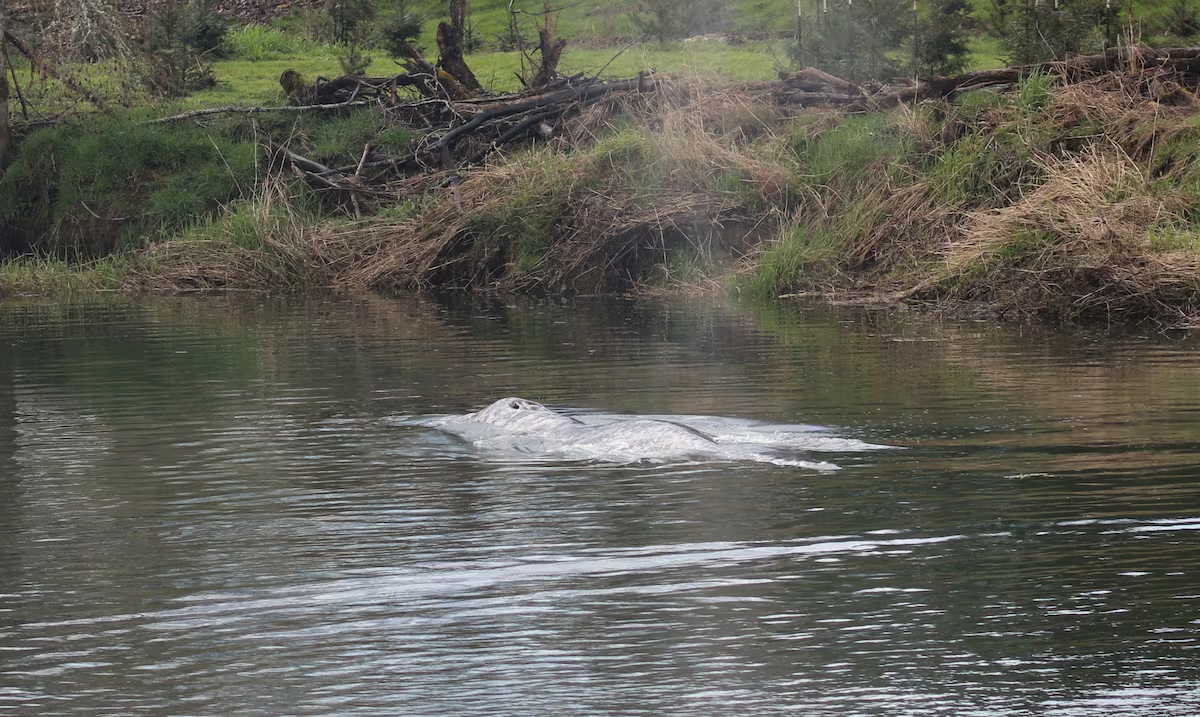
A juvenile gray whale that stunned Washington state residents after swimming 20 miles up a small river was found dead, leading an investigating official to suspect starvation may have driven it to the river as the species’ population declines.
The whale was discovered Saturday near Raymond, Washington, in the Willapa River, which empties into the ocean at Willapa Bay. There are currently several gray whales in the bay during their 5,000-mile spring migration, from calving grounds in Baja California, Mexico, north to feeding grounds in Alaska.
The main problem the gray whale population in the eastern Pacific Ocean has faced since 2019 is reduced food availability in the northern Bering and Chukchi seas off the coast of Alaska, John Calambokidis, a research biologist with the Cascadia Research Collective, a nonprofit research organization, told The Associated Press on Sunday.
“Gray whales face a serious crisis, and the origin of it seems to be the predation of their prey in the Arctic”Calambokidis explained.
He National Maritime Fisheries Service (NOAA Fisheries, in English), which depends on the National Office of Oceanic and Atmospheric Administration (NOAA, for its acronym in English), declared the existence of an unusual mortality event for eastern gray whales – that is, those in the eastern Pacific – from the end of 2018 to the end of 2023. In that period, 690 strandings of gray whales were recorded, from Alaska to Mexico.
NOAA Fisheries researchers concluded that the preliminary cause was “site-specific changes in the ecosystem in the whales’ subarctic and arctic feeding areas, which led to changes in diet, malnutrition, decreased birth rates, and increased mortality.”
Authorities believed the population was recovering, but the most recent count, from 2025, rather showed a continued decline. The federal agency estimated there were about 13,000 gray whales, the lowest count since the 1970s.
“Many of these gray whales look very emaciated, very thin,” Calambokidis observed.
Their migration north is usually the most difficult period for them, the longest stretch they go without eating, which forces them to deplete their nutritional reserves.
“When that happens, gray whales are often seen in a more desperate search for new areas to feed,” Calambokidis explained. And he added: “That is the most likely context for this whale.”
Researchers will attempt to examine the dead whale, possibly as early as Monday.
It entered the North Branch of the Willapa River on Wednesday, across a bay about 185 miles southwest of Seattle. Some residents gathered on bridges along the river just to catch a glimpse of the huge mammal, and flooded social media with photos and videos showing it expelling air from its blowhole.
Although the gray whale appeared thin, it behaved normally and did not appear to have any injuries.Cascadia Research Collective said in a Facebook post.
The organization was giving the whale time and space to get out of the river on its own, but when researchers tried to locate it on Friday, the animal had moved further upriver, into waters impassable for boats, Calambokidis said.