
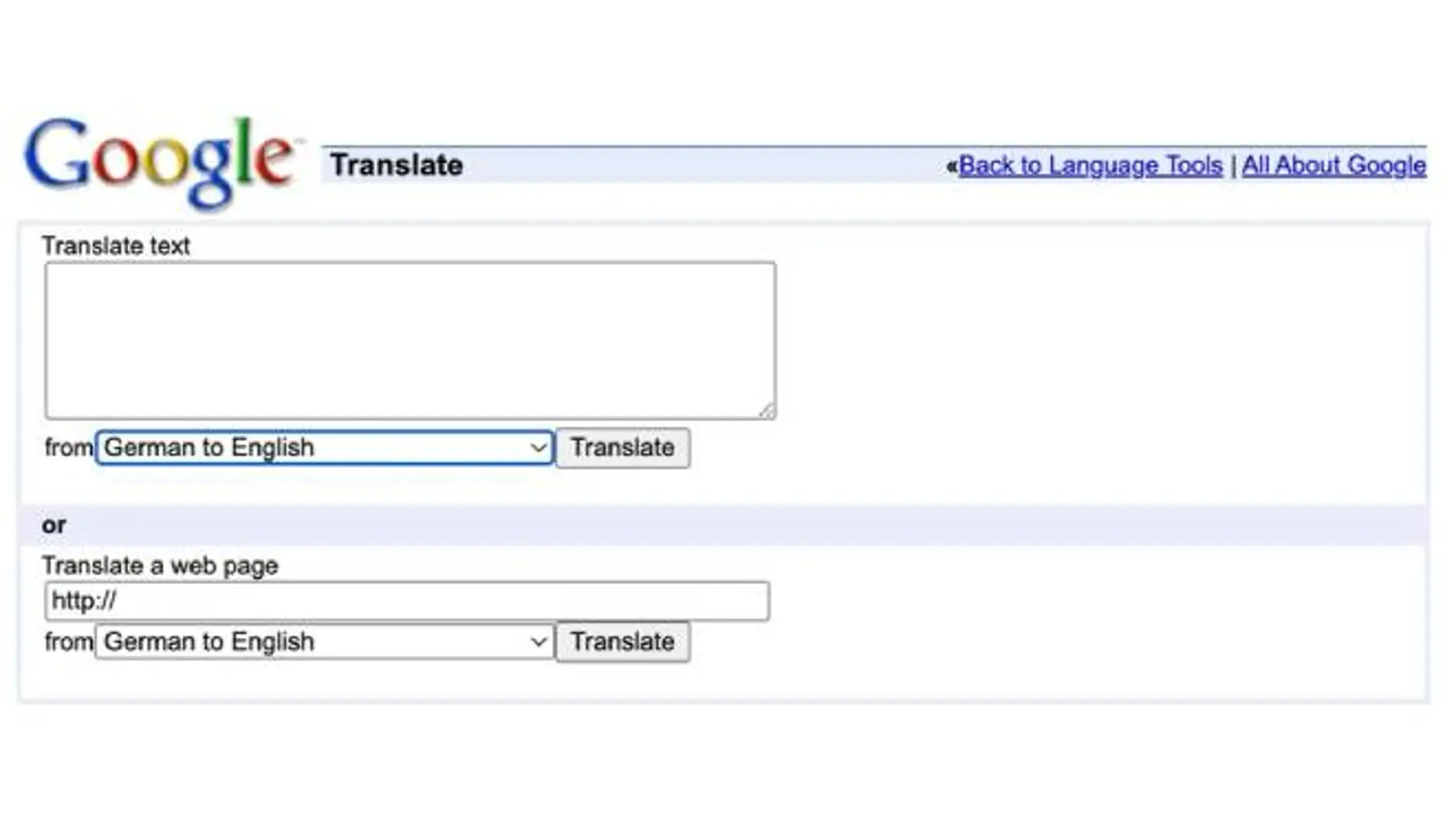
This week they have been fulfilled 20 years since the launch of Google Translatealso known as Google Translateon April 28, 2006. To celebrate, the company has added a new feature that allows users practice pronunciation and vocalization of words and phrases in different languages.
When translating a word, sentence or phrase, you can access the menu ‘Practice’incorporated in August 2025 and which has not yet been deployed in Spain, and then play in ‘Pronounce’which shows the phonetic transcription which the user can say out loud to practice pronouncing the translated text.
The app then scores the pronunciation and provides feedback, such as ‘Some sounds were not entirely clear’. You can also hear the translator’s pronunciation of the text.
This function, reminiscent of Duolingo because of the way it allows you to practice the pronunciation of words and phrases, is beginning to be deployed in USA and India and, for now, it is compatible with English, Spanish and Hindi.
Celebrating 20 years of Google Translate and… the launch of a top-requested feature! 🎂
One of the toughest things about speaking a new language is getting the nuances of pronunciation just right. Now, you can get instant feedback with “pronunciation practice,” which uses AI… pic.twitter.com/DdMfiMB9dz
— Nick Fox (@thefox) April 28, 2026
Google doesn’t mention when this feature will come to other regions, but hopefully it will do so sooner rather than later. Last month, the company launched its live translation with headphones for iOS and expanded its availability on devices Android to several countries, among which is Spain.
This is how Google Translate has changed in 20 years
The company has also recalled the history of the Translator, noting that it was ‘one of the initial experiments that launched Google’s machine learning work decades ago, within Google Research‘.
‘In 2006, Translate was based on statistical machine learning, and a key part of achieving smoother, more natural translations was our research into maintaining much larger and more accurate language models, which capture how often words and short phrases occurfrom billions of words of data’.
‘In 2016, we promoted enormous change towards neural networks to go beyond literal word-for-word translationsrelying on our research on models Sequence-to-Sequence and in our initial work with the Tensor Processing Unitsproving that deep learning could work on a global scale to be really useful for people,’ explains the company.
Today, the models Gemini are used and help drive real-time conversations of Instant translationwith more than a third of these sessions lasting five minutes or longer.
Every month, 1 billion of users turn to Google for help with translations, while each month they translate 1 billion words between Google Translate, Search, Lens and Surround to search.