
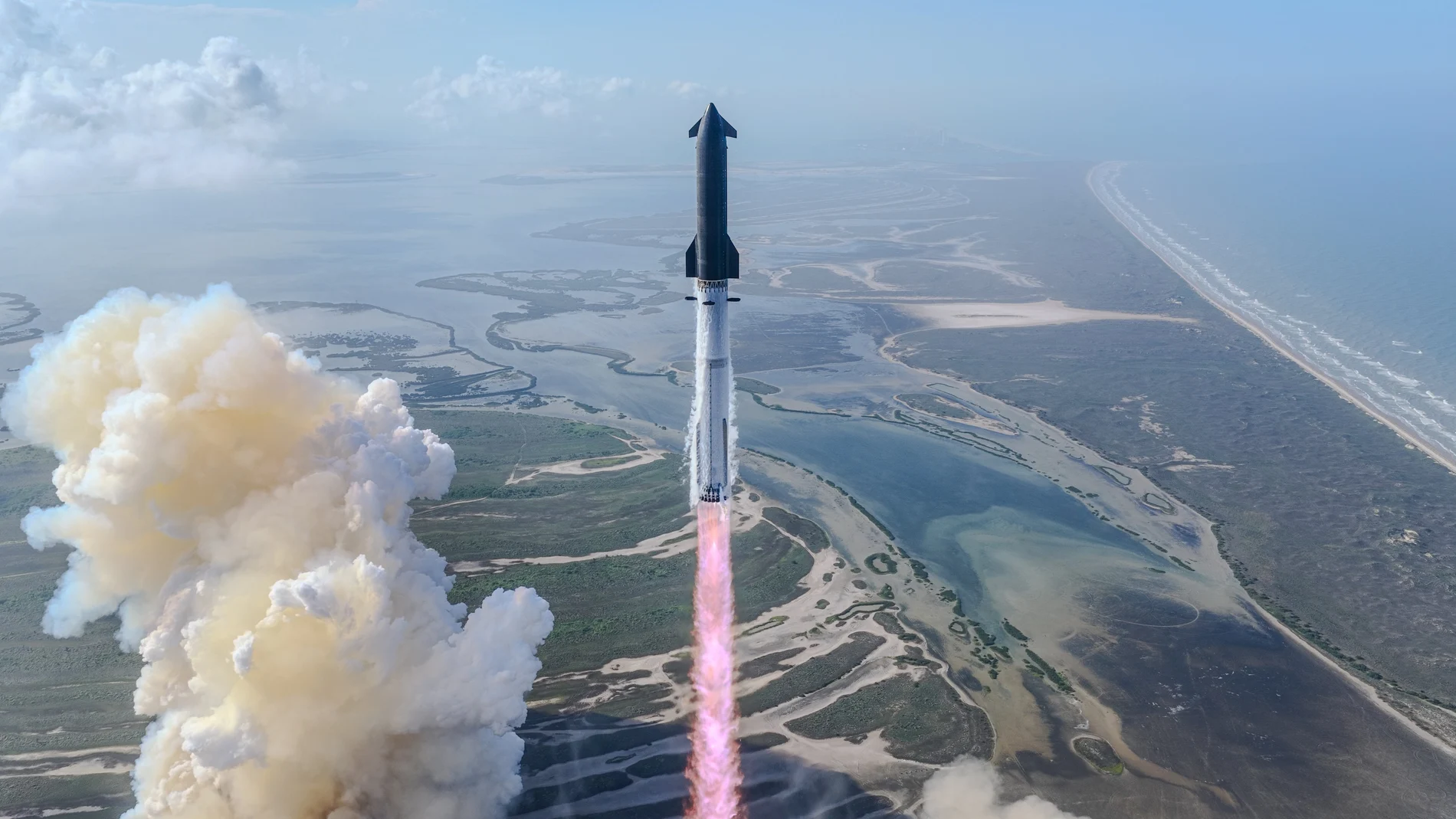
It’s been six days since SpaceX launched the mega rocket for the first time Starship Version 3in what was the twelfth flight of the platform Starship. Flight 12 It was, apparently, a success, although not as much as it seemed at first. This Wednesday, the Federal Aviation Administration (FAA) of the US has rated as ‘incident’ the flight, requires an investigation and that Starship V3 remains grounded until it is authorized to fly again.
‘The return to flight of the Starship-Super Heavy vehicle depends on the FAA determine that no system, process or procedure related to the incident affects public safety‘, the FAA said in an update published this Wednesday.
SpaceX hopes that Starship, the largest and most powerful rocket ever built, will revolutionize space flight, making the colonization of space economically viable. Mars. The new V3 variant, 124.4 meters tall, is a key piece of that vision.
According to the company, it is the first version of Starship capable of deep space flights and will take astronauts to the lunar surface on the mission. Artemis IV of the POT at the end of 2028, if everything goes as planned. That’s why last week’s suborbital test flight was very important for SpaceX.
What went wrong in Flight 12 with Super Heavy
Flight 12 went well in most respects. Among other objectives, Starship successfully deployed 20 mock-ups of Starlink satellites, as well as two real Starlinks equipped with cameras to photograph the vehicle’s heat shield in space. Furthermore, the upper stage survived in good condition upon re-entry into the Earth’s atmosphere and performed a smooth and controlled landing off the coast of Western Australia, as planned.
But things didn’t go so well with the engine. Super Heavymore than 20 stories high, which was also to make its own soft landing in the Gulf of Mexico. However, the first stage he was unable to execute the engine ignitions necessary for that controlled return and ended up ‘suffering a sudden ditching’ in the gulf, as explained by SpaceX in a mission update.
The FAA considers this result an incident and requires the company to conduct an investigation into its causes. ‘The FAA will oversee the SpaceX-led investigation, participate in every step of the process, and approve SpaceX’s final report, including corrective actions’agency officials have pointed out.
That ‘rough landing’ was not something that was noticeable in the live broadcast of the flight, but it has important implications. So far, SpaceX has managed to return to land and capture the booster with the arms of the launch tower on three occasions. A failure in this operation would be a huge setback, in addition to extremely dangerous.
SpaceX’s intention is to carry out the next flight, Flight 13in June, although it is now subject to the result of the investigation and that the FAA is satisfied with the measures that the company takes to avoid a new ‘rough’ ditching or landing.