
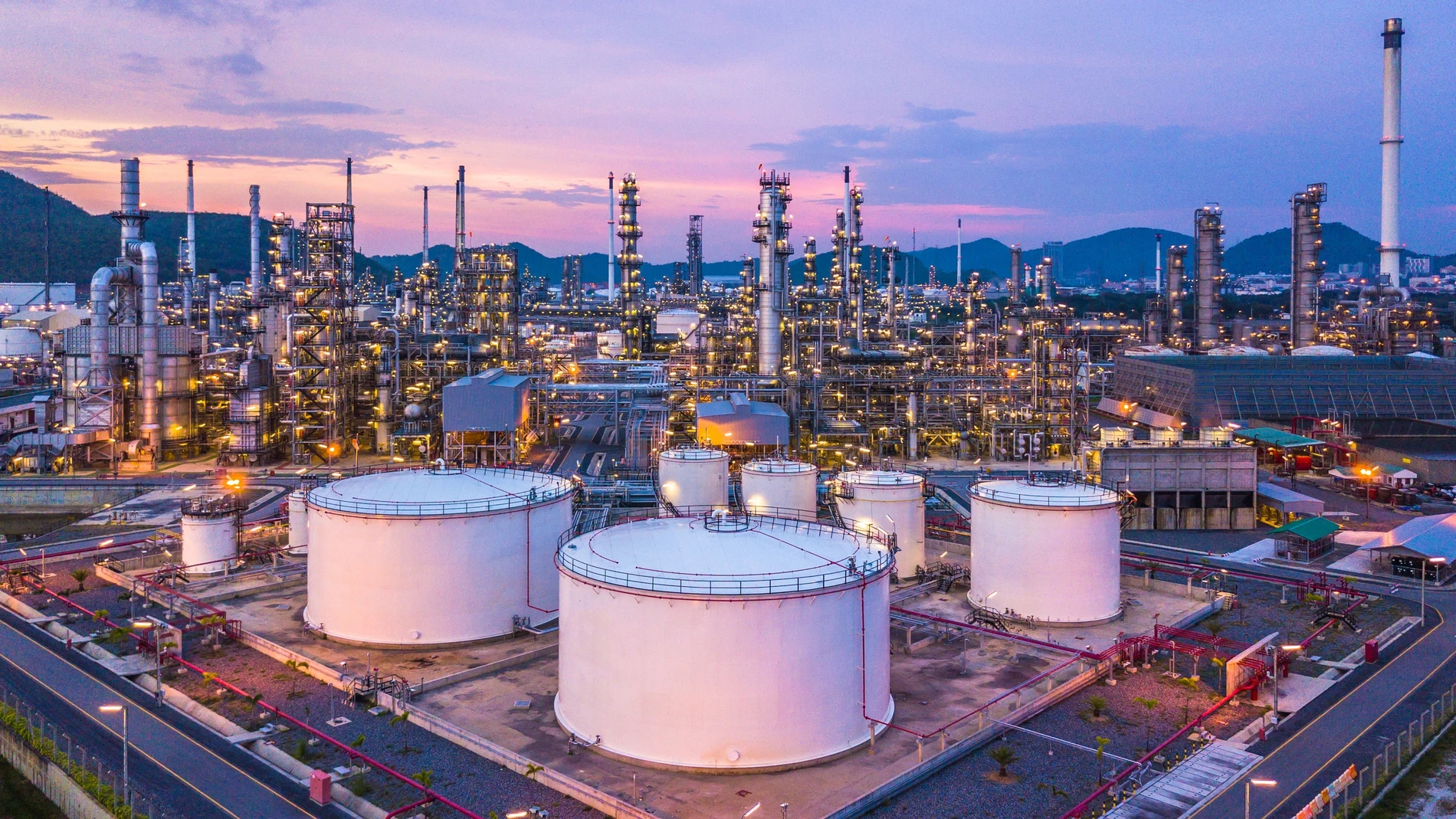
A worrying shortage of diesel. The International Energy Agency has just published its Report of the Oil Market and in it he draws a gloomy panorama facing winter in Europe. The stagnation of negotiations between the United States and Iran and a drop in refinery yields are having repercussions, above all and according to the Agency, on diesel and other middle distillates. “Not enough diesel is produced to cover the global demand for this fuel, despite the fact that the strong crack spread (the differential between a barrel of oil and diesel) generates an incentive for refineries to quickly start producing it,” the report says.
The price of a barrel of oil already exceeds one hundred dollars, but diesel, which represents almost 30% of global demand, has reached $200 per barrel earlier this month in the US. On this side of the pond, prices at service stations are rising, in Spain even more subdued, but in Germany a liter is very close to three euros. In other more exposed economies such as the Philippines, temporary measures such as the four-hour work day were imposed to reduce fossil fuel consumption. Bangladesh closed universities and has suffered supply cuts, reductions in bus services or long lines to refuel. Meanwhile, the IEA admits that the price will continue to rise in the coming months and that the crisis will not be resolved soon.
A geopolitical question
Diesel is not only vital for the transport of goods by road, it also moves ships, agricultural vehicles, is used in mining, as fuel for backup electricity generation and is also used in heating systems. Winter is approaching and European warehouses are at low levels.
For Antonio Turiel, researcher at the Institute of Marine Sciences of the CSIC «What is happening is that there is a lack of the best oil to make diesel, which is from the Persian Gulf as a consequence of the Iran War. It is difficult to quantify how much diesel is produced with the oil that is extracted, because different mixtures are made, but They can now add 18 million barrels per day (To the 12 million (Mb/d) that were not being extracted, we have to add the 4 Mb/d of the Saudi bypass that was just lost and another 2 Mb/d of Iranian exports. All, just when the palliative measures are ceasing to work,” he says. The recent attack on the East-West pipeline that allowed Saudi Arabia diverting some four million barrels per day (Mb/d) from their production so that they did not have to pass through the Strait of Hormuz and reached directly to the Red Sea, was a formula to alleviate the situation caused by the situation in the Strait of Hormuz, but it has just been blown up.
The IEA also targets the drone attacks launched by Ukraine against Russiabut Turiel considers “the impact of what is happening in Russia, including the decision to stop exporting diesel, to be less.” For the researcher, we are at a decisive moment that clarifies a downward trend in the availability of diesel that has already been there since 2015. “Avoiding the crisis was never possible, but an attempt has been made to delay the hope that the United States would win the war,” he says in an interview with Heraldo de Aragón.
Different mixes
What is the best oil to get diesel? The scientist explains that to produce diesel, conventional oil with long hydrocarbon chains is needed, above all. And that type of oil has been in decline for more than twenty years. «You can have a lot of “liquid”, but if it does not produce diesel, it is not useful for moving trucks, agricultural machinery, ships or mining, which are the basis of the real economy. Although the drop in volume does not seem brutal (we have gone from about 70 million barrels a day in 2005 to about 60 today), the impact is enormous because it is precisely that oil that fuels diesel production. Fracking and other substitutes do not compensate for this, because they produce very light crude oils. World diesel has already passed its maximum between 2015 and 2017 and since then we are clearly below those figures,” he comments to explain that, for example, “The US mixed fracking oil with heavy crude oil from Canada to compensate for this lack of long chains of the liquid extracted from fracking. As Canada’s production has reached its ceiling, Venezuela’s reserves have come into play, key piece to sustain its refining system,” says Turiel.
Concern in Europe
As the war raged in the Persian Gulf, strategic reserves have been released; Imports have been reduced (China has done so) and other suppliers have been sought (Spain has diversified its purchases).
However, despite the adjustment measures, the world faces a real shortage of diesel. Among other reasons because the refining capacity fails. Refineries do not produce enough diesel to cover consumption. «It is no longer just that oil is expensive or that international conflicts complicate its transportation. The world also has a problem converting all that oil into enough fuel,” warns Russell Hardy, CEO of Vitol, an oil trading company, these days.
The situation in Spain, those consulted point out, is a little less bad than that of the rest of the European countries because here we have eight refineries capable of working with different crude oil mixtures. Ramón Rodríguez Pons-Esparver, from the Natural Resources Research group at the Polytechnic University of Madrid, clarifies that “Spain consumes between three and four times more diesel than gasoline, but fortunately we have refineries that can treat a very wide range of oils; from light or with little sulfur content to heavy or with a lot of sulfur like those from Venezuela. In fact, we have increased imports from there by 5% in 2026.
The flow of diesel is vital because “transport has to continue working, just as the food or commercial chain must do.” During the last few months too A lot of diesel has come in from Morocco (up to 14.3% more than last year in the same period –March to June–). Something striking for some analysts since the neighboring country does not have refining capacity. There are many voices in the sector that suspect that the product sold by Morocco could come from Russia. Data such as those from the Corporation for Strategic Reserves of Petroleum Products (CORES) point to a drop in the sale of diesel by Morocco coinciding with Moscow’s ban on exporting what the country produces.
The rest of European countries are more exposed, as seen in the prices per liter of diesel in Germany for example. For José Francisco Mediato Arribas, researcher at the Geological Institute of Spain (IGME), “everything comes together a little bit. European countries, along with Russia, are the largest consumers of diesel. At the same time, decarbonization regulations and the commitment towards the disappearance of diesel from production means that in Europe many refineries have been closed or transformed for the production of other products such as biofuels,” says the researcher.
It’s not just oil. There is also a lack of Liquefied Natural Gas and other products such as aluminum or agricultural fertilizers. In the case of natural gas, Spain this summer has seen the arrival of this material decrease by up to 40%. Furthermore, before the conflict, between 30 and 35% of global exports of urea, an essential fertilizer for agriculture, passed through Hormuz. In fact, different entities such as the FAO have warned that the conflict can seriously impact global food security.
Gas shipments that change destination
►For months, Spain has suffered a decrease in the arrival of gas due to diversions in commercial flows derived from the rise in the price of this fossil gas. The gas ends up in the hands of the highest bidder. Between April and June, Spanish gas terminals stopped receiving one in every four contracted vessels (which means up to 23% less gas). The greater the price difference between the European and Asian markets, the more likely there is to lose ships. The contracts signed with energy companies mostly include “flexible destination” clauses, that is, shipments can be redirected to other destinations that offer greater profitability.
The situation has improved over the summer; Spanish regasification plants lost two vessels out of a total of 15 in July and only three out of a total of 26 scheduled discharges in August.