
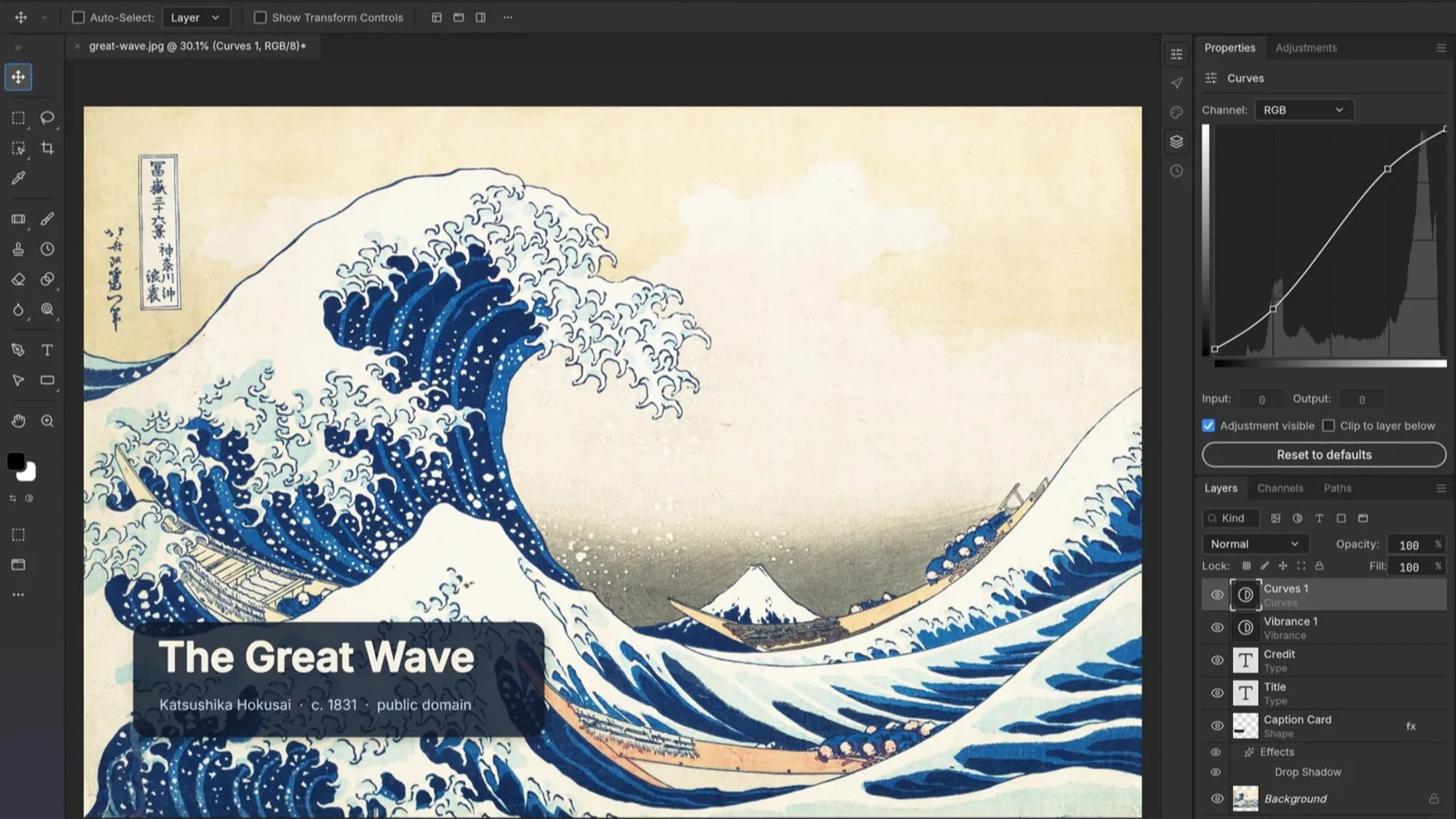
Adobe It has been one of the main references in creative software for years with programs like photoshop, Premiere either Illustratorbut the price of its subscriptions and the conditions for canceling them are not liked by all its users. one of them is Brandon Thomasa developer who has decided to use artificial intelligence to Create your own free alternatives to the company’s seven apps.
Before that, Thomas released last year Artcraftan artificial intelligence tool aimed at artists and content creators that allows you to generate images and videos with AI and then modify them, using visual tools to control aspects such as the composition or position of the elements.
Now, the brand has just considerably expanded its ambitions with the presentation of seven open source applications that aim to reproduce the functions and interface of many other Adobe programs.
Thomas explained in Hacker News that he decided to undertake this project after repeatedly suffering the financial penalties that Adobe applies for canceling certain subscriptions early. The developer, who claims to have about ten years of experience working with rusthas used Claude Opus 5.5the artificial intelligence model of Anthropicto write the code for new applications.
The programs are called PhotoCraft, VectorCraft, FilmCraft, LightCraft, EffectCraft, DesignCraft and PdfCraft. They aim to offer alternatives to Photoshop, Illustrator, Premiere, Lightroom, After Effects, InDesign and Acrobat Prorespectively. They are tools dedicated to photo editing, vector illustration, video montage, visual effects, publication layout and PDF document editing.
To develop them, Thomas has resorted to reverse engineeringa technique that consists of studying the operation of a program to reproduce its characteristics without directly copying its source code. In this case, Artificial intelligence makes it possible to considerably speed up work that traditionally requires a lot of time and extensive technical knowledge..
The seven applications are developed in Rust and have versions for Windows, macOS and Linux. Some can also be run directly from a browser thanks to WebAssembly. Those interested can access them from the official Artcraft page, where they will find links to the different applications, their preliminary versions and their GitHub repositories.
For now, the tools are far from matching the capabilities of the original programs. Hacker News users and other communities have pointed out numerous bugs and features not yet availablewhile Thomas himself acknowledges that the project is in a very early development phase.
Despite these limitations, his initial forecasts were extraordinarily optimistic. ‘We are going to reach 100% functional equivalence in one month’he said on Reddit, although he later moderated his expectations by stating that ‘reaching 99% equivalence will take some time, but I’m sure it will be measured in months and not years’.
The applications are distributed free of charge under open source licenses M.I.T. and Apachewhich allow you to use, modify and redistribute the software. To finance its development, Thomas intends to use for the sale of tokens that allow the use of Artcraft’s AI content generation functions. ‘We have a team that develops software popular with filmmakers, so Financing to maintain this project is fully secured‘, said Thomas.
Although reverse engineering is generally legal, the project could run into problems whether Adobe believes that the interfaces of these applications too closely reproduce protected visual elements of its programs. Legislation can also protect a product’s distinctive trade dress, even when its code has not been copied.
Thomas does not seem particularly worried about the difficulties that still lie ahead. After working exclusively with AI programming tools since February, he finds that This technology will allow developers to create free alternatives to virtually any commercial software.
‘The software has run out’he even claimed in Hacker News last week, where he also claimed to have managed to ‘recreate Photoshop in one go.’ Whole’. A statement that, for now, contrasts with the still very preliminary state of its applications.